

The Tomahawk missile has an almost cinematic quality. There is a certain weight to the name alone—it is incisive, historical, and distinctly American. A production line in Tucson, Arizona, however, is much less dramatic than the headlines declaring launches in far-off wars or the shaky Pentagon footage of missiles streaking through the night.
Today’s Tomahawk missiles are manufactured by Raytheon, which is now a part of RTX Corporation. It wasn’t always that easy. In the early days of the missile’s development, General Dynamics, McDonnell Douglas, and Hughes Aircraft were involved. However, Raytheon has been the only manufacturer since the late 1990s, consolidating control after purchasing Hughes’ missile division. Monopolies are rarely unintentional in defense contracting. They can occasionally be inherited, but they are earned.
It might surprise you to learn that one of the most iconic weapons systems in the United States is located in Tucson. The landscape is dry and wide open, ringed by mountains. Engineers and technicians at Raytheon construct a missile that can travel about 1,000 miles while flying low enough to evade radar. The missile is guided by GPS and terrain mapping systems that have been improved over decades. It’s difficult to ignore the stark contrast between the serene desert landscape and the worldwide repercussions of what happens when those buildings are demolished.
| Category | Details |
|---|---|
| Missile Name | Tomahawk Land Attack Missile (TLAM) |
| Current Manufacturer | Raytheon (a business unit of RTX Corporation) |
| Primary Production Location | Tucson, Arizona, United States |
| In Service Since | 1983 |
| Current Variant | Block V (modernized Tactical Tomahawk) |
| Approximate Cost Per Missile | ~$1.3–$2.5 million depending on variant |
| Primary Operators | U.S. Navy, U.S. Army, U.S. Marine Corps, allied nations |
| Official Company Website | https://www.rtx.com |
| Official Product Page | https://www.rtx.com/raytheon/what-we-do/sea/tomahawk-cruise-missile |
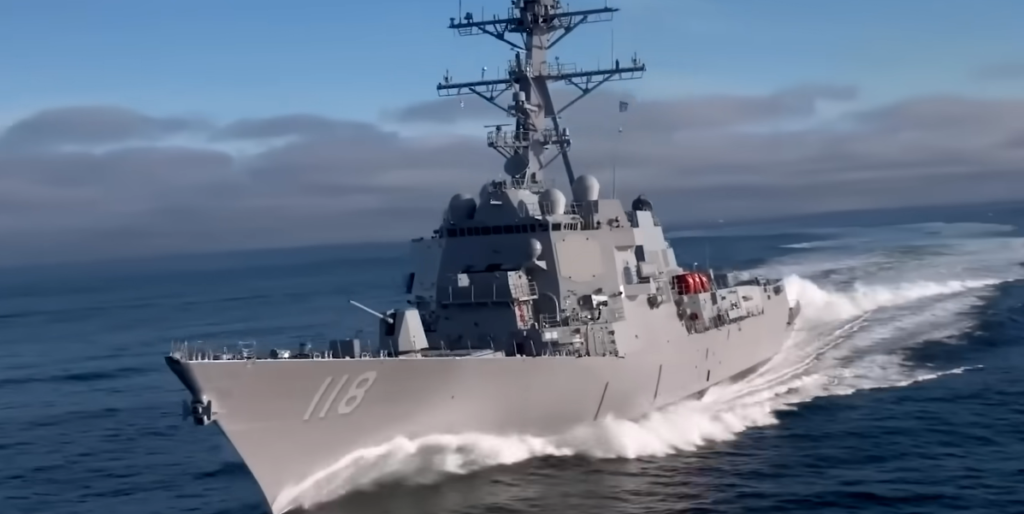
The Tomahawk itself has undergone gradual change. Block V, the most recent version, reflects the priorities of modern warfare: improved communications, GPS that doesn’t jam, and the capacity to hit moving targets in the maritime domain. Recertifying older Block IV missiles will increase their service life by 15 years. Modernizing current stockpiles and maintaining capability without starting from scratch are now more important aspects of production than merely creating new weapons.
The urgency with which demand has returned is remarkable. Following years of comparatively low production rates, which at one point slowed to about 100 missiles annually, RTX recently reached an agreement with the US Department of Defense to dramatically increase output. Eventually, more than 1,000 missiles per year are the goal. That’s not a small change. This change raises questions about the geopolitical environment on a deeper level.
There is a feeling that cruise missiles have subtly reclaimed their strategic importance as tensions rise throughout the world, from the Middle East to Eastern Europe to the Indo-Pacific. They are accurate. Both ships and submarines are capable of launching them. Without any physical presence, they exude strength. The defense sector’s resilience in the face of wider market uncertainty suggests that investors still think demand will persist.
However, there are practical issues with production at that scale. Are suppliers able to keep up? Will subcontractors grow? A network of specialized components, such as solid rocket boosters, guidance systems, and turbofan engines, are essential to defense manufacturing. It’s not as easy as turning a dial to scale up. Retraining employees, obtaining supplies, and negotiating budget approvals that change depending on political circumstances are all necessary.
In the background, history is also present. The Gulf War in 1991 was the first time the Tomahawk was used in combat. Since then, it has been employed in high-profile operations involving Iran, as well as in Iraq, Afghanistan, Libya, Syria, and Yemen. Its reputation for dependability is strengthened with every deployment. Over the course of four decades, more than 2,000 operational uses have a tendency to increase institutional trust.
However, a paradox exists here. The Tomahawk is a sophisticated and contemporary weapon. Despite its Cold War origins, it is still evolving to meet new threats. Upgraded warheads and the addition of maritime strike capabilities demonstrate that even long-standing systems can change rather than vanish. The Tomahawk endures because it is subsonic, strategic, and reliable in a field that is fixated on next-generation hypersonic weapons.
Critics contend that making significant investments in cruise missiles runs the risk of preparing for conflicts from the past. Drones dominate tactical conversations, while hypersonics make headlines. However, cruise missiles are a sensible compromise. Although they are pricey, they are not outrageous. Although they are expensive, at about $1 to 2 million per unit, they are still regarded as cost-effective when compared to some air-launched alternatives.
The renewed focus on Tomahawk production may be a reflection of both industrial pragmatism and military strategy. The system is in place already. The supply chains are well-known. The allied nations and the Navy know how to use it. It would be risky to start from scratch. Like business executives, defense planners frequently favor updating established platforms over placing all of their bets on unproven ones.
Raytheon in Tucson is at the center of all of this. Production lines hum steadily inside those facilities as technicians integrate warheads and put together guidance packages. The desert sun beats indiscriminately outside. It seems that a lot of contemporary power projection is shaped in settings like these—industrial, procedural, and subtly growing—rather than in dramatic war rooms.
Who produces the Tomahawk missiles? The answer is simple: Raytheon, a division of RTX Corporation. The broader narrative, however, is one of resurgence, adaptation, and consolidation. It concerns the continued relevance of a Cold War-era weapon in a multipolar world. And it’s about how one business, rooted in the arid landscape of Arizona, keeps producing a missile that, in times of crisis, governments all over the world continue to rely on.
Disclaimer
Nothing published on Creative Learning Guild — including news articles, legal news, lawsuit summaries, settlement guides, legal analysis, financial commentary, expert opinion, educational content, or any other material — constitutes legal advice, financial advice, investment advice, or professional counsel of any kind. All content on this website is provided strictly for informational, educational, and news reporting purposes only. Consult your legal or financial advisor before taking any step.
