

When someone is standing on the deck of an Antarctic research vessel, the first thing they notice is the silence. The Southern Ocean moves with a heavy, purposeful rhythm beneath the howling wind and moaning ice. It makes no announcements about its changes. They are absorbed by it.
For many years, Antarctica was viewed as a far-off white continent that was responding to climate change more slowly than the Arctic. That presumption is eroding. Even seasoned polar scientists have been surprised by the rate at which the sea ice surrounding Antarctica has decreased since 2014. Once displaying a comparatively stable ring of winter ice, satellite images now show irregular gaps, with darker water absorbing more sunlight and contributing to the warming.
Most of the excess heat that greenhouse gases trap is absorbed by the Southern Ocean, which serves as a buffer for the planet. Coastal cities have probably been spared from even more severe warming because of that service. However, there is a price for it. As surface temperatures fracture ice shelves from above, warmer, deeper currents are now slipping beneath them, melting them from below. Long regarded as a stabilizing force, the ocean may now be acting as an accelerant.
Once creeping toward the sea, glaciers are now speeding up. Since the 1990s, ice loss in some areas of West Antarctica has multiplied several times. Data from underwater robots, which are yellow, cylindrical devices that are lowered through drilled ice holes, has revealed that warm currents are licking at the undersides of glaciers. We get the impression that we are witnessing something irrevocable in real time as we watch the video, which shows shimmering meltwater creating channels in the ice.
| Category | Details |
|---|---|
| Region | Antarctica |
| Surrounding Waters | Southern Ocean |
| Critical Ice Mass | West Antarctic Ice Sheet |
| Keystone Species | Emperor penguin |
| Climate Role | Absorbs majority of excess global heat and carbon |
| Potential Sea-Level Rise | 4–6 meters (WAIS collapse scenario) |
| Key Research Body | British Antarctic Survey |
| Climate Science Authority | Intergovernmental Panel on Climate Change (IPCC) |
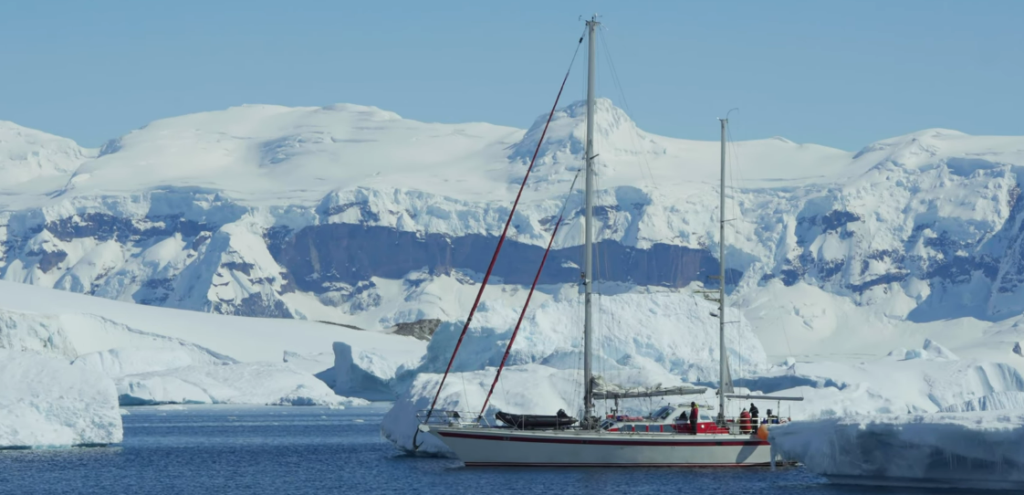
Perhaps too frequently, the term “tipping point” has been used. However, there is enough ice on the West Antarctic Ice Sheet to cause sea levels to rise by several meters worldwide. Scientists warn that if a collapse were to occur, it would take centuries to occur. However, the ice shelves supporting the sheet are now becoming thinner. Whether we are already approaching or approaching a critical threshold is still up in the air.
The signs are not limited to ice. In a number of colonies under observation, the number of emperor penguins, which depend on stable sea ice for breeding, has drastically decreased. Where thousands of nesting grounds once stood, satellite imagery has shown them deserted. Sea ice serves as the nursery habitat for krill, which are tiny, translucent crustaceans that serve as the foundation of the Antarctic food web. Seabirds, seals, and whales will all suffer if there is less ice because there will be fewer krill.
Then there are the forces that are hidden. Researchers have discovered infrequent underwater “tsunami-like” waves that are caused by melting glaciers, which can further destabilize ice by redistributing heat and nutrients. Long dormant under kilometers of ice, subglacial volcanoes provide geothermal heat that lubricates glacier bases and accelerates their descent into the ocean. It sounds dramatic. It appears to be measurable based on the measurements.
The pace is what worries researchers the most. Slow trends are giving way to sudden changes. The rate of sea ice decline is currently about twice as fast as it was in some Arctic regions during similar periods. The slowing of deep ocean circulation patterns, especially the Antarctic overturning circulation, may change the flow of carbon and oxygen through the world’s waters. A slowdown might result in more carbon staying in the atmosphere and less carbon being stored in the deep ocean.
It’s difficult to ignore the wider ramifications. Low-lying coastal areas are home to at least 750 million people worldwide. Sea level projections are implicitly assumed to be stable by national defense plans, insurance models, and even urban planning maps. It might be necessary to revise adaptation plans if Antarctica’s oceans are compressing those timelines.
This situation is paradoxical. Antarctica seems far away, unspoiled, and nearly unreal. However, events in its waters influence heatwaves throughout Europe, storm intensity in the North Atlantic, and rainfall patterns in Asia. The size of the continent may give the impression that it is permanent. It’s easy to think that a wall of blue ice that stretches to the horizon will endure human error.
However, it seems as though the “silent sentinel” is no longer silent as one watches ice shelves calve into the ocean—massive slabs falling with a sound akin to distant thunder. It is transmitting signals, data, and quantifiable changes. It’s not a theatrical message. It’s statistical. It’s tangible.
Scientists are reconstructing climates from times when carbon dioxide levels were similar to those we are approaching by drilling ancient ice cores, some of which date back more than a million years. Sensitivity is suggested by the past. Acceleration is suggested by the present.
Some of these processes might be stabilized by significant emissions reductions. It’s also possible that some thresholds won’t react to human timelines once they’re crossed. There’s no comfort in the Southern Ocean. It is providing proof.
Disclaimer
Nothing published on Creative Learning Guild — including news articles, legal news, lawsuit summaries, settlement guides, legal analysis, financial commentary, expert opinion, educational content, or any other material — constitutes legal advice, financial advice, investment advice, or professional counsel of any kind. All content on this website is provided strictly for informational, educational, and news reporting purposes only. Consult your legal or financial advisor before taking any step.
