

It is not a cricket story about Rinku Singh’s father. Not at all. In many respects, it is a tale of labor—the kind that wears you out, stains your shirt, and seldom receives recognition.
After fighting stage 4 liver cancer, Khanchand Singh, the father of Indian cricketer Rinku Singh, died in Greater Noida. While his son was traveling between training camps and international matches, he had been ill for months, slowly getting worse. Hospitals became ingrained in family life. Uncertainty did too.
It’s difficult to overlook how frequently athletic achievements are presented as the result of individual brilliance, with the supporting infrastructure going unnoticed.
Khanchand Singh was a well-known distributor of gas cylinders in Aligarh, where Rinku was raised in humble circumstances. He apparently kept working long after his son started hitting sixes for India and the IPL. It was viewed as stubbornness by some. Discipline was observed by others. He seemed to want his son to recall the feel of exertion, such as the weight of a cylinder balanced on a shoulder or the scent of dust on small streets. It appears that lesson has stuck.
| Category | Details |
|---|---|
| Cricketer | Rinku Singh |
| Full Name | Rinku Khanchand Singh |
| Father’s Name | Khanchand Singh |
| Father’s Profession | LPG Gas Cylinder Distributor |
| Cause of Death | Stage 4 Liver Cancer |
| Place of Passing | Greater Noida, Uttar Pradesh |
| Hometown | Aligarh, Uttar Pradesh |
| National Team | India (T20I) |
| Governing Body | Board of Control for Cricket in India (BCCI) |
| Player Profile | https://www.bcci.tv/players/ |
| ICC Tournament Info | https://www.icc-cricket.com |
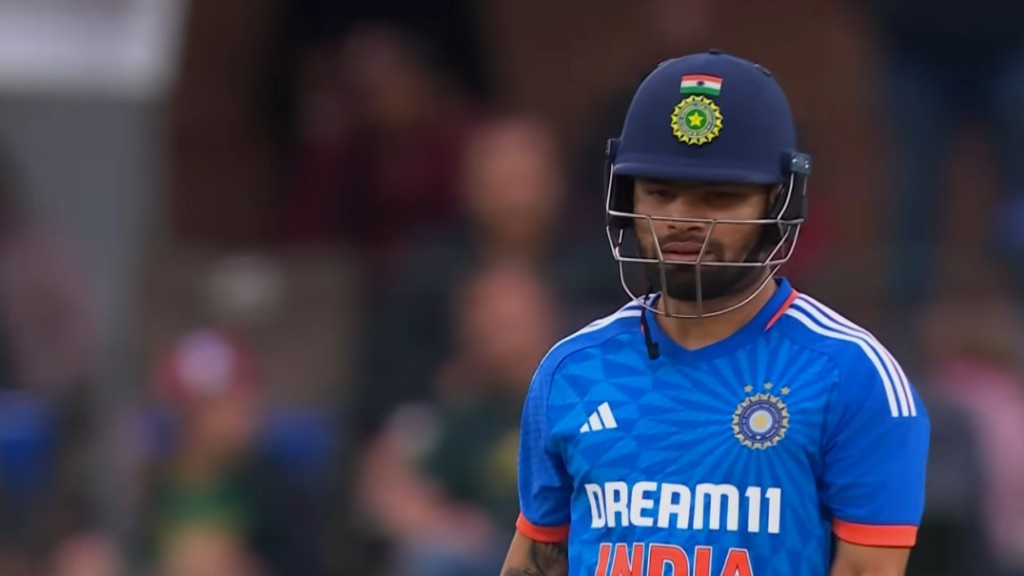
Rinku left the national camp right away after learning of Khanchand Singh’s passing. During the funeral procession, he was seen on camera carrying his father’s bier. The picture was bleak: a cricket player used to boisterous crowds now strolling through his hometown’s more sedate streets with his head down and family by his side.
This moment might end up being more significant than any innings that decide a game.
Colleagues reacted promptly. Senior players flooded in with messages, including remarkably personal public words of support. For a while, the usually chilly and competitive cricket community warmed up. Something about losing parents transcends tournament rankings and performance indicators.
However, the timing couldn’t have been more challenging. India was in the middle of a big competition. There were already heated discussions about selection. Would Rinku come back? Would he participate? Whether he will play regularly in the upcoming games is still up in the air.
He appeared thinner in some way as he walked through the Kolkata airport to rejoin the team, but that could just be perception. Posture is altered by grief. It slows motions. Athletes, however, are taught to compartmentalize. They practice muscle memory, face bowling machines, and enter nets.
It seems possible that cricket now has a deeper significance for Rinku.
According to reports, Khanchand Singh’s illness had been severe for more than a year. ventilator assistance. frequent trips to the hospital. Rinku continued to play in both domestic and international series while juggling his personal anxieties and professional commitments. Something about elite sport is revealed by that quiet perseverance: it seldom takes a break for personal grief.
This has happened in India before. Cricket has frequently required resiliency that verges on severity, as evidenced by Sachin Tendulkar’s playing following the death of his father in 1999 and Virat Kohli’s emotional burden during personal crises. However, every case is unique. Every sorrow is unique.
The ordinaryness of Rinku Singh’s father’s story is what makes it so captivating. He had never played cricket. Not famous. He was a hard worker who made sure his family was taken care of and who allegedly insisted on maintaining his modesty despite his son’s rising fame.
Neighbors outside the Aligarh family home said he was grounded. Although that word is overused, it seems appropriate in this context. rooted in habit. in accountability. repeatedly.
It’s hard not to consider how many Indian cricket players come from similar backgrounds as you watch this play out. In small-town India, the foundation of aspiration is parental sacrifice, including early bus rides to practice grounds, overtime work, and borrowed funds for coaching. The glitz follows. The debt is still there.
Rinku has frequently played the role of a finisher for the team; he is composed, strategic, and late to the game. It took time for that poise to emerge. It was probably formed in more subdued environments: small spaces, little money, watching a father who continued to work without protest.
Naturally, there are doubts about how much time professional sports give for grieving. Tournaments continue. The headlines change. However, the absence of a parent causes a fundamental shift. Rinku might carry over his motivation and absence into his upcoming innings.
Without hesitation, the BCCI gave him leave, and after finishing the last ceremonies, he returned to the team. Duty is indicated by that return. Or to divert attention. Returning to routine can be a coping mechanism for athletes.
Analysis shows will be dominated by conjecture regarding team combinations as India gets ready for important matches in the future. Behind the batting orders and strategy boards, however, is a more personal tale of a father who spent decades building his son’s resilience and a son who lost his father.
Disclaimer
Nothing published on Creative Learning Guild — including news articles, legal news, lawsuit summaries, settlement guides, legal analysis, financial commentary, expert opinion, educational content, or any other material — constitutes legal advice, financial advice, investment advice, or professional counsel of any kind. All content on this website is provided strictly for informational, educational, and news reporting purposes only. Consult your legal or financial advisor before taking any step.
