

In Kabul, people reported being awakened just before dawn by a low, mechanical hum above them, followed by two sharp explosions that rolled across the city like distant thunder. Hours later, soldiers wearing green-and-white flags were given funeral prayers in Peshawar. The phrase “Pakistan Afghanistan War” ceases to sound like a headline and begins to feel like a rupture in these quiet, human moments—sirens rising, sleep interrupted.
Officials have referred to the recent escalation between Pakistan and Afghanistan as “open war,” a term that seems both purposeful and dangerously ambiguous. After cross-border attacks, Khawaja Asif said Islamabad’s patience had run out and blamed Afghan authorities for encouraging militant violence. Taliban-led Kabul retorted that retaliation was unavoidable because civilians had been killed by Pakistani airstrikes. Both sides report significant losses. Both contest each other’s figures. As is typical in border disputes, the truth lies somewhere in the middle.
The location is important. In 1893, a British diplomat drew the Durand Line, which splits families and allegiances and crosses Pashtun tribal lands. It has never been formally acknowledged by Afghanistan as a valid international border. According to Pakistan, it is established law. The line has been a porous, tense scar for decades, guarded by soldiers who understand that a single mortar round can alter a month of uneasy calm.
This time, the scale and symbolism seem different. According to reports, Pakistan has targeted locations in important Afghan cities like Kabul and Kandahar in addition to suspected militant hideouts. For the first time in years, analysts quietly observe, Islamabad seems to be focusing on infrastructure connected to the Taliban instead of just the Tehreek-e-Taliban Pakistan, the insurgent group it accuses of carrying out suicide bombings and other attacks within Pakistan. This might indicate a change in strategy, a sign that the patience with Kabul’s denials is wearing thin.
| Category | Details |
|---|---|
| Countries Involved | Pakistan and Afghanistan |
| Border in Dispute | Durand Line (1,600-mile frontier) |
| Pakistani Defense Minister | Khawaja Asif |
| Afghan Ruling Authority | Taliban |
| Pakistani Militant Group | Tehreek-e-Taliban Pakistan (TTP) |
| Recent Operation | Operation Ghazab lil-Haq |
| References | BBC News – South Asia • Reuters World News |
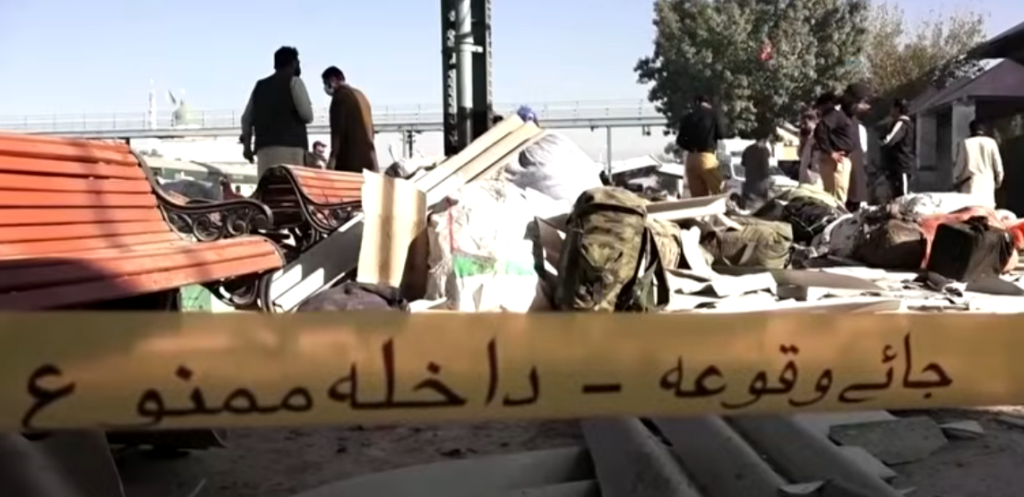
Shopkeepers in the Pakistani border districts of Bajaur and Khyber Pakhtunkhwa describe how the hills are illuminated at night by artillery flashes. Now, trucks transporting fuel and fruit stand in uncertain lines at crossings that suddenly open and close. It seems like everyday business, which is so delicate in this area, is always the first to suffer as this plays out. Traders who used to negotiate unofficial agreements between commanders now wait for an answer that never comes.
In contrast, Kabul exudes defiance. Despite threatening retaliation, Taliban spokespeople maintain that they want to have a conversation. The balancing act they must perform is revealed by the dual tone—offering talks while launching counterattacks. The Taliban have courted China, Russia, and Gulf states in an attempt to gain regional legitimacy since taking back power in 2021. That goal is complicated by a protracted conflict with Pakistan, which has historically been one of their few diplomatic allies. Whether this escalation encourages pragmatists to engage in dialogue or reinforces hardliners within the movement is still up in the air.
Powers in the region are keeping a close eye on it. Concerned about instability spreading throughout Central and South Asia, China and Russia have urged moderation. Both sides seem to have too much at stake for either side to really want a full-scale conventional conflict. Pakistan faces domestic political unrest and economic hardship. Afghanistan is still financially and diplomatically isolated. Long-term hostilities would deplete resources that both parties can hardly afford.
However, the history of this area indicates that reason is not always right. The TTP problem is a major concern. Pakistan contends that militants stage operations before slipping across the mountains to launch attacks from Afghan territory. The Taliban claim that Pakistan’s security issues are internal and deny harboring them. Airpower and nationalistic rhetoric have raised the stakes in this well-known exchange, which is frequently repeated in press conferences and on social media.
Tanks parked close to Torkham and soldiers wearing night-vision goggles to scan ridgelines are symbolic, and it’s difficult to ignore them. These are pictures intended as much for home viewers as for enemies. Under pressure, governments frequently discover that conflict from the outside strengthens their internal cohesion. It remains to be seen if that unity holds up after the initial surge of headlines.
But for the frontier’s civilians, the math is brutally straightforward. Schools are closed. Livestock is moved further away from the line by families. Youngsters get used to hearing the whistle of approaching shells. Long after the jets had vanished, a Kabul taxi driver reported hearing ammunition explode and the depot igniting on its own. The fact that violence persists even after the plane has taken off and flown home is a persistent detail.
If the Pakistan-Afghan conflict escalates beyond a flare-up, it will challenge presumptions on both sides. It’s possible that Islamabad thinks using strong force will discourage cross-border militancy. Kabul might reason that a limited response maintains credibility without provoking a massive reaction. Both might be misinterpreting each other’s red lines.
Disclaimer
Nothing published on Creative Learning Guild — including news articles, legal news, lawsuit summaries, settlement guides, legal analysis, financial commentary, expert opinion, educational content, or any other material — constitutes legal advice, financial advice, investment advice, or professional counsel of any kind. All content on this website is provided strictly for informational, educational, and news reporting purposes only. Consult your legal or financial advisor before taking any step.
