

Anyone standing on the waterfront in Bergen is immediately struck by how unremarkable it appears. Ferries make a humming noise. Angry seagulls hover. The dock is rocked by fishing boats. However, Norway is quietly building machines inside a warehouse near the water that could change how people perceive the ocean floor.
These aren’t the big, clumsy submarines from the Cold War. Sleek, torpedo-shaped autonomous underwater vehicles and small surface drones, they glide beneath Arctic waters with no human on board and are powered by artificial intelligence. The phrase barely conveys the ambition that lies beneath it as Norway tests underwater AI robots to map deep sea ecosystems.
| Category | Details |
|---|---|
| Lead Institutions | Norwegian Institute of Marine Research (IMR), Norwegian University of Science and Technology (NTNU) |
| Key Industry Partner | Kongsberg Maritime |
| Energy & Offshore Partner | Equinor |
| Core Technology | Autonomous Underwater Vehicles (AUVs), Uncrewed Surface Vessels (USVs), AI-driven sonar mapping, 3D photogrammetry |
| Deployment Areas | Arctic coral zones, Norwegian fjords, Njord field, coastal inshore mapping zones |
| Notable Systems | KONGSBERG Sounder USV, EK80 echo sounder, Blue Insight cloud infrastructure |
| Mission Focus | Deep-sea ecosystem mapping, ghost net removal, seabed mineral monitoring, microbial hotspot detection |
| Workforce Impact | 1,100+ researchers and staff involved across marine institutes |
| Coastline Monitored | 25,000 km of Norwegian coastline |
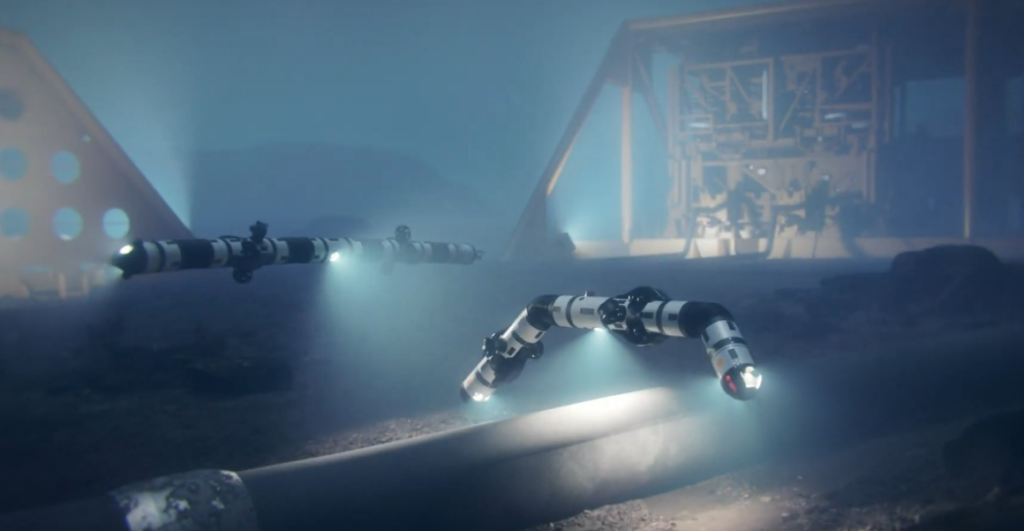
For many years, mapping the oceans required sending out big research ships, which were costly and carbon-intensive, with scientists on board who looked at sonar screens. AUVs and unmanned surface vessels that can navigate through fjords silently are currently being used by engineers in collaboration with the Norwegian Institute of Marine Research to scan sediment plains and coral gardens using high-resolution echo sounders.
There’s something uncanny about the silence when watching video from one of the Arctic coral missions. White coral structures rise like frozen trees as the robot’s lights pierce the icy, dark water. No bubbles. No scuba divers. Just sensors that record, adjust, and learn.
This silent effectiveness might be the true innovation.
The roughly 25,000 kilometers of Norway’s coastline are divided into rocky fjords and bare Arctic shelves. It has always been a logistical challenge to keep an eye on that huge region with conventional ships. It has long been acknowledged by researchers, sometimes in private, that they were only sampling pieces of a much bigger picture. By supplying data to cloud platforms such as Blue Insight, these robots are altering that rhythm by continuously gathering streams of data while using significantly less fuel.
However, efficiency is not the only aspect of the project. A moral undertone is present.
Ghost nets, which are abandoned fishing nets that drift and trap marine life, have grown to be a nearly undetectable threat. These nets are now cut and retrieved by AI-driven drones that have robotic arms and cameras. It’s difficult to overlook the symbolism: machines repairing damage we couldn’t see, cleaning up after human industry.
Norway, of course, is an energy country as well. Long involved in offshore oil and gas, Equinor is working on autonomous robotic systems that can survey mineral-rich seabeds and, controversially, inspect infrastructure. Political sensitivity still surrounds deep-sea mining. AI-guided “pick and place” systems, according to government officials, can harvest nodules with the least amount of disturbance to the sediment. Perhaps. Perhaps not.
Only small sediment clouds were captured by cameras used during recent tests, and preliminary reports indicate that there hasn’t been any obvious ecosystem collapse. However, the ocean takes a while to show its effects. It may take years to measure long-term effects, marine scientists quietly acknowledge. Even in a nation renowned for its cautious regulation, there is a sense that technology is outpacing policy.
This time, the collaborative scale feels different. Clusters of autonomous systems that coordinate from the seabed to a satellite are being experimented with by NTNU researchers, defense establishments, and marine institutes. Algal blooms in Svalbard have been mapped from below and above by a research satellite, surface ships, aerial units, and underwater drones working in tandem.
Although it sounds futuristic, it appears almost ordinary from the dock. Battery housings are inspected by engineers wearing insulated jackets. Sensor calibration is being reviewed by software experts. Coffee cups balancing on crates of equipment.
Careful pragmatism went into the design of the robots themselves. For instance, to lessen acoustic interference, the KONGSBERG Sounder suspends the same EK80 echo sounder—which is used on full-scale research vessels—beneath a hydrodynamically optimized gondola. Although reducing micro-cavitation bubbles for cleaner readings may seem like a small detail, it represents years of gradual advancement rather than ostentatious innovation.
Additionally, there is skepticism among the ranks. In congested coastal waters, some seasoned navigators are concerned about the maneuverability of unmanned surface vessels. Autonomous ships are still not fully covered by Norway’s maritime laws. In crowded areas, remote control from a “mother ship” might still be necessary. Regulation is walking; technology is progressing.
The larger economic backdrop comes next. Data is needed for the so-called blue economy, which includes seabed minerals, aquaculture, and offshore wind. According to a survey, investors seem certain that autonomous systems will significantly lower costs. Funding and political momentum are being propelled by this belief.
However, it’s difficult to avoid feeling a little uneasy when you watch the robotic footage of snow crabs skittering across Arctic sediment or cold-water corals gently swaying in dark currents. For centuries, the ocean has been a blind spot for humanity. The blind spot is now getting smaller as microbial hotspots beneath the seabed are revealed by AI-enhanced sonar and photogrammetry.
It’s unclear if that results in better stewardship or just more effective extraction.
Norway’s experiment seems both realistic and hopeful. It is neither a careless dive nor a utopian tech fantasy. It is more Scandinavian—calculated, driven by engineering, and subtly aspirational.
One can’t get rid of the feeling that the true story isn’t about robots at all when they’re standing close to the harbor and listening to the soft hum of electric motors getting ready for another autonomous deployment. Visibility is the key. about transforming the dark into information.
Disclaimer
Nothing published on Creative Learning Guild — including news articles, legal news, lawsuit summaries, settlement guides, legal analysis, financial commentary, expert opinion, educational content, or any other material — constitutes legal advice, financial advice, investment advice, or professional counsel of any kind. All content on this website is provided strictly for informational, educational, and news reporting purposes only. Consult your legal or financial advisor before taking any step.
