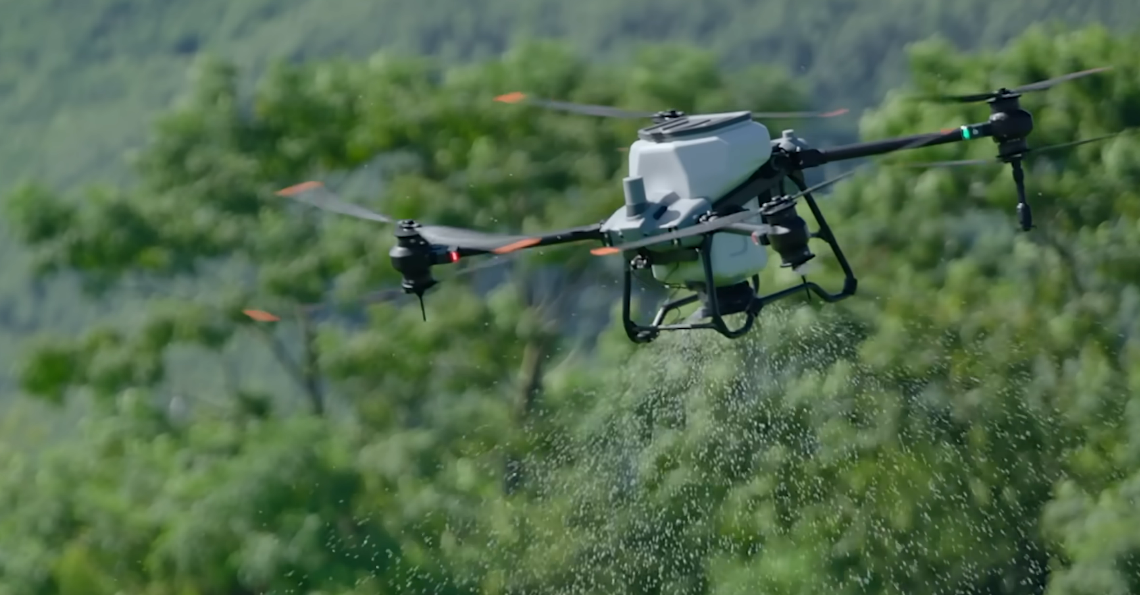
A tiny quadcopter hovered over the jacaranda trees in Palermo on a windy afternoon in Buenos Aires, its propellers humming like a giant insect. That flight could have led to a call to the police a few years ago. It feels almost normal now.
Argentina has started to finance and restructure its national drone safety laws for urban areas, combining targeted safety oversight with deregulation. Executive Order 550/2025 eliminated registration for drones weighing less than 250 grams and drastically lowered licensing requirements for drones weighing less than 25 kg. However, authorities maintain that they are enforcing safety regulations, especially in crowded city corridors where airspace is complicated by glass towers and crowded sidewalks.
It seems like the nation is attempting to accomplish two goals at once: fostering innovation and averting global chaos.
The Administración Nacional de Aviación Civil (ANAC), which has long been in charge of regulating everything from commercial airlines to amateur pilots, continues to be the regulatory backbone. For many years, its framework mandated insurance, licensing exams, age restrictions, and drone registration through the SIVANT system for commercial use. It was thorough—painfully so at times. Operators expressed dissatisfaction over paperwork piling up more quickly than firmware upgrades.
| Category | Details |
|---|---|
| Country | Argentina |
| Regulatory Authority | Administración Nacional de Aviación Civil (ANAC) |
| Key Legal Update | Executive Order 550/2025 |
| Previous Framework | ANAC Resolution 527/2015 |
| Maximum Legal Altitude | 120 meters (400 feet) |
| Airport Safety Radius | 5 kilometers |
| Official Reference | ANAC Official Website |
| Legal Update Record | Library of Congress – Argentina Aeronautical Code |
The change in 2025 caught many off guard. Some people thought it was like throwing open the gates when the smallest drones’ registration was removed and mid-sized equipment’s license was removed. Within weeks, Córdoba drone retailers reported strong sales. Mendoza videographers celebrated the new flexibility with social media clips. Investors appeared to think Argentina was establishing itself as the drone-friendliest market in Latin America, especially those interested in delivery services and agricultural monitoring.
However, Patagonia’s expansive horizon is not the sky over Buenos Aires.
It is evident why safety funding is still important when one is standing close to Puerto Madero’s waterfront and observes drones making slow arcs above high-rise balconies. The airspace in cities is unpredictable. Gusts bounce from building to building. Hospital helicopters fly over skyline routes. A poorly calculated flight path is real, not just hypothetical.
Strict rules are still in place under the revised policy, including no flying within five kilometers of airports, no hovering over crowds, and no entering sensitive government buildings or military areas. The maximum elevation is still limited to 120 meters. The rules of visual line-of-sight remain in effect. These limitations may seem simple, but in reality, they draw a fine line between urban risk and recreational freedom.
The government of Argentina might have been aware of a more comprehensive economic calculation. Drone technology is developing rapidly on a global scale, with businesses experimenting with automated inspection networks and delivery systems that are not visible to the human eye. Particularly in the wake of near-miss incidents, nations such as the United States and portions of Europe have tended toward stricter regulatory frameworks. Argentina seems to be placing a bet that more targeted enforcement coupled with less stringent oversight will spur innovation without inviting catastrophe.
It’s still unclear if that balance holds.
Stricter requirements, such as operational manuals and liability insurance, still apply to commercial operators. The reasoning is clear: responsibility transfers along with money. In Buenos Aires, insurance companies have subtly started to provide specialist drone coverage, modifying rates according to payload weight and flight zones. It’s almost as fascinating to watch that insurance market grow as the drones themselves; it indicates that the private sector is getting ready for both opportunity and liability.
Privacy issues also persist. The collection of images and data is already governed by Argentina’s Personal Data Protection Law. No executive order can fully address the questions raised by a drone hovering over a residential balcony with its camera angled slightly downward. Aerial surveillance feels different to urban dwellers who are used to CCTV cameras and smartphones. more invasive. less dependable.
The issue of enforcement is another. Enforcing safety regulations and keeping an eye on compliance are two different things. Updated training on drone identification and incident response has started to be provided to police units in major cities. According to reports, some towns are looking into using geofencing technology to automatically limit flights close to important infrastructure. It is a subtly sophisticated combination of digital control and deregulation.
Recently, while strolling through a San Telmo weekend market, it was difficult to miss a drone flying overhead, filming street performers. Nobody became alarmed. Nobody cheered. Like a delivery van or a passing bicycle, the gadget just blended into the landscape.
As this is happening, it seems like Argentina is experimenting with both cultural acceptance and airspace policy. Drones are evolving from toys for hobbyists to tools for businesses, from novelty to infrastructure. Even in the face of deregulation, the government shows that it understands the stakes by continuing to fund national safety regulations.
Sunsets captured on camera by amateurs won’t be the true test. It will show up when automated drones start flying over neighborhoods every day, when logistics companies push for regular urban deliveries, and when one mishap puts the public’s patience to the test.
Disclaimer
Nothing published on Creative Learning Guild — including news articles, legal news, lawsuit summaries, settlement guides, legal analysis, financial commentary, expert opinion, educational content, or any other material — constitutes legal advice, financial advice, investment advice, or professional counsel of any kind. All content on this website is provided strictly for informational, educational, and news reporting purposes only. Consult your legal or financial advisor before taking any step.