

The lights inside Constellation Energy Corporation’s headquarters flicker on a gloomy Baltimore morning long before the majority of commuters show up. The structure doesn’t appear to be a hub for speculative startups or a tech campus. It seems older. Firm. A little too subtle. However, the price of CEG’s stock has been acting much more dramatically.
CEG has quietly outperformed a large portion of the utilities industry as a whole, recently trading at about $323, up more than 3% in a single session. Shares have increased by over 300% in the last three years, which is an impressive run for a company that generates electricity, one of the most predictable industries in the world.
That is what adds interest to this tale.
| Category | Details |
|---|---|
| Company Name | Constellation Energy Corporation |
| Stock Ticker | NASDAQ: CEG |
| Headquarters | Baltimore, Maryland, United States |
| Founded | 2021 (spinoff) |
| CEO | Joe Dominguez |
| Employees | ~14,240 |
| Market Capitalization | ~$113 Billion |
| 52-Week Range | $161.35 – $412.70 |
| Dividend Yield | ~0.5% |
| Official Website | ConstellationEnergy.com |
| Stock Information | Nasdaq – CEG |
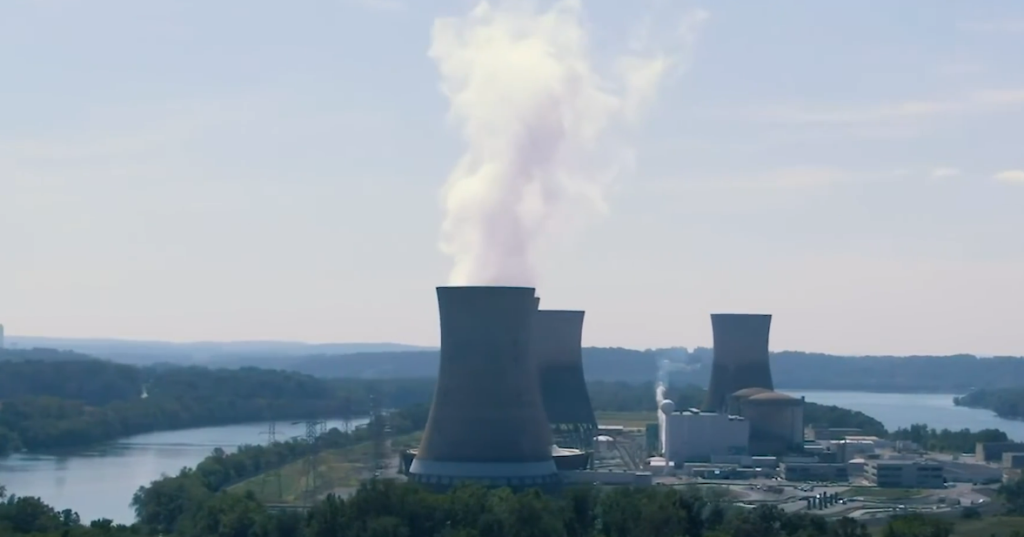
Utilities are meant to be dull. dividends. steady flow of cash. slow expansion. However, nuclear energy has been making a comeback in the national discourse, and Constellation owns the largest fleet of nuclear plants in the US. Continuous, dependable electricity is required by data centers growing to support AI models. Even though they are growing, wind and solar power can’t always offer that 24-hour reliability. Nuclear is capable.
It’s possible that investors now see Constellation as AI-era infrastructure rather than a slumbering utility.
The stock’s tenacity is further demonstrated by the company’s recent mixed fourth-quarter report. As a result of more difficult year-over-year comparisons, earnings decreased from $2.71 per share to $1.38 per share last year. Revenue, however, increased by almost 13% to just over $6 billion. Instead of the headline profit decline, the market appeared to be more interested in the company’s top-line strength and overall strategic positioning.
Wall Street seems to be seeing beyond the noise of the quarter-to-quarter cycle.
With the recent completion of Constellation’s acquisition of Calpine, executives claim to have created the country’s largest electricity producer. The agreement combines Calpine’s geothermal and natural gas resources with Constellation’s nuclear fleet. Reliability is strengthened on paper. In actuality, it also raises integration risk, debt exposure, and complexity.
It’s difficult to ignore how composed the response was as you watched the CEG stock price gradually rise following the earnings announcement. No rush of euphoria. Don’t panic. Just consistent purchasing that brings shares closer to the intraday high of $325.
However, valuation raises questions. CEG is not trading like a typical utility, with a forward P/E in the high 20s and a trailing P/E in the mid-30s. For stability and growth, as well as possibly for flexibility in a power-hungry economy, investors are paying more.
In some areas, the cost of electricity has been increasing, which has improved margins. In the meantime, major plants’ operating horizons were extended by decades when the Nuclear Regulatory Commission recently approved long-term license renewals. Although that type of regulatory approval doesn’t make news, investors who are projecting cash flows for the next twenty years find it to be extremely important.
However, if electricity prices become more normalized, it’s unclear if the current enthusiasm can last. Bold forecasts tend to be humbled by energy markets.
The sheer size of the operation seems almost comforting when you stand close to one of Constellation’s generating stations, which are enormous cooling towers that release white plumes into the winter air. These assets aren’t abstract. They are steel, concrete, and uranium-powered machines that run constantly. The previous quarter alone saw the company generate over 45,000 gigawatt-hours from major stations. That output is quantifiable and not speculative.
The stock, however, trades according to expectations.
CEG isn’t just an income play, as evidenced by its modest dividend yield of about 0.5 percent. Investors appear to be setting up for growth linked to trends in electrification, the expansion of AI data centers, and possible changes in carbon policy that favor nuclear power. Constellation frequently fetches a higher multiple than its competitors, such as Vistra Corp.
Although confidence can change, it is reflected in that premium.
With operating cash flow exceeding $4 billion last year, the balance sheet is strengthened and capital expenditures close to $3 billion are supported. Long-term debt, however, continues to surpass $7 billion. Although that leverage is not concerning, it does increase interest rate sensitivity, particularly in a higher-rate environment.
It’s difficult to ignore how utilities, which were once disregarded, are now mentioned alongside artificial intelligence. That comparison would have seemed odd five years ago. Power generation is now frequently portrayed as the impediment to the growth of digital technology. The data centers stall when there is no electricity. The grid is strained when baseload capacity is lacking.
As this develops, it seems that changes in the price of CEG stock are a reflection of factors other than quarterly profits. In a digital world, they reflect a change in the way markets value physical infrastructure.
There is still potential for growth if momentum holds, as the stock is still below its 52-week high of $412. The average price target of analysts is close to $393, indicating cautious optimism as opposed to irrational zeal.
Continued demand for power, prudent capital allocation, and stable plant performance may be more important factors in determining whether the CEG stock price rises from here than headline EPS figures. Operational errors are not readily tolerated by nuclear facilities.
For the time being, Constellation seems to be enjoying a unique combination of factors: growing electricity costs, demand driven by AI, stable regulations, and investor interest in physical assets. Markets, however, are never static. It’s possible that tomorrow’s steady climb will encounter headwinds.
Disclaimer
Nothing published on Creative Learning Guild — including news articles, legal news, lawsuit summaries, settlement guides, legal analysis, financial commentary, expert opinion, educational content, or any other material — constitutes legal advice, financial advice, investment advice, or professional counsel of any kind. All content on this website is provided strictly for informational, educational, and news reporting purposes only. Consult your legal or financial advisor before taking any step.
