

According to reports, the atmosphere in Microsoft’s gaming offices changed long before the formal announcement was made public. People were already discussing succession, timing, and what would happen after a leader who had spent decades defining Xbox’s identity in hallways lined with framed cover art from Halo and Fallout. There was more curiosity than surprise—and maybe a glimmer of unease—when Asha Sharma was finally announced as the new CEO of Microsoft Gaming.
She didn’t come from the typical sources.
Her journey took her through strategy reviews, product dashboards, and artificial intelligence teams where engineers were arguing about systems rather than narratives. Gamers, who still view the industry as a combination of underground movement and art studio, appeared to react reflexively to that alone. Even though this fear is more emotional than rational, there seems to be an innate concern that efficiency will supplant creativity when someone from AI assumes leadership.
| Category | Details |
|---|---|
| Full Name | Asha Sharma |
| Current Position | Executive Vice President & CEO, Microsoft Gaming |
| Company | Microsoft |
| Previous Role | President, CoreAI Product at Microsoft |
| Past Experience | Former COO at Instacart; Former VP at Meta |
| Notable Transition | Successor to Phil Spencer after his retirement |
| Reports To | Satya Nadella |
| Industry Reach | Xbox platform serving over 500 million monthly active players |
| Education | University of Minnesota, Carlson School of Management |
| Reference Links | Official Microsoft Announcement • Asha Sharma LinkedIn Profile |
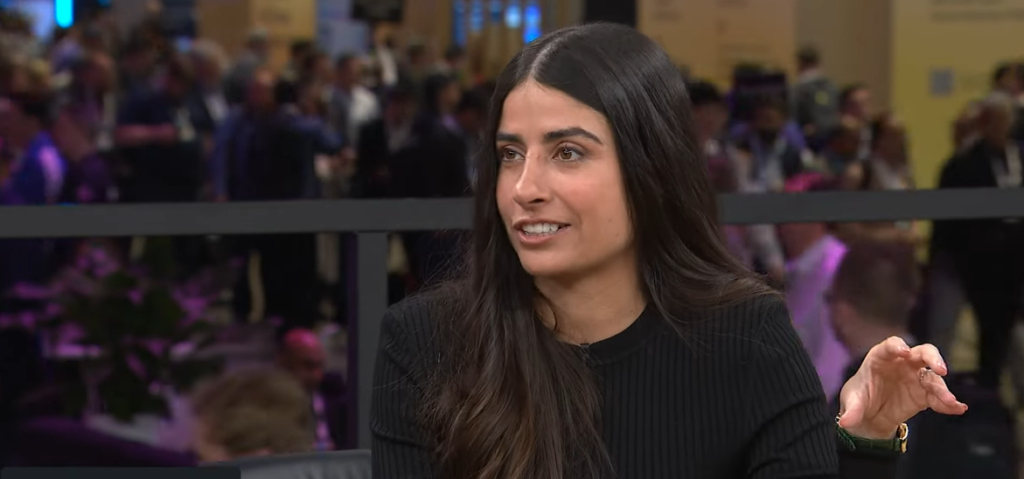
It’s simple to understand why Microsoft selected her when strolling around the Redmond campus on a cloudy morning. Glass conference rooms glow with half-finished ideas, buildings hum with quiet intensity, and staff members pace while silently practicing presentations. This place has a scale obsession. Managing products that were intended to serve billions, not thousands, is how Sharma earned her reputation here. It’s possible that Microsoft wanted scale more than nostalgia for video games.
However, gaming is not the same as cloud storage. It has memory.
The excitement of Xbox’s early years, when releasing a console felt more like a declaration of rebellion than the release of hardware, is still vivid in the memories of many employees. In some hallways, posters from those launches remain, a little faded now, corners curling. There’s a sense that Sharma is inheriting more than just a division as she takes on that legacy. Expectations are inherited by her.
That tension was evident in her opening remarks. She discussed urgency, humility, and preserving what gives games their significance. Her choice of words sounded deliberate, almost defensive, as though she was aware that suspicion was already growing. It’s still unclear if words alone can calm a crowd that has grown accustomed to trusting actions over words due to years of delays and disappointments.
Even Microsoft Gaming isn’t stagnating. Now, the division operates almost 40 studios, each with its own unique creative rhythm and culture. Caffeine and deadlines drive some offices to bustle late into the night, while developers escape into the rainy Washington air in other offices that become quiet by evening. Overseeing so many creative realms at once is more akin to conducting an orchestra in which each member composes their own sheet music than it is to managing a business.
Investors, on the other hand, seem to be observing completely different signals. They appear to be interested in subscriptions, recurring income, and whether Microsoft can turn its enormous player base into steady revenue. Sharma’s experience with platforms and systems seems to fit in well with those priorities. It’s unclear if players gain anything from that alignment.
The competition is also not waiting patiently. With the quiet assurance of a business that is well-aware of its target market, Sony keeps protecting its territory. Meanwhile, smaller studios are changing the game by demonstrating that corporate size isn’t always necessary for innovation. Sharma joins at a time when gaming seems more expansive and more vulnerable than it was ten years ago.
Her timing is more noteworthy than her resume.
She assumes control at a time when gaming is changing once more, spanning devices and blurring the lines between console and cloud. It’s difficult to ignore how much trust is placed in decisions made far above their desks when you walk past a line of workers testing incomplete builds with controllers slackly in their hands. funding, priorities, and patience decisions.
Disclaimer
Nothing published on Creative Learning Guild — including news articles, legal news, lawsuit summaries, settlement guides, legal analysis, financial commentary, expert opinion, educational content, or any other material — constitutes legal advice, financial advice, investment advice, or professional counsel of any kind. All content on this website is provided strictly for informational, educational, and news reporting purposes only. Consult your legal or financial advisor before taking any step.
