

That morning, there was an eerie silence over Livigno Snow Park, the thin, anxious silence that precedes danger. Workers carefully brushed away the snow that clung to the metal rails because they knew that even a thin layer could ruin a run. The mountain appeared more like a test than a venue as the men’s snowboarding slopestyle final for the 2026 Winter Olympics got underway.
Su Yiming appeared almost at ease as she stood at the top of the course, which raised suspicions in and of itself. With the expectations of a nation that had started making significant investments in winter sports, he was young but not new at the age of 22. His final score of 82.41 during his gold medal run wasn’t flawless in the conventional sense. The moment felt more human because of the faint hesitation that preceded one landing. He might have been saved by hesitation, which made him more careful rather than careless.
Riders huddled close to the finish line below him, their boards leaning against their legs as they stared straight ahead. Slopestyle at the Olympics is more than just performing tricks. It involves deciding precisely how much risk to take on and sequencing that risk. Everyone seemed to be aware of how narrow the margin had gotten as they watched them. Four years could be erased by a single error.
After a run that appeared smoother than practically everyone else’s, Japanese competitor Taiga Hasegawa came dangerously close, finishing with silver. He moved more subtly and without aggression, navigating the course as though he were solving a puzzle rather than confronting it. Even though gold slipped away this time, there’s a sense that Hasegawa’s style might hold up over time. It’s unclear if in the upcoming Olympics, patience will triumph over unbridled ambition.
| Category | Details |
|---|---|
| Event | Men’s Snowboarding Slopestyle |
| Olympics | Milano Cortina Winter Olympics 2026 |
| Venue | Livigno Snow Park, Livigno, Italy |
| Final Date | February 18, 2026 |
| Gold Medalist | Su Yiming (China) |
| Silver Medalist | Taiga Hasegawa (Japan) |
| Bronze Medalist | Jake Canter (USA) |
| Sport Olympic Debut | 1998 Winter Olympics |
| Official Website | https://www.olympics.com |
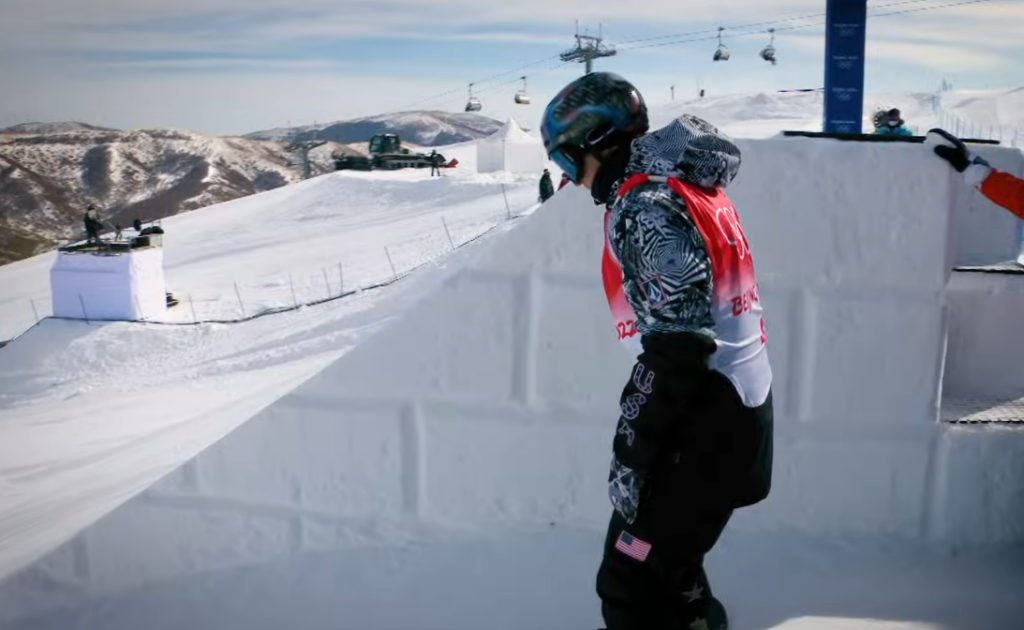
Perhaps the most poignant finish of all was Jake Canter’s bronze medal. After his first runs, he had been waiting for another opportunity, shaking his head a little, out of medal contention. Then something changed on his last run. He took a different approach to the course, going faster and taking more chances. Upon crossing the finish line, he did not immediately celebrate. He simply waited while glancing up at the scoreboard.
An odd Olympic sport has always been snowboarding. It awkwardly carries its rebellious origins within the framework of global competition. Judging panels score tricks that were originally created to completely circumvent the rules. Nevertheless, here it was, making a national pride decision.
Even the Livigno course felt harsh. The jumps sent riders into chilly, thin air that punished hesitation, and tall steel rails gleamed in the wan sunlight. Officials waved away riders who under-rotated even a little, causing them to slide to a stop and land hard. There was a silent reminder of how brittle success is while watching those falls.
Red Gerard, who won the gold medal as a teenager in 2018, struggled to find his rhythm this time. He made a clean but unimpressive landing. The surprise judges were looking for was absent from his runs. It’s difficult to avoid wondering if Olympic success, particularly early success, sets athletes up for life.
Parts of the Olympic schedule had already been thrown off due to weather, which caused delays and increased tension. Days before, snowstorms had swept through Livigno, changing the course’s layout and requiring feature adjustments. The snow felt heavier than expected, according to riders. That little thing was important.
Snowboarding is constantly changing.
Once-impossible tricks are now considered commonplace. Younger athletes show up fearlessly, challenging the limits that more seasoned competitors have come to accept. That change was personified by Su Yiming, who rode with an almost carefree confidence. It appears that Olympic committees, sponsors, and investors think athletes like him are changing the course of the sport.
Dominance, however, rarely endures.
Su didn’t have a wild celebration after his winning run, standing at the bottom of the course. He gave a cautious smile. He seemed to have a better understanding than others. Winning gold at the Olympics alters everything, but it also generates pressure that never goes away.
Disclaimer
Nothing published on Creative Learning Guild — including news articles, legal news, lawsuit summaries, settlement guides, legal analysis, financial commentary, expert opinion, educational content, or any other material — constitutes legal advice, financial advice, investment advice, or professional counsel of any kind. All content on this website is provided strictly for informational, educational, and news reporting purposes only. Consult your legal or financial advisor before taking any step.
