

When I first saw a teenager using a tablet to control a robot across a shiny classroom floor, I was struck by how drastically different education had changed since I was their age. Giving kids who are just starting to see their future access to actual automation technologies has a subtly revolutionary effect.
Schools all throughout Australia are now getting funding to help them do that. High schools are implementing robotics apprenticeships aimed at igniting STEM curiosity and expanding long-term opportunities, thanks to more than 130 grants awarded countrywide, which range from modest injections of $1,500 to more substantial funding up to $15,000.
This is neither a temporary competition or a tech demonstration. These are skill-building, structured apprenticeships designed to introduce students to robotic systems, automation technologies, and coding languages. Students from low-income or immigrant families, who frequently lack access to state-of-the-art educational resources, benefit most from the method. These programs reduce the barrier to entry by delivering hands-on learning using simplified drag-and-drop coding platforms, making a seemingly complicated skill set surprisingly approachable.
| Key Detail | Description |
|---|---|
| Program Name | National Robotics Apprenticeship Initiative |
| Announced By | Australian Federal Government |
| Initial Funding | Grants ranging from $1,500 to $15,000 for 132 schools |
| Core Focus | Coding, robotics, automation, AI fundamentals |
| Target Group | High school students (Year 9–12), including low-income and refugee students |
| Delivery Partners | TAFEs, universities, private educators, industry partners |
| Broader Goal | Strengthen future STEM workforce; reach 1.2M tech jobs by 2030 |
| Related Programs | RoboCup, WARP, ACU pilot studies, TAFE Future Skills programs |
| Reference Link | industry.gov.au – National Robotics Strategy |
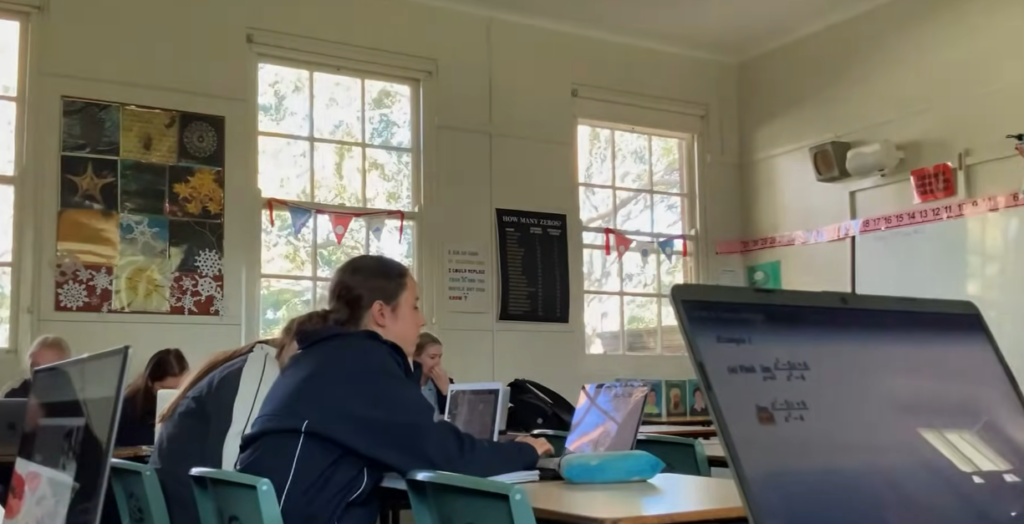
Students like Ahmad Elbashety, who came to Australia as a refugee, were given a tablet, a programmable robot, and a nine-month challenge in one Western Sydney-based program. By the conclusion of the first week, Ahmad could not only navigate his bot through mazes but also imagine himself working as a math teacher or engineer in the future. Like many others, his path demonstrates the human aspect of technology investment. This goes beyond machines. It has to do with attitude.
The apprenticeship approach enables students to develop layered expertise by utilizing cross-sector connections with national institutions, local tech institutes, and TAFEs. While some might seek trade credentials with an automation support focus, others might move into formal mechatronics degrees. In both situations, the path forward has become remarkably obvious, particularly when contrasted with previous career routes that were irrelevant to the modern world.
This push’s confidence is based on actual urgency. According to national data, pupils’ STEM proficiency has plateaued. The percentage of Year 10 pupils that achieved the scientific criterion in 2023 was just 54%, hardly changing from 2018. By 2030, 1.2 million tech-related jobs are expected to be needed in Australia. The disparity between industry demands and what students are learning is now quantifiable rather than theoretical.
Robotics serves as a particularly creative entry point into more complex disciplines for young students. It may seem insignificant to program a small car to turn left at exactly 90 degrees. However, the rational procedures, failure, and eventual achievement can foster confidence in problem-solving skills that go well beyond the classroom. Students are makers, designers, and tinkerers rather than just passive consumers of knowledge.
One small element I noticed at a RoboCup Junior competition stuck in my mind long after the event was over. A robot that danced to a Taylor Swift song had been programmed for days by two girls, no older than 14. Even though the choreography wasn’t flawless, their pride, patience, and coordination were clearly genuine. I recall thinking about how different their after-school program was from mine and how much more prepared they would be for the coming digital economy.
The apprenticeship program is also addressing historical inequities by emphasizing inclusion. Indigenous students, young women, and members of linguistically and culturally diverse communities are not merely participants; they are key players. Targeted support results in long-lasting involvement, as demonstrated by initiatives like the Young Indigenous Women’s STEM Academy and the Monash Nova Rover project. To spark debate on gender standards in robotics, the Monash team even released a bright pink rover called “Waratah” in 2023. It was successful.
Compared to earlier tech scholarships, these apprenticeships have a far better structure. Instead of just equipment, the financing prioritizes mentorship, training, and ongoing feedback. This guarantees that in addition to receiving a robot, students will also learn how to program it, what it can do, and where that knowledge could lead them. It’s a very effective use of tax dollars that gradually increases its influence.
The incorporation of real-world circumstances is equally significant. Certifications in industrial automation and remote operations are now available on TAFE campuses in Western Australia. Jobs in sectors like mining and agriculture, which are already automating their processes, are compatible with these qualifications. The programs create graduates who are not just academically capable but also prepared for the workforce by matching courses to labor market demands.
This initiative’s long-term advantages extend beyond job creation. Adaptability, systems thinking, and cooperative problem-solving are abilities that robotics education imparts and that hold up well when industries change. Additionally, it presents a formative and beneficial kind of failure. Students must reorganize, reconsider, and try again when robots malfunction or codes break. It is a humbling and empowering experience.
The path has already begun for kids like Isabella Sukkarieh, who aspires to be a biomedical engineer. She explains clearly that software is required to mimic product functionalities, a skill she is currently honing in real time with her school-issued robot. Aliyah Chilly, another student, demonstrates that the potential goes well beyond conventional engineering jobs by imagining the use of robotic tools in early childhood education.
Australia is developing a tech workforce and a tech-aware generation through smart collaborations and proactive policymaking. The ability to communicate with, create, and oversee these systems will become essential as robots grow more prevalent, from autonomous cars to waiters in restaurants.
This is a personal investment as well as a national plan. And for a lot of students, it’s the first time they’ve heard that they can create, not inherit, their future.
Disclaimer
Nothing published on Creative Learning Guild — including news articles, legal news, lawsuit summaries, settlement guides, legal analysis, financial commentary, expert opinion, educational content, or any other material — constitutes legal advice, financial advice, investment advice, or professional counsel of any kind. All content on this website is provided strictly for informational, educational, and news reporting purposes only. Consult your legal or financial advisor before taking any step.
