

In early July, residents of Trentino-Alto Adige began to murmur that the snowmelt was acting strangely aggressively. Streams swelled sooner, slopes darkened with exposed rock, and a buzz of dread trailed travelers down routes once lined with hard white crust. High in the Adamello-Presanella range, what formerly seemed immovable was now visibly thinning.
The Alpine glaciers of Italy are getting close to a “critical threshold,” as glaciologists refer to it. In simpler terms, that means a number of these ancient ice bodies are nearing the boundaries of their physical and ecological function. Particularly stunning is the Marmolada glacier, already forecast to melt totally by 2040. And that’s not a faraway risk—it’s the lifespan of a child born last year.
Across the Alps, studies reveal approximately 40% of glacier volume has been lost since 2000. Certain peaks have lost their ability to reflect sunlight. Instead, they absorb it—partly due to the expanding coating of dark rock and soot-like carbon particles that build on their surface. This lessens the reflecting ability of snow and ice, which scientists call albedo. Less reflection implies more absorption, and greater absorption means faster melting.
| Element | Details |
|---|---|
| Location | Italian Alps – notably Lombardy, Adamello-Presanella, Marmolada Glacier |
| Issue | Rapid glacial retreat due to climate change |
| Projected Loss | Marmolada may disappear by 2040; others by end of century |
| Volume Shrinkage | Over 40% since 2000 in some regions |
| Causes | High temperatures, low snow, black carbon, debris cover |
| Risks | Collapse hazards, hydropower disruption, loss of alpine biodiversity |
| Source (reference link) | Cold Regions Science and Technology |
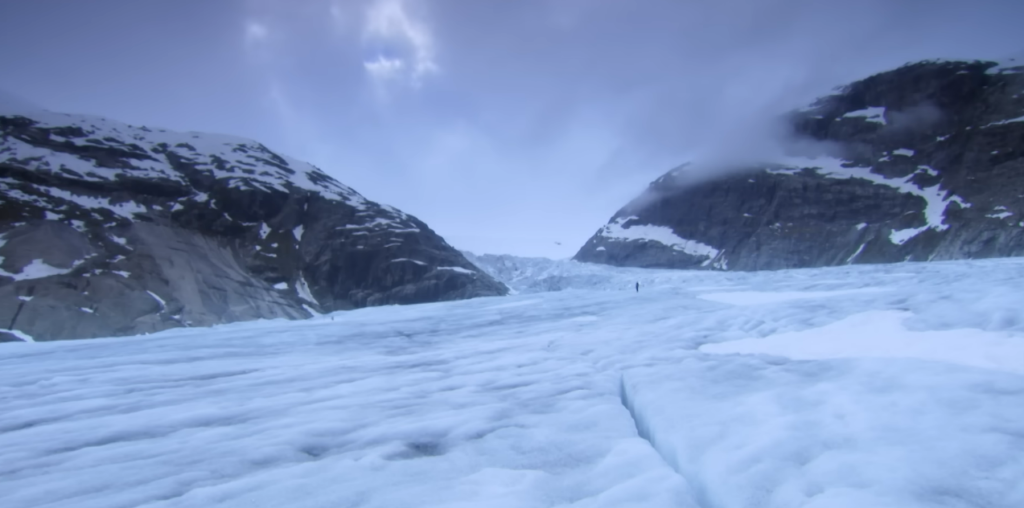
This retreat’s beat isn’t consistent. In certain locations, it’s punctuated by catastrophic collapses like the one that rocked Marmolada in 2022, sadly killing eleven climbers. But basically, it’s quiet deterioration. The kind of shift you don’t notice until you discover a trail no longer curls along an icy ridge but meanders through bare scree.
In recent years, improved weather stations—some perilously perched on glacier surfaces—have obtained real-time data on ice melt patterns. A study on the Amola glacier included a mix of satellite thermal readings, air temperature sensors, and debris-layer thickness assessments. They discovered something quite evident: the ice underneath is melting at quantifiable rates, even under dense rock cover. Buried ice, formerly considered insulated, is succumbing faster than earlier models projected.
By exploiting methods like luminescence dating, researchers have even tracked material buried beneath glacial ice for centuries. At Miage Glacier, clasts showed transport histories that span back thousands of years. Some parts were preserved for generations before migrating through frozen rivers of time. Now they’re surfacing again—testimony to the glacier’s last retreat.
There are very serious consequences for the ecosystem. For background, consistent snowmelt and glacial runoff are critical to hydropower in northern Italy. The Adda River, for instance, supports both electrical generating and agricultural irrigation. When that flow weakens, so does the region’s ability to manage seasonal water supply and demand. Power shortages during warmer months are becoming more common—and more consequential.
Additionally, there is an urgent ecological layer. Dead zones do not exist in glaciers coated in debris. They host microbial life, insects, and specialized plants that thrive in these frigid, high-altitude settings. These ecosystems are generally neglected, although they are surprisingly durable and beautifully balanced. When the glaciers disappear, their biodiversity also disappears. And replacement isn’t possible—at least not in any meaningful time frame.
I recall looking at an observation screen from 2005 that still displayed the borders of the Forni Glacier while I was standing above it. What was once a solid white tongue of ice was now merely a shadow, receding further than the marker could reach.
Yet the story isn’t totally one of gloom. In response, communities in the Alpine areas are being creative and conscious. In portions of the Aosta Valley, local groups have established heritage routes that track glacier movement over time, converting loss into education. These programs are not only about tourism—they are about establishing long-term stewardship.
Engineers are also developing new types of high-altitude water storage and ice-preserving technology. One pilot project tested geotextile blankets to screen glacier surfaces from direct sun. The idea was very successful in maintaining mass throughout the summer, despite its small-scale application. It’s not a solution, but it displays a willingness to act, and act creatively.
More broadly, Italian authorities are acknowledging the threat with increasing urgency. There has been an increase in strategic investment in climate monitoring at high altitudes lately. And while the budget may not yet reflect the severity of the problem, the endeavor itself is considerably improved from five years ago.
For young Italians growing up close to the mountains, this is more than simply a scientific story; it’s a changing aspect of who they are. The study of glaciers is increasingly taught in schools. Children visit ice tunnels and listen to interpreters explain what permafrost used to feel like underfoot.
From a scientific standpoint, most smaller glaciers are likely beyond saving. Even if emissions were dramatically cut today, atmospheric conditions already locked in decades of continuing melt. But resignation isn’t the only road ahead.
Local governments, academic organizations, and even mountaineering clubs are creating new connections with these quickly changing environments through strategic adaptation. This doesn’t merely conserve knowledge—it inspires purpose.
It’s possible that Italy’s Alpine glaciers will never fully recover. But by understanding them, measuring them, and above all remembering them, we can find amazingly effective strategies to conserve what remains and prepare for what’s next.
Disclaimer
Nothing published on Creative Learning Guild — including news articles, legal news, lawsuit summaries, settlement guides, legal analysis, financial commentary, expert opinion, educational content, or any other material — constitutes legal advice, financial advice, investment advice, or professional counsel of any kind. All content on this website is provided strictly for informational, educational, and news reporting purposes only. Consult your legal or financial advisor before taking any step.
