

Now, the Elizabeth line—measured, reliable, and surprisingly vital—pulses through London like a second heartbeat. Crossrail has finally fulfilled its promises of quicker travel times, easier transitions, and noticeably better connection after years of public scrutiny, fluctuating dates, and constant financial recalibrations.
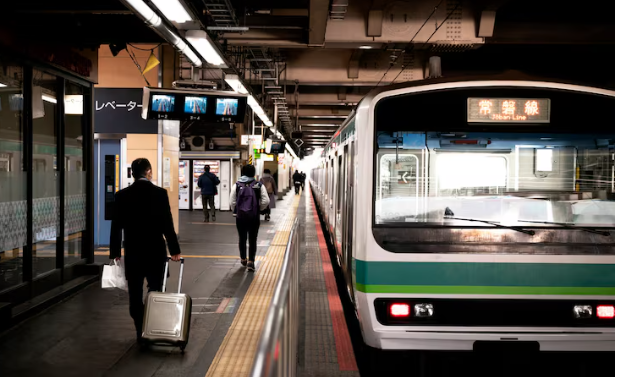
It was simple to forget throughout the launch delays that this railway was about more than just speed; it was about bringing together locations that, although geographically close, frequently felt emotionally far. From the bustle of Heathrow to the commuting buzz of Shenfield, it now requires fewer transfers, fewer assumptions, and much less time to navigate a once fragmented metropolis.
| Attribute | Details |
|---|---|
| Project Name | Crossrail (Elizabeth line) |
| Launch Milestones | Central section: May 24, 2022 / Full route: May 2023 |
| Final Cost | £18.8 billion (28% over original 2010 projection) |
| Network Size | Over 100km of track, including 42km of new tunnels |
| Station Investment | 10 new stations, 31 upgraded |
| Capacity Gain | Boosted London’s rail capacity by 10% |
| Ridership Volume | 350 million+ journeys within two years of full opening |
| 2026 Service Enhancements | More peak trains, 10 new Class 345 trains, early work on Crossrail 2 |
| Source | https://www.crossrail.co.uk |
The capital has quietly accomplished something incredibly ambitious, with 42 kilometers of freshly excavated tunnels beneath its feet. The stations themselves—Canary Wharf, Farringdon, Tottenham Court Road—aren’t merely updated; they’re redesigned. Exceptionally clear signs, generous platforms, and barrier-free architecture provide for a commuting experience that feels amazingly successful for regular users and first-timers alike.
Over the past decade, London’s infrastructure has encountered the same public fatigue that long-term initiatives tend to invite: first adulation, then doubt, and eventually indifference. But since the Elizabeth line’s full integration in 2023, something has shifted. After over 350 million trips, the excitement is more about dependability than novelty. This isn’t only a gain for engineers or municipal planners. It’s a reorganization of daily existence.
By dramatically reducing journey times across zones, the railway has facilitated wider employment commutes, extended housing choices, and redefined the distance between settlements. A family in West Drayton now sees a day excursion to Canary Wharf not as a logistical nightmare but as an everyday Saturday plan. The line is particularly advantageous to people balancing hybrid schedules, giving amazingly steady service that suits the stop-start rhythm of post-pandemic habits.
And as of early 2026, the expansion isn’t slowing. Transport for London has stated that more morning peak services will reach under-served west London stations such Southall, Hanwell, and Acton Main Line. This tailored service enhancement responds directly to high-volume commuter data. The delivery of 10 new Class 345 Aventra trains—scheduled to roll out later this year—underscores that this isn’t a finished project, but a developing ecosystem.
Through intentional scaling, TfL is changing the spine of the capital’s daily mobility to reflect actual patterns—not hypothetical models put up a decade ago. It’s a notably responsive method.
I remember, probably in late 2023, hopping off at Woolwich Station during a dreary Tuesday afternoon. There was a moment of silence during which I became aware of how calm everything seemed—tidy, effective, and free of any sense of urgency. For a minute, it felt more like a central airport than a commuter hub. That consistency and serenity stayed with me.
As we look to the future, the proposed Crossrail 2 project is like a younger brother trying to figure out where they fit into the family tradition. The revolutionary potential of this north-south connection, which is still in pre-construction, may someday equal or surpass that of the Elizabeth line. It promises to reduce congestion on Victoria and Northern lines, giving new pathways for circulation through the capital’s overstressed heart.
But today’s Elizabeth line stands as proof that long bets on public infrastructure, when executed with care and recalibration, can be both extremely adaptable and shockingly economical in human terms. Not only does it free up time—it reclaims it.
The scale of change is difficult to completely capture until it’s already happening. What once took forty minutes now takes twenty. Where passengers traditionally counted platform changes, they now plan direct journeys. These aren’t merely logistical improvements—they’re moments of recovered serenity, clarity, and control.
In the context of climate goals, too, the implications are impossible to ignore. Every new rider diverted from auto or bus to rail improves London’s lower-emission future. With electric trains operating at high frequency, the line represents a step toward a highly efficient, less polluting metropolitan paradigm.
Through meticulous project management—despite its detours—and adaptive reinvestment, Crossrail has turned from a political football into a working backbone. And probably most significantly, it’s done so without boasting about its accomplishment. That modesty is appropriate. No loud branding. No overpromised slogans. Just stations that work, trains that show up, and journeys that develop exactly as intended.
This subdued modernity feels remarkably fresh for a city that is frequently characterized by layers of history and elaborate Victorian complexity. And perhaps that’s the best measure of progress: when something radical arrives not with fanfare, but with ease.
Disclaimer
Nothing published on Creative Learning Guild — including news articles, legal news, lawsuit summaries, settlement guides, legal analysis, financial commentary, expert opinion, educational content, or any other material — constitutes legal advice, financial advice, investment advice, or professional counsel of any kind. All content on this website is provided strictly for informational, educational, and news reporting purposes only. Consult your legal or financial advisor before taking any step.
