

During a late-night wildfire monitoring briefing a few years ago, an engineer discreetly acknowledged that the fire line had frequently already changed by the time response teams received satellite pictures. Across borders and agencies, that irritation turned into a pivotal moment. The idea that researchers started posing was surprisingly straightforward: what if satellites didn’t wait to be informed of what was important?
Satellites have gradually transitioned from passive collectors to active players during the last ten years, thanks in large part to onboard processing power that can evaluate photos while in orbit. These systems now filter information instantly, choosing what is vital and eliminating what can wait, thus cutting down on response times, as opposed to transmitting every raw pixel down to Earth.
Having been educated on thousands of previous disasters, machine learning is at the core of this shift, silently picking up patterns that human analysts previously had to painstakingly look for. Similar to a swarm of bees rearranging itself around the most important duty, the satellite detects floodplains, burn scars, broken bridges, and damaged highways practically quickly and modifies its own timetable.
While an emergency is still developing, satellites can concentrate on the most impacted areas by automatically prioritizing imaging. This independence is especially helpful in situations where traditional command chains weaken under pressure, such as when ground connection is disrupted or clogged, which frequently occurs following earthquakes or strong storms.
| Detail | Description |
|---|---|
| Innovation | Satellites are now being trained with artificial intelligence to think independently during emergencies. |
| Purpose | Enhance speed and efficiency of disaster response by enabling satellites to analyze data onboard and make autonomous decisions. |
| Technologies Used | Onboard processing units, machine learning algorithms, real-time data filtering, autonomous scheduling. |
| Practical Impact | Faster damage assessments, communication continuity during network failures, predictive alerts, better-targeted relief efforts. |
| Organizations Involved | NASA, ESA, International Charter: Space and Major Disasters, Ubotica Technologies, various space-tech researchers. |
| Reference Link | NASA Science |
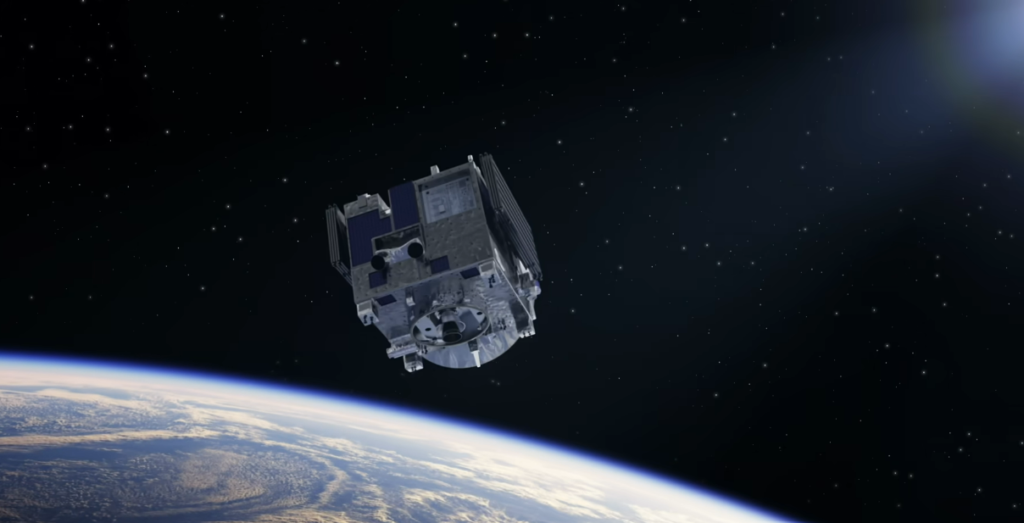
Satellites with onboard intelligence were able to generate useful damage maps in minutes instead of hours during previous flood occurrences. Rescue boats were able to bypass inaccessible roads and reach remote settlements faster thanks to the unusually clear visibility, while relief shipments were directed with noticeably better accuracy, according to emergency coordinators.
Failures to communicate are still one of the most deadly effects of disasters. When power grids or cellular towers fail, satellites are frequently the only connection left. When terrestrial systems go silent, smarter satellites can detect damage to infrastructure from above and provide interim communication routes, proving to be incredibly dependable.
This independence is remarkably revolutionary for relief organizations operating in isolated areas. Responders get prioritized information nearly as events happen, much faster than previous systems ever permitted, and frequently while conditions on the ground are still changing, as opposed to being asked for data and waiting for approval rounds.
Alongside these technological advancements, international cooperation has quietly grown. In times of emergency, several nations can contribute data via shared satellite frameworks, guaranteeing coverage even in the event that one system is down. Response capacity has become extremely flexible thanks to this paradigm, allowing it to adjust to crises on different continents without having to renegotiate access in the midst of chaos.
Satellites now track heat signatures in almost real-time during wildfire monitoring, modifying image angles as flames move in response to wind. This flexibility—which is very creative in its design—has enabled firefighters to predict the movement of the fire instead of responding after damage has occurred, saving time that frequently results in the saving of lives.
The ability to predict is also getting better. Satellites are able to identify situations that frequently precede landslides or flash floods by combining historical data with real-time observations. Previously hidden in databases, these early warning signs are now automatically highlighted, providing communities with valuable time to be ready or flee.
When I read about a satellite that detected small changes in the terrain that humans might have written off as noise, I felt quite reassured.
Researchers are cautious to stress that satellites are not taking the place of human judgment because the delicate balance between human monitoring and machine autonomy still exists. They are simplifying the decision-making process instead, allowing human specialists to concentrate on strategy instead of analyzing facts under duress.
When compared to constructing redundant ground infrastructure, these systems are also surprisingly inexpensive for emergency organizations with tight budgets. Once launched, a single intelligent satellite can provide highly effective coverage across several regions without requiring continuous intervention.
It has taken years of laborious work to train these systems, classifying photos from previous catastrophes and honing algorithms via trial and error. With lessons learned in one area influencing quicker reactions in another, each crisis feeds the subsequent advancement, generating a feedback cycle that continuously improves global readiness.
Researchers anticipate that satellites will become even more autonomous in the upcoming years, sharing work dynamically and collaborating with one other. When they work together, they might act as a dispersed nervous system in orbit, detecting disruption and reacting before human teams fully understand the scope of what is happening.
This change is noteworthy because of the confidence that underpins it, not just the technology. Relying on satellites to make important decisions reflects a wider recognition that, in emergency situations, speed can be more important than perfect certainty if it is guided correctly.
Teaching satellites to think is no longer an experiment as disasters become more complicated and common. This evolution is becoming essential, subtly changing the way assistance is provided when all other options have been exhausted.
