

These days, there’s a good chance the person taking your money isn’t reaching for a card machine if you walk into nearly any small coffee shop or weekend market stall in a mid-sized American city. They have their phone in their hands. Only their phone. The transaction is completed in a split second with a tap, beep, and vibration. No need to carry any hardware. No plug-in terminal. There’s no need to wait for a Bluetooth connection to catch up.
Since Apple first released the feature in the US in 2022, it has been subtly expanding throughout North America. This is iPhone Tap to Pay in its most common form. The technology was introduced to Mexico, a market of millions of small and medium-sized enterprises that typically operate with tight margins, constant mobility, and very little appetite for the upfront cost of physical payment hardware, in the most recent expansion, which was announced on March 24, 2026. The rollout essentially completes Apple’s contactless acceptance coverage throughout the continent. Although the company didn’t publicly announce this milestone, it is significant to anyone considering the future of business payments.
iPhone Tap to Pay — Key Facts & Information
| Category | Details |
|---|---|
| Feature Name | Tap to Pay on iPhone |
| Developer | Apple Inc. |
| Launched | 2022 (US); gradually expanded internationally |
| Latest Expansion | Mexico (March 24, 2026) — completing North America rollout |
| Compatible Devices | iPhone XS or newer |
| Minimum iOS Requirement | iOS 16.5 or later |
| Payment Types Accepted | Contactless credit/debit cards, Apple Pay, Google Pay, Samsung Pay, NFC-enabled digital wallets |
| Hardware Required | None — iPhone only |
| Technology | NFC (Near Field Communication) |
| Supported Platforms | Stripe, Square, PayPal Zettle, Adyen, Clip, Mercado Pago, Visa Acceptance Platform, and others |
| Transaction Limits (Square) | Up to $50,000 per contactless transaction |
| Data Storage | Card numbers and transaction details are not stored on device or Apple servers |
| Official Apple Page | Tap to Pay on iPhone — Apple |
| Square Setup Guide | Accept Payments with Tap to Pay on iPhone — Square |
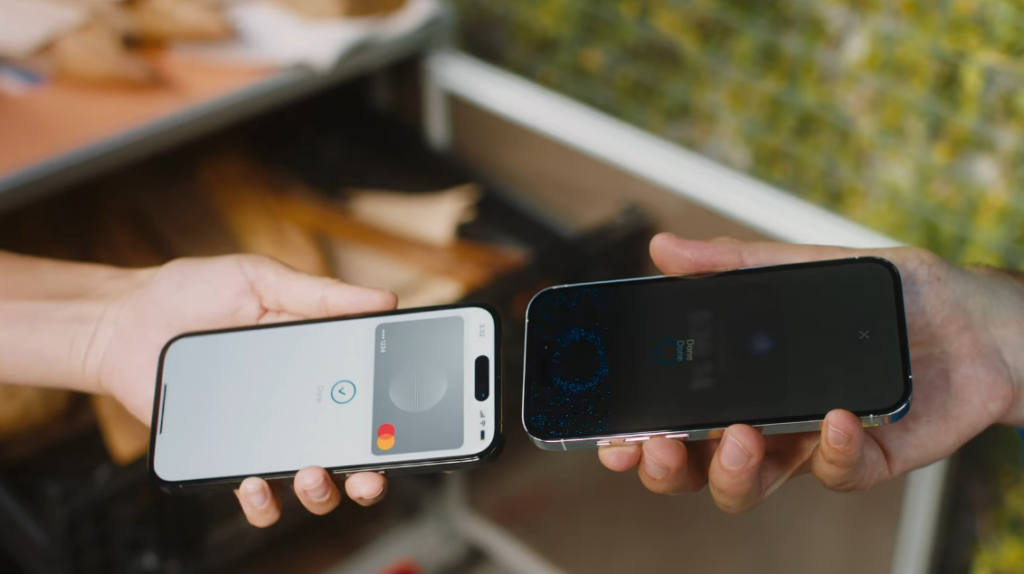
The device’s mechanics are fairly simple. A merchant opens a compatible app, such as Square, Stripe, PayPal Zettle, Adyen, or any of the increasing number of platforms that are supported, inputs the amount of the sale, and asks the customer to tap their card or an NFC-capable device close to the top of the iPhone. the methods of payment. You can send a digital receipt via email or SMS. It takes roughly the same amount of time to describe the entire sequence. Bluetooth pairing, a square white dongle inserted into a headphone jack, or a separate terminal to activate are all absent. Only the phone.
It’s easy to underestimate how difficult it was for smaller businesses to comply with the previous hardware requirement. In the past, a food truck driver, a market vendor, or a freelance photographer collecting a deposit on location had to decide whether to carry specialized card hardware or risk losing clients who don’t carry cash. In most urban markets, the number of people who carry cash at all has been steadily declining for years, making it less dependable as a fallback. On an iPhone, tapping to pay completely eliminates that computation. The merchant already has the phone in his pocket. It has already been charged. It has the app already.
Understanding the security architecture is important, especially for people who are still a little anxious about contactless payments in general. The system uses tokenization and the iPhone’s Secure Element, the same chip-level hardware that manages Apple Pay for customers, to process payments; Apple does not store card numbers or transaction data on the device or on its servers. From the standpoint of a merchant, this implies that there is nothing to backup, nothing to safeguard beyond standard device security, and no additional data liability to be concerned about. Square’s own security guidelines for retailers are particularly detailed: never give your iPhone to a customer; before deeming a transaction complete, wait for the spinning circle, checkmark, and “Approved” confirmation. It reads like guidelines penned by people who have carefully considered potential problems.
When you take into account the size of the informal and semi-formal business economy in Mexico, the expansion seems especially important. The democratization of digital payments for companies that might not otherwise have access to financial technology is the clear objective of Clip, one of Mexico’s top digital commerce platforms and currently one of the supported Tap to Pay processing partners. Adolfo Babatz, CEO of Clip, explained that it’s important to take the framing seriously and that it’s about financial inclusion rather than just convenience. Giving a small business owner a payment method that only requires a phone could significantly alter how those businesses operate in markets where millions of transactions still take place in cash due to circumstances rather than preferences.
Observing all of this, it seems as though the card terminal manufacturers are facing a more serious issue than anyone is making much noise about. Hardware is still sold by Square. Stripe does the same. Adyen agrees. However, every month that Tap to Pay on the iPhone expands into a new nation, integrates with a new platform, attracts a new merchant who gives it a try but never returns, and causes the hardware industry to slightly contract. Physical terminals will continue to exist for some time due to the inertia of current infrastructure, such as in restaurants, retail chains with well-established setups, and locations where several employees share a single point of sale. However, there appears to be a clear direction for the long tail of small businesses.
How quickly adoption will pick up speed is still unknown, especially in more recent markets like Mexico where digital payment infrastructure is still developing. Since offline payments are not supported, stable internet connectivity is a true prerequisite for Tap to Pay on iPhones, which poses a serious problem in places with patchy coverage. However, considering how rapidly urban connectivity has spread throughout Latin America in the last ten years, it is unlikely that this restriction will remain a significant barrier for very long. The iPhone Tap to Pay is one of the clearer examples of this trend in recent memory. The larger arc here is one of gradual simplification, with payments becoming lighter, faster, and more difficult to interfere with.
