

The plane took off with hardly a sound. Just a clear ascent into the sky, no fuel burn, no jet boom. And without requiring a single battery change, it touched down 250.64 kilometers later. This was a turning point for many in the aviation industry, not merely a piece of data.
Prosperity 4 from AutoFlight didn’t aim to be ostentatious. There was no need for it. Its vertical takeoff, cruise, and landing all happened with amazing regularity, demonstrating that electric aviation is about staying in the air with purpose rather than merely taking off. More and more, this goal focuses on cutting emissions, minimizing noise, and reinventing the way people experience regional travel.
The topic of sustainable flight has changed in recent months. The focus now is on how far, safely, and commercially electric aircraft can fly, rather than if they can fly at all. Prosperity 4’s discreetly surpassing the range of any known eVTOL aircraft without the need for complicated mid-air solutions or battery swaps offered a particularly obvious alternative.
The ability to cruise steadily at speeds of more than 200 km/h provided a preview of what short-haul routes would look like in the coming years. Imagine a 40-minute electric jump between cities instead of a two-hour vehicle ride. Not only would the experience be quicker, but it would also be more quieter and cleaner—so much so that your phone conversation onboard might not be interrupted.
| Record Set | 250.64 km (155.74 miles) on a single charge |
|---|---|
| Aircraft | AutoFlight Prosperity 4 eVTOL |
| Flight Type | Fully electric vertical takeoff and landing |
| Previous Record | 248.8 km by Joby Aviation (2021) |
| Launch Date | March 2023 (Shanghai, China) |
| Significance | Longest eVTOL flight without battery swap |
| Reference | Yicai Global |
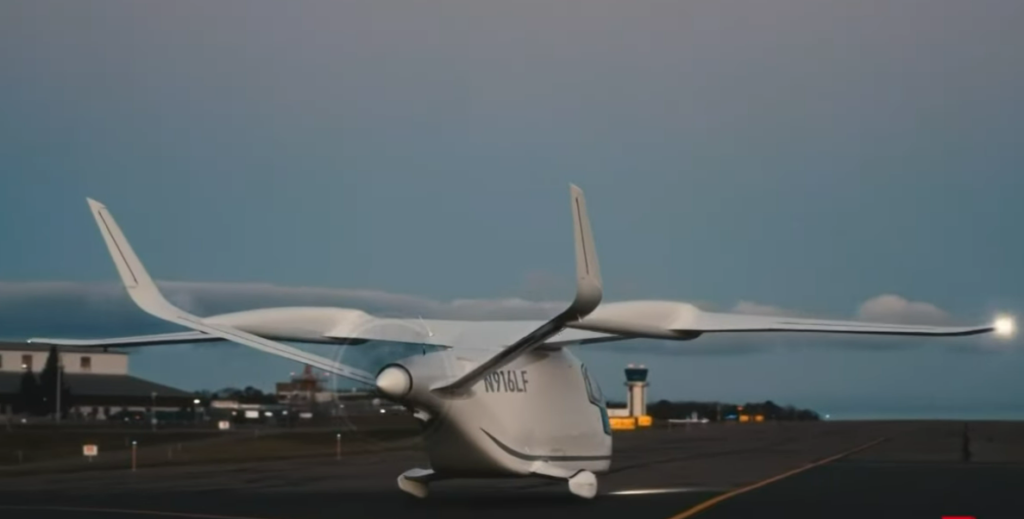
Another Australian electric plane, called “Bobby,” attracted attention during the same season when it traveled almost 1,400 kilometers across isolated regions while stopping in rural locations to recharge. The goal of that flight was to map out a future for remote villages where airplanes are lifelines, rather than to break a record. Even yet, it brought to light the difficulties in infrastructure: landing strips were cut into dusty fields, weather patterns fluctuated with unpredictable patterns, and mobile chargers had to be airlifted in.
AutoFlight’s run, on the other hand, was very effective. They posted an uncut, unaltered video of the flight. Just an ongoing trip that highlighted how design and energy management are working together to transform aviation. This was mature behavior for a technology that is sometimes said to as fledgling.
Importantly, the accomplishment went beyond theory. Despite the existing battery restrictions, it demonstrated that an airplane could actually traverse practical business routes. That flight range includes cities like Boston and New York or Paris and Brussels. Additionally, operators can plan routes much more easily because they can fly without the hassles of a battery switch.
Long-haul electric flight is still technically challenging, according to the majority of engineers. Jet fuel continues to perform significantly better than batteries due to its incredibly high energy density. However, the calculation is changing on short and medium routes, where aircraft seldom reach peak cruising altitudes. Significant advancements in battery chemistry, astute aerodynamics, and effective propulsion systems are reducing the performance disparity.
I was particularly struck by how confidently AutoFlight stated its objective. They are not anticipating a miracle in energy. Instead, they are verifying, optimizing, and iterating using what is already available. Their goal of receiving European airworthiness approval by 2025 seems both bold and realistic, especially in light of their current performance history.
In the meantime, solar-powered flight is also gaining popularity. Thanks to portable solar panels and meticulous flight preparation, an electric aircraft in California successfully completed a multi-day voyage using only sunshine. The flight demonstrated a quiet resilience despite not being designed for speed—each kilometer was earned, not borrowed.
Another useful bridge that is starting to emerge is hybrid systems. Recently, Ampaire’s hybrid aircraft, which combines electric and combustion engines, flew for 12 hours, demonstrating how emissions might be reduced without completely redesigning the aircraft. Although the blend is not pure, it is progressive and becoming more effective.
In the grand scheme of things, aviation, which used to be the most obstinate industry when it came to emissions, is now embracing a test-and-learn approach. The goal is to gradually close the distance rather than sprint to the finish line. Additionally, the breaking of such a record indicates that the industry is gaining pace as well as altitude.
From a business perspective, this milestone signifies more than just range. It emphasizes customer satisfaction, operational flexibility, and cost savings. By avoiding congested hubs, short-hop electric aircraft may enable more point-to-point trips and lessen travel fatigue. Avoiding battery changes in the middle of a schedule is a game-changer for air taxi operators, who depend on simplicity and dependability.
Nations such as Norway are already establishing deadlines for electrifying all domestic flights. Even while those goals are idealistic, records such as AutoFlight’s transform aspiration into a plan. They offer investors, regulators, and customers a concrete reason to have faith in electric flying and its scalability.
I find myself thinking back to the early days of electric cars as I see this transformation. Even mockers and skeptics were present. But the discussion progressively shifted as the technology advanced and the roads more congested. The air is now starting to do the same.
We’re still not quite there. However, flying 250 kilometers without gasoline, noise, or fumes felt like more than just a headline. It seemed like a promise beginning to hold true.
