

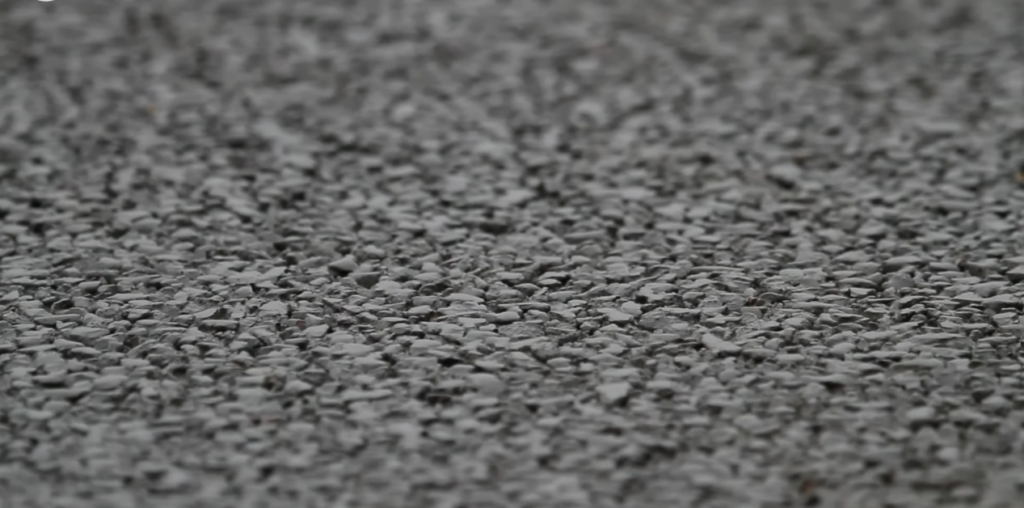
The Penn lab’s gray slab has the same appearance. However, it acts in a very different way. It absorbs and stores CO₂ with silent efficiency thanks to its porous materials, designed geometry, and ancient algae. Once cast and forgotten, concrete is now being used as a climate resistance weapon.
This change has been molded by Penn researchers utilizing diatomaceous earth, or fossilized algae, and geometrically precise 3D-printed structures. Because of their strength and great porosity, the resultant forms may absorb carbon dioxide from the atmosphere while supporting heavy loads. The concrete’s actual strength increase as it absorbed more CO₂ was what most surprised me as I read through the lab papers and interviews.
People were initially taken aback by this seemingly incongruous detail. Nevertheless, when considering mineralization, it makes sense—CO₂ reacting with reactive substances to create carbonates that fortify the substance. It heals instead of deteriorating.
Their efforts are a part of a bigger change. According to MIT researchers, concrete in existing buildings across the United States already passively absorbs about six million tons of CO2 annually. The potential is subtly immense, despite the modest pace.
Key Facts About Carbon-Capturing Concrete
| Category | Details |
|---|---|
| Innovation | Concrete formulas that absorb and destroy CO₂ by incorporating reactive materials. |
| Core Materials | Diatomaceous earth, biochar, magnesium silicates, carbon-injecting agents, bacteria. |
| Lead Institutions | University of Pennsylvania, MIT, UCLA, Northwestern University, Washington State University |
| Key Benefits | CO₂ removal, cement reduction, structural strength, marine habitat potential. |
| Technologies Used | 3D printing, biomineralization, polyhedral graphic statics, carbon injection, post-tensioning |
| Potential Uses | Infrastructure, facades, marine restoration, structural panels, urban design. |
| Credible Source | Penn Today – Designing Greener Concrete |
Penn’s strategy greatly shortens that timetable. They choose bio-based materials that open up additional mineralization pathways, and their lattice designs maximize surface exposure. Using 68% less cement, their concrete absorbed up to 142% more CO₂ in tests than conventional samples. That’s revolutionary.
They are utilizing natural design concepts, such as coral patterns, sea-star symmetry, and even historic architecture, in addition to material science through creative engineering. These are not decorative details. They boost performance.
Another team at Northwestern is producing clean hydrogen while utilizing seawater to fuel concrete manufacturing. A carbon-rich substance called biochar is being used by engineers at Washington State to more actively absorb pollution.
Additionally, captured CO2 is injected straight into fresh concrete by CarbonCure, a business that is already in business, where it reacts and becomes irreversibly mineralized. The fundamental objective of these various approaches is very similar: re-engineer concrete as a climate ally.
Penn’s version is especially inventive because of its adaptability. It can serve as habitat in marine environments, supporting oyster beds and repairing reef structures. Concrete becomes something that gives back to the Earth rather than something we take from it in this way.
Blocks and panels aren’t where the research team ends. Larger-scale buildings, floors, walls, and facades are part of their future plans, all of which are intended to actively lower atmospheric carbon over many years. Even zero-cement alternatives are being investigated, in which recycled or bio-based materials are used in place of binders completely.
Their approach is not just excellent scientifically, but it is also exquisitely multi-layered. Strength, sustainability, and elegant design all come together. Maybe that’s why it seems so subtly promising. Concrete is changing for more reasons than that. The adjustment is the result of careful consideration.
By transforming a static material into a dynamic climate solution, researchers are providing agency, which is uncommon in infrastructure. In the near future, buildings may be involved in environmental repair. And one day, the buildings that surround us might breathe with us.
Disclaimer
Nothing published on Creative Learning Guild — including news articles, legal news, lawsuit summaries, settlement guides, legal analysis, financial commentary, expert opinion, educational content, or any other material — constitutes legal advice, financial advice, investment advice, or professional counsel of any kind. All content on this website is provided strictly for informational, educational, and news reporting purposes only. Consult your legal or financial advisor before taking any step.
