

The lab has the vibe of an ambitious greenhouse rather than a fashion workshop. Trays lay in precisely regulated light and humidity, and beneath that peaceful environment, mycelium was growing gradually into dense networks that would eventually resemble leather. Its simplicity was extremely effective.
Using mycelium, Dutch researchers are growing lab-based leather from fungi to produce sheets that remarkably resemble real hides in terms of texture and suppleness. They use organic substrates to guide fungal development instead of cattle and chemical tanning, then press and dry the resulting material to create a material that is both biodegradable and incredibly durable.
| Category | Details |
|---|---|
| Initiative | Lab-Grown Leather from Fungi (Mycelium-Based Material) |
| Location | Netherlands |
| Core Technology | Cultivated mycelium integrated into bio-based leather structures |
| Key Focus | Replacing polyurethane coatings with fungal alternatives |
| Environmental Aim | Reduce plastic use and improve biodegradability |
| Industry Context | Part of emerging alternative leather market (mycelium, plant-based, microbial, lab-grown) |
| Market Outlook | Vegan bio-based leather projected strong growth through 2034 |
| Applications | Fashion, footwear, upholstery, accessories |
| Research Collaborations | Dutch designers, biologists, university labs |
| Sustainability Goal | Fully biodegradable, scalable leather alternative |
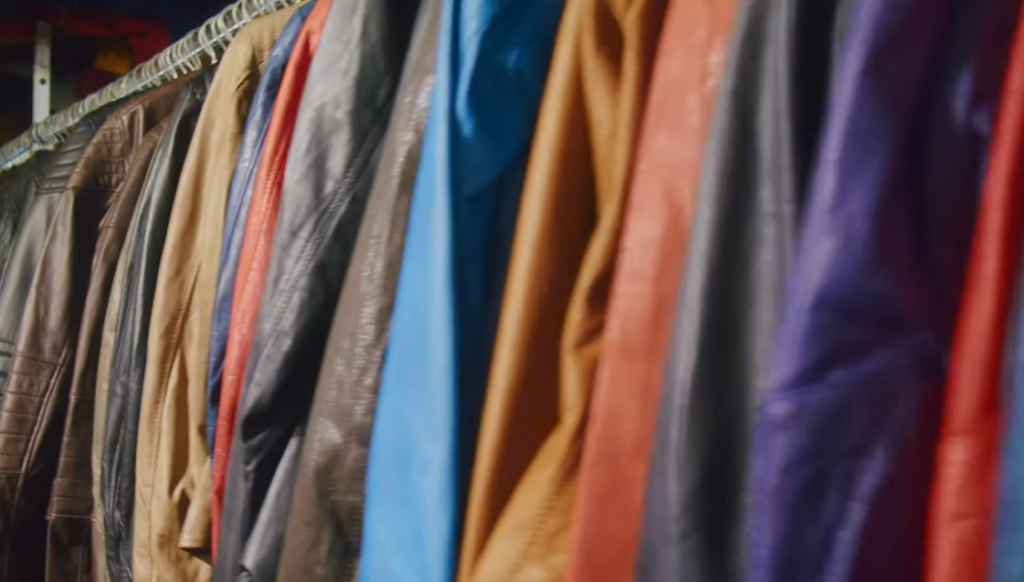
Beyond its texture, leather has always been heavy. It stands for skill, prestige, and even fortitude. However, over the last ten years, there has been a greater focus on emissions, deforestation, and harmful tanning methods. Vegan leather made of plastic made an effort to solve ethical issues, but it also brought up disposal issues and a reliance on petrochemicals that were equally worrisome.
Because it does more than just swap out one material for another, this Dutch endeavor feels very inventive. The entire logic of production is rethought. Researchers turn garbage into structure by growing fungi on agricultural waste, which simplifies processes and frees up human talent to concentrate on design rather than extraction.
The coating technique is the most promising development. Polyurethane is necessary for many plant-based leathers to be water resistant, which compromises their biodegradability. Fungal coatings that naturally encircle the cellular structure and create a very dependable barrier without the need for plastic reinforcement are being tested by Dutch researchers.
The use of renewable energy has increased dramatically over the last ten years, and fashion is moving toward biological alternatives in a very similar way. Infrastructure is becoming the topic of discussion instead of trends. These days, material science shapes silhouettes just as much as designers do.
I recall experiencing a glimmer of surprise at how commonplace it appeared when I gently bent a sample square.
The point is exactly that it’s ordinary.
The success of sustainable materials depends on their ability to function without the need for spectacles. Rain, friction, and time are all things that mycelium leather must endure. To guarantee surfaces are remarkably clear in finish and noticeably stronger, researchers are modifying growing durations, testing post-treatments, and fine-tuning density.
Dutch labs are steadily scaling growth chambers through strategic relationships with companies and universities. It’s like growing a crop, but the product goes into ateliers instead of supermarkets. Theoretically, it is very efficient, but industrial consistency is still an issue.
Securing funding is still the largest challenge for early-stage entrepreneurs, but this market has drawn a lot of investment. Through 2034, analysts predict that the manufacturing of vegan bio-based leather may expand at a remarkable rate due to brand pledges and consumer expectations.
The material is quite versatile, according to designers. It can be dyed using vegetable pigments, embroidered, and embossed. It performs in ways that are far faster to create than rearing cattle and processing hides, and it may be used to make upholstery, shoes, and purses.
The sustainability argument is very advantageous. Emissions of methane are greatly decreased. The use of chemicals is reduced. The material’s ability to spontaneously degrade under controlled circumstances at the end of its useful life is in line with the circular economy principles that Dutch officials have long supported.
However, tension is introduced by scaling.
It is crucial to keep growing chambers sterile. Even slight changes in humidity can change texture. Careful calibration is necessary to achieve consistent thickness over big sheets. However, engineers report that the workflow has significantly improved with each iteration, observing quantifiable improvements when comparing early prototypes to current examples.
Teams optimize nutrition mixes and drying curves by using advanced analytics to track fungal growth patterns in real time. Although additional efficiency improvements will be necessary for full commercialization, data-driven cultivation makes the process surprisingly economical at the pilot size.
The entire industry is keeping a close eye on it.
There is pressure on major fashion businesses to lessen their environmental impact. Bio-based interiors are being investigated by automakers. Adoption may grow quickly if mycelium leather passes stringent testing and is shown to be remarkably durable.
Millions of people adopted remote work during the pandemic, which changed customer behavior and increased supply chain scrutiny. Brands are now looking for materials that are sustainably produced and supplied transparently as a result of this scrutiny.
The Netherlands provides an ideal environment for this kind of testing. Byproducts of agriculture are easily accessible. Circularity is emphasized in design schools. Labs are transformed into hybrid studios where biology and aesthetics collide as scientists and creatives work together seamlessly.
There is still some skepticism. Customers will inquire as to whether fungus leather ages well. Investors will want precise deadlines. Conventional leather manufacturers could be resistant to change. However, rather than happening all at once, progress frequently happens gradually.
