

The flow of life in Uvalde was permanently altered when a youngster entered Robb Elementary School late one morning in May 2022. He opened fire on fourth-grade classrooms while carrying a lawfully obtained gun that was almost exactly like those used by armed forces. The pain lasted, and the sequence was quick.
The 18-year-old who carried out the shooting, Salvador Ramos, was well-known in the community. He had been raised there, assimilating into a community that now finds it difficult to balance the noise of his aggression with the tranquility of his presence. His history showed a young man who had gradually fallen apart, first emotionally, then socially, and last destructively.
He had a history of tantrums that never progressed to official involvement, and he was said to have been bullied and reclusive. Former students remember a boy who silently wandered the high school hallways, frequently singled out for criticism due to his attire or speech pattern. He had already left by graduation. He purchased the weapon shortly after his birthday.
He gathered ammunition, protective clothing, and a chilling strategy over the next few days. Online cues included cryptic messages, unsettling pictures, and even direct remarks to other people, but none of them produced a significant warning. There were the dots, but they were still disconnected.
| Item | Verified Information |
|---|---|
| Date | May 24, 2022 |
| Location | Robb Elementary School, Uvalde, Texas |
| Victims | 19 students and 2 teachers killed |
| Shooter | Salvador Ramos, age 18 |
| Weapon | AR‑15‑style rifle (legally purchased shortly before the attack) |
| Police Response | Delayed entry; extensive reviews and investigations followed |
| Ongoing Proceedings | Criminal and civil cases related to law‑enforcement response |
| Credible Reference | Texas Tribune reporting on Uvalde (May 2023) |
The fact that so many of those indications were evident in real time is very concerning. Platforms failed to recognize the larger ramifications while allowing bad behavior to reverberate. Some of those digital footprints might have prompted assistance, investigation, or at the very least a delay under a more proactive approach.
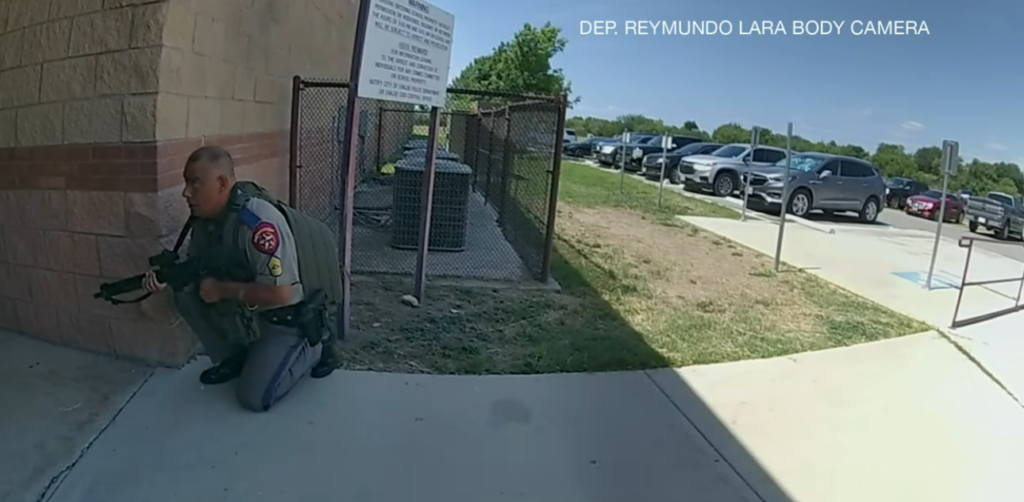
The gunman drove to the school after shooting his grandma in the face early on May 24. He was seen with his firearm after crashing close to the campus. There were several 911 calls after that. Nevertheless, it took more than an hour for police to break into the classroom where he had taken refuge. Two instructors and nineteen children were shot and killed in that hour.
The police response received harsh criticism and was somewhat delayed. Chains kept doors closed, radios malfunctioned, officers waited in corridors, and orders clashed. The gunman continued to fire. Inside, scared kids were using their teacher’s phone to dial 911. Parents outside begged to be admitted.
Some districts have since enhanced agency coordination through greater crisis training and strategic alliances. Uvalde’s response prompted changes to command structures and communication procedures by providing a sobering example of what should never be done again.
I recall stopping to consider how a nation so well-equipped could still be so unprepared at one point while reading the after-action reports.
Since then, investigations have shown both personal reluctance and systemic shortcomings. Prosecutors investigated whether criminal negligence contributed to the disastrous reaction and charged some policemen, including Adrian Gonzales. In times of mass tragedy, these trials now explore the limits of legal culpability.
However, no matter how comprehensive, trials are unable to fill in all the gaps. Why was it so easy for a young man with a history of instability to buy a weapon? Why were mental health issues identified but not taken further? Why did digital companies that had billions of dollars in infrastructure miss obvious warning signs?
The anatomy of mass shootings has grown quite familiar to the United States during the last ten years. Although the causes are intricate, the access is remarkably straightforward. The rules pertaining to gun ownership in Texas tend to be less restrictive. Training, waiting periods, and psychiatric testing are not required. Preparation is assumed automatically.
This incident has changed the definition of urgency in relation to school safety. Districts have revised emergency entrance procedures, employed more security guards, and implemented AI-powered video systems. Even while these actions can appear reactive, they have greatly shortened the time it takes to react in the event of a threat. However, the issue still stands: are we addressing the underlying causes or just the symptoms?
The establishment of school-based mental health facilities, which are intended to assist families as well as kids, is one particularly creative endeavor. These programs acknowledge that early intervention is considerably more successful than punishment at a later stage. Research indicates that they are quite effective at lowering dropout rates and behavioral problems.
However, the harm that has already been done cannot be repaired. In Uvalde, the youngsters who were killed were just nine or ten years old. Cartoons, summer plans, and their favorite snacks influenced their dreams. They should not be reduced to a footnote in a blaming cycle.
Many of their families, surprisingly, have used their loss as a catalyst for advocacy. They have held vigils, addressed summits, and lobbied lawmakers in an effort to bring about change in addition to grieving. Their voices are now a constant, powerful reminder that everyone needs public safety, regardless of party affiliation.
Researchers and policy experts are developing more accurate predicting systems by utilizing data from previous tragedies. They are conducting behavior analysis, combining threat patterns, and advocating for more intelligent legislation. Though gradual, progress is clearly being made.
As is frequently the case, the shooter’s identity may eventually disappear from public conversation, but his violent legacy endures. Conversations that were previously avoided are now driven by that memory, which is deeply ingrained in the town. discussions on how to control entry, keep an eye on instability, and create safe spaces without incarcerating people.
We can create environments that feel less reactive and more prepared by implementing new regulations, enhancing training, and paying closer attention to early warning indicators. Not flawless—no system is—but more vigilant, more sympathetic, and harder for tragedy to infiltrate.
