

Unprepared travelers will see a subtle yet important change at U.S. airports in February. Anyone arriving at a TSA checkpoint without a REAL ID or similar document after the beginning of the month will be subject to a new $45 fine. This isn’t merely an additional administrative burden. Either cooperate or pay to improvise—that’s the clear message.
The agency refers to the new procedure as ConfirmID. It provides a temporary fix for travelers who have lost their passport or haven’t updated their license: pay the cost, submit your legal name and travel dates online, and get a confirmation email. For up to ten days of travel, the system confirms identity. It is not a quick pass, though, even after payment. There is no guarantee of boarding, although there is further screening.
The way this policy addresses behavior without actually punishing it is very effective. For more than 10 years, REAL ID warnings have been present in DMV mailers and airport signage, yet they are frequently disregarded or delayed. This charge turns that long-standing hint into a subtle but unavoidable outcome.
The launch has pragmatic wording. Taxpayers shouldn’t be responsible for paying for tourists who don’t comply with federal identification requirements, officials emphasize. At a time when public-sector finances are being stretched thin, that line of reasoning seems especially convincing.
However, it brought back memories of a journey to Dallas a few years ago, when a woman in front of me started crying when she discovered her ID had expired. She was simply exhausted, hurried, and unlucky rather than reckless. Travelers like her will now have to deal with delays in addition to a $45 fee for the additional verification.
| Key Detail | Information |
|---|---|
| Fee Amount | $45 |
| Program Name | TSA ConfirmID |
| Start Date | February 1, 2026 |
| Who It Affects | Air travelers without REAL ID or other accepted identification |
| What It Covers | Identity verification using ConfirmID; valid for 10 days |
| How to Pay | Online at tsa.gov/ConfirmID |
| Risk of Denial | TSA may still deny boarding if identity cannot be verified |
| Purpose | Ensure non-compliant travelers—not taxpayers—cover verification costs |
| Additional Screening | Yes, even with ConfirmID payment |
| How to Avoid the Fee | Bring REAL ID, U.S. passport, military ID, or permanent resident card |
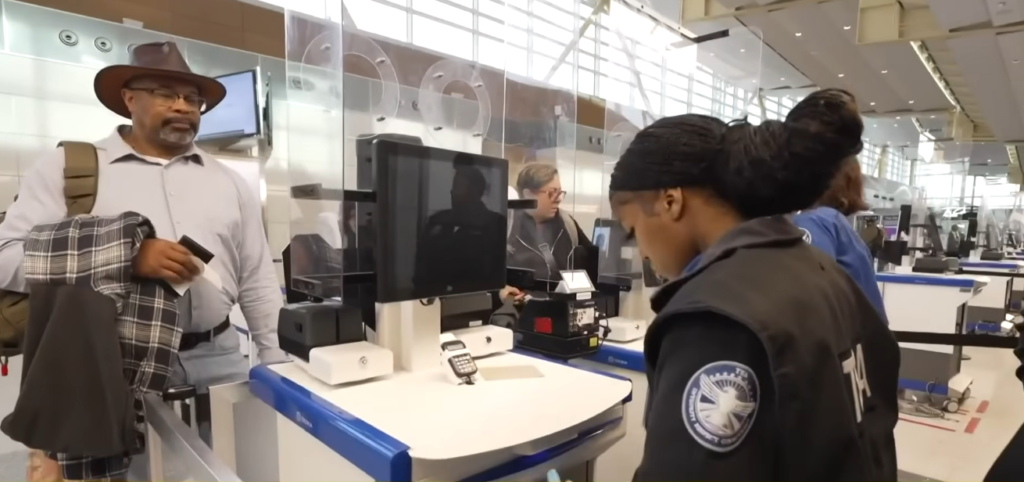
If you’re asking if the cost is worth it for convenience, the answer is firmly yet kindly no. The only thing it does is open a door that may still close based on how convincingly TSA agents can identify you. The organization is clear: no promises, no ID.
The system is especially creative in how it strikes a balance between accessibility and accountability. Prepayment of the charge at tsa.gov/ConfirmID expedites the check-in process. This convenience, however, does not negate the fact that you are being directed through a secondary security procedure, a more subdued indication that the fast lane is reserved for those who have completed the necessary paperwork.
State-level delays and public uncertainty have frequently contributed to the delayed adoption of REAL ID standards during the last 10 years. It makes sense that the federal government’s tolerance is running thin. Through what economics might refer to as a “nudge,” the TSA is trying to hasten behavior change by introducing ConfirmID with a price tag.
For the majority, the message is unmistakable: it’s time for an ID upgrade. Others may feel confused or even punished by the policy, particularly older Americans or those who fly infrequently. Even so, that tension seems expected. There is no profit-making structure behind the fee. Its purpose is to educate.
The TSA is developing a layered approach by incorporating this modification without completely interfering with airport operations. Those that are ready pass with ease. Hesitants pay, both in terms of money and time.
It was also noteworthy to me that the ConfirmID approval is only valid for 10 days. Though it’s brief enough to deter recurrent behavior, it’s long enough to cover a round journey. Regular travelers will quickly figure out how much more cost-effective REAL ID compliance is over time.
The way the method promotes accountability without coming across as harsh is certainly ingenious. Unless, of course, you are completely refused boarding, which is still a possibility if verification is unsuccessful, it makes noncompliance uncomfortable but not disastrous.
Further considerations of the relationship between identity and contemporary travel are also prompted by the deployment. It’s like witnessing two histories play out simultaneously at a period of biometric boarding, mobile passports, and face recognition gates: one for those who are completely equipped and one for others who are catching up.
The $45 fee could act as a resource buffer for medium-sized airports, which frequently have a shortage of staff, alleviating the burdensome manual ID check process. Travelers may not notice this trade-off, but it highlights the logistical constraints underlying the strategy.
Not only has the TSA initiated a revenue-neutral program, but it has also generated awareness through effective execution. Compared to any public advertising campaign, ConfirmID is expected to generate more REAL ID applications.
It’s especially helpful to remember that the cost is per traveler rather than per household. This may mount up rapidly for families traveling with teenagers who might not yet have compliant IDs, which is a clear incentive to plan ahead.
TSA’s action seems well-considered rather than reckless. No, it’s a gentle prod. And maybe for that reason it could succeed.
A small fee is used as a simple administrative tool to promote participation in a long-delayed national ID upgrading. For the first time in years, there is a significant deadline for that upgrade.
