

When the question first appears on a phone screen, it almost seems theatrical: was the Strait of Hormuz closed? There’s nothing theatrical about it, though, out on the water.
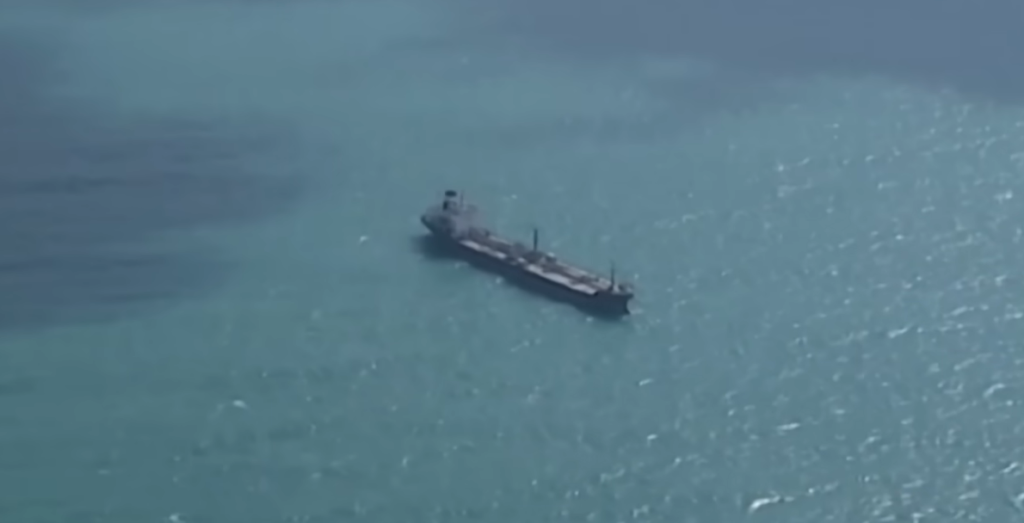
Tankers are idling in loose formations off the coast at dawn, instead of gliding in steady formation toward the Gulf of Oman. Dozens of ships can be seen hardly moving on satellite maps, their digital markers remaining stationary. The ocean appears to be serene. It’s not tense.
Iran has not formally announced that the waterway will be sealed. According to reports, however, Iran’s Revolutionary Guard has radio-warned ships that “no ship is allowed to pass.” The cost of insurance has increased. There is hesitation among shipping companies. Practically speaking, traffic has slowed to a standstill. So, is the Hormuz Strait closed? Depending on one’s definition of closed, yes.
At its narrowest, the strait is only about 33 kilometers wide, and shipping lanes are about two miles wide in each direction. One could nearly convince themselves that it’s just another horizon when standing on the rocky Omani coastline. However, 20% of the world’s oil and a sizable portion of liquefied natural gas are found beneath that body of water.
| Category | Details |
|---|---|
| Name | Strait of Hormuz |
| Location | Between Iran (north) and Oman/UAE (south) |
| Narrowest Width | ~33 km (21 miles) |
| Shipping Lane Width | ~3 km in each direction |
| Global Oil Transit | ~20% of world’s oil supply |
| Key Patrol Force | U.S. Navy Fifth Fleet (based in Bahrain) |
| Monitoring Authority | UK Maritime Trade Operations (UKMTO) |
| Reference | https://www.eia.gov |
| Reference | https://www.ukmto.org |
That number is used so frequently that it may lose its meaning. However, observe how early trading saw an 8–10% increase in oil prices, and the abstraction suddenly feels pricey.
Within hours of the initial reports of attacks on ships near the strait, energy traders in London and Singapore started recalculating. After rising sharply, Brent crude began to decline. The market appears to be anxious but not yet in a panic. It appears that investors think a complete blockade would lead to immediate military action. And for the time being, that belief is keeping prices below the triple-digit mark.
But something has changed.
According to marine tracking platforms, at least 150 tankers have anchored outside the entrance to the strait. There is a certain understated drama to that picture of massive ships waiting, engines running, and crews listening to radio frequencies. There are no visible explosions. Just hesitancy.
This might be more of a warning shot than a resolution.
For decades, Iran has threatened to close the strait, especially when it and the United States are at odds. However, it has never done so completely. Part of the reason is strategic. A prolonged closure would most likely prompt the Fifth Fleet of the U.S. Navy, which is based in Bahrain, to act quickly. There are already American carrier strike groups in the area. The calculus is clear.
And China comes next.
China is the biggest buyer of the oil that passes through the strait, with about half of it ending up in Asian markets. The majority of Iran’s crude exports, frequently at reduced prices, go to China. Closing the strait would cut off Tehran’s own sources of income in addition to those of Western-aligned economies. That contradiction is difficult to overlook. However, history also demonstrates that brinkmanship can intensify in unanticipated ways.
Projectiles striking vessels is one of several incidents near the strait that have been reported by the UK Maritime Trade Operations center. At least one ship has had its crews evacuated. Fear alone has the power to stop traffic, even if the infrastructure is unharmed. The cost of insurance rises. Escorts are waited for by captains. Executives in shipping make cautious remarks.
As this develops, it seems possible that “closure” won’t need a formal declaration. The outcome is the same if enough ships determine that the risk is intolerable.
The effects are immediate onshore. Airlines start examining their fuel hedging plans. Anxiously, central bankers who are already struggling with inflation look at oil futures. Policymakers determine how long reserves can withstand a disruption in countries like Japan and India, where refineries rely significantly on Gulf crude.
The strait is frequently referred to as the most significant oil chokepoint in the world. Although it sounds dramatic, that statement is accurate. This small passageway handles about 20 million barrels a day. A protracted halt might cause oil prices to rise above $100 per barrel. Higher numbers are whispered, albeit quietly, by some analysts.
However, there are ways to get around it.
Some of Saudi Arabia’s exports can be redirected to the Red Sea via its East-West pipeline. A pipeline from the United Arab Emirates to Fujairah completely avoids the strait. Although they lessen the impact, these substitutes don’t take the place of full capacity. That could be one factor preventing a market meltdown. It’s difficult to avoid feeling fragile, though.
Screens on trading floors alternate between commodity charts and missile reports. A drone was intercepted there, a tanker hit here. Every headline feeds a vicious cycle of anxiety by pushing prices up a bit. Perception is just as important to markets as supply.
It’s still unclear if Iran wants to demonstrate its power or cause a long-term disruption. Even a brief closure of the Strait of Hormuz would be a daring escalation that could intensify an already tense regional conflict.
As of right now, the waterway doesn’t seem to be completely open or officially sealed. Ships are moving slowly; some are going back, while others are holding out for more information. Technically, the sea lanes are still passable. But routine has been replaced by caution.
