

Even though John Higgins is now old enough that success in sports is typically discussed in the past tense, he continues to insistently place himself in the present, sitting beneath Alexandra Palace’s brilliant lights as though time had reluctantly decided to grant him another extension.
Even if snooker has evolved around him—becoming faster, more aggressive, more overtly statistical, and influenced more by players who grew up watching Higgins than playing against him—his presence nevertheless modifies the atmosphere of a match in a manner that feels remarkably reminiscent of past periods.
He defeated Judd Trump in the 2026 Masters semifinals by absorbing pressure, rerouting momentum, and patiently waiting for the slightest mistake—like a seasoned chess player calmly allowing a younger opponent to overreach—rather than using brute force. This was especially illuminating.
With the age of fifty, Higgins no longer dominates frames; instead, he manipulates them by time, positioning, and a psychological forbearance that seems to work amazingly well against players who rely on pace and rhythm.
| Detail | Information |
|---|---|
| Full Name | John Higgins MBE |
| Date of Birth | May 18, 1975 |
| Nationality | Scottish |
| Professional Debut | 1992 |
| Ranking Titles | 33 (as of January 2026) |
| Triple Crown Titles | 9 (4 World, 3 UK, 2 Masters) |
| Nicknames | The Wizard of Wishaw, The Kid, The Toughest |
| Latest Highlight | Reached 2026 Masters final after defeating Judd Trump 6-5 |
| Official Website | johnhiggins.org.uk |
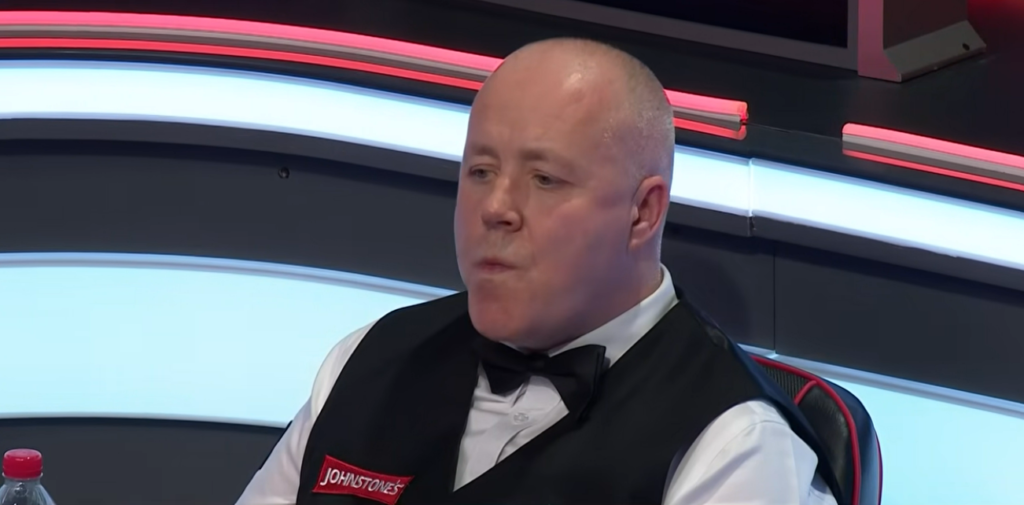
Higgins’ reluctance to panic at 3-0 and then again at 5-3 down, playing each shot as if the score were an administrative detail rather than a verdict, made the comeback itself seem almost incidental.
Snooker has attempted to categorize Higgins into phases for decades, such as prodigy, champion, veteran, and survivor, but none of those terms adequately describe his career, which has been more like a protracted dialogue with the game, occasionally contentious, occasionally cooperative, but never detached.
He was the dominant force in the late 1990s and early 2000s, winning with an authority that felt deliberate rather than theatrical. He collected titles while giving the impression that complexity had been subtly eliminated rather than conquered.
The cycle of revival that has become his defining rhythm was created by that supremacy fading, returning, and then slipping again, with each comeback noticeably improving in subtlety if not necessarily in silverware.
While Higgins’ losses in the 2017 and 2019 Crucible finals would have put an end to his career for others, he used them as motivation to improve his safety play and match control against opponents who were a better generation younger.
His ranking dropped, he became less confident, and there were rumors that he was going to retire, but instead of backing down, Higgins adjusted, making fewer mistakes, slowing down matches, and transforming competitions into endurance tests that he was still remarkably resilient enough to pass.
When I watched him clean a frame late in the semifinal, I thought, “It didn’t look very impressive, but it must have been really hard to do under that kind of pressure.”
While big scoring, century counts, and highlight-reel breaks are celebrated in modern snooker, Higgins’ significance stems from a different skill set that puts decision-making above domination and control over spectacle.
Without depending on his physical explosiveness, which eventually wanes, he has been able to prolong a career that started before many of his current competitors were even born thanks to this method, which has proven surprisingly cost-effective in terms of energy.
When others are still focused on the here and now, his moniker, The Wizard of Wishaw, now feels more about foresight and anticipating results three shots ahead of time.
Higgins, who knows exactly how finals tilt psychologically and how minor advantages multiply when nerves tighten, takes on Kyren Wilson in the Masters final as a real threat rather than a nostalgic curiosity.
Wilson contributes momentum and accuracy, while Higgins contributes memory, flexibility, and an innate awareness of when patience becomes a strength rather than a weakness.
Higgins’ career reads like a lengthy study in knowing when to use each, changing without sacrificing his essential self. At its finest, snooker has always been a dialogue between courage and control.
Even now, there is a subtle respect that verges on discomfort when younger players discuss him because they know that Higgins won’t give up frames cheaply, won’t rush, and will take advantage of any lapse with cool-headed efficiency.
The more telling statistic is how frequently he makes opponents play below their averages just by sharing the table with them. His century total keeps rising, but numbers only tell a portion of the story.
While some players shine brightly then vanish, while others hover in the background imperceptibly, Higgins holds a unique position, continuing to influence events even when the storyline demands that he be done.
The fact that he is still here, still relevant, and still posing awkward questions about a sport ready to move on seems almost more important than whether or not he wins another Masters trophy.
John Higgins does not seek attention; rather, he earns it year after year and frame after frame, reminding snooker that expertise, when used wisely, continues to solve issues much more quickly than talent alone.
