

The floodlights illuminating the green outfield, the excitement of commentary teams settling in, and the way a crowd typically fills that oval with something electric are all unique aspects of opening night at Gaddafi Stadium. But the stands were deserted this time. When Fakhar Zaman left, there was no commotion. When Shaheen Shah Afridi took the ball, there was no commotion. Despite the lack of spectators at the start of PSL 11 on March 26 due to regional austerity measures, cricket managed to make an impression.
In the tournament’s opening match, the Lahore Qalandars defeated the Hyderabad Kingsmen, who were making their debut, by 69 runs. They finished with 199 for six before destroying the newcomers for 130. It appears to be a standard thumping on paper. Upon closer examination, it was a fairly comprehensive performance from a team that has subtly emerged as the model for how franchise T20 cricket should function in Pakistan. They were well-organized, well-balanced, and formidable in both areas.
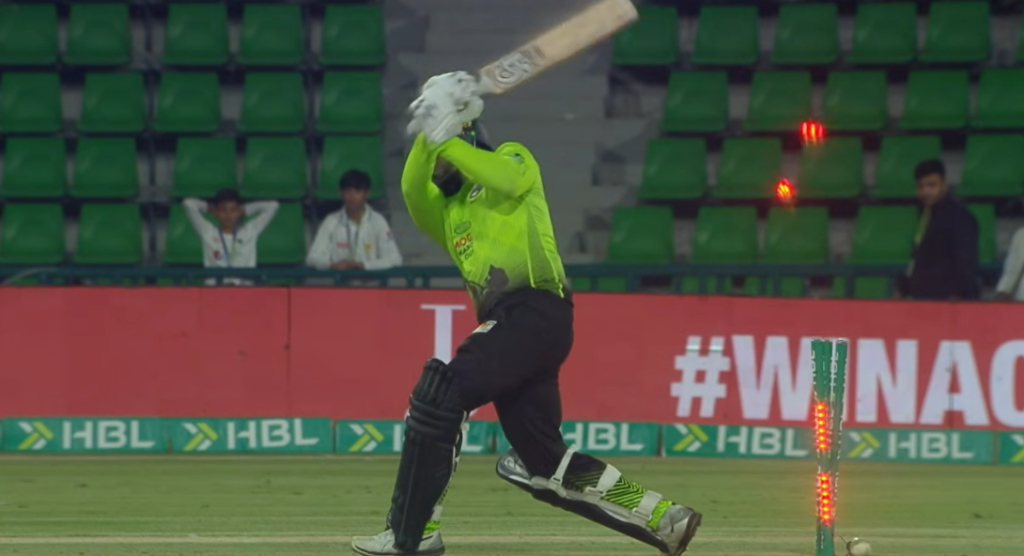
The person who set the tone was Fakhar Zaman. He looked unhurried as he scored 53 from 39 deliveries, threading nine boundaries through a field that the Kingsmen never really set up correctly. When Fakhar is playing well, there’s something about him that sets him apart from batters who are just trying to survive, like his loose shoulders and willingness to wait for the ball. Before the middle overs even start, he and Mohammad Naeem put on 84 for the first wicket, the kind of partnership that subtly breaks the spirit of a bowling attack. After Naeem went for 30 off 19 balls, Fakhar continued, and Haseebullah Khan entered the game and did what he always does: finish undefeated on 40 off 28, with Sikandar Raza scoring 24 runs off just ten deliveries next to him. Really, it was clinical.
| League Name | Pakistan Super League (HBL PSL) |
|---|---|
| Founded | 2015 |
| First Edition | 2016 |
| Current Edition | PSL 11 (2026) |
| Format | Twenty20 (T20) |
| Organized By | Pakistan Cricket Board (PCB) |
| Headquarters | Gaddafi Stadium, Lahore |
| Number of Teams | 8 (2026) |
| Current Champion | Lahore Qalandars (3-time champions) |
| Most Runs (All-time) | Babar Azam (3,792) |
| Most Wickets (All-time) | Hasan Ali (125) |
| PSL 11 Venues | Lahore & Karachi |
| PSL 11 Opening Match | Lahore Qalandars vs Hyderabad Kingsmen, March 26, 2026 |
| Result | Lahore Qalandars won by 69 runs |
| Official Website | psl-t20.com |
| Live Scores & Coverage | ESPNcricinfo PSL 2026 |
A truly intriguing addition to the league is the Hyderabad Kingsmen. As a result of the PSL’s eight-team expansion, more players will have competitive exposure, more cities will be able to participate in the competition, and there is real doubt about how new teams will establish themselves. It’s interesting to see Marnus Labuschagne leading a PSL team. The Australian Test specialist, who is more known for his gritty accumulation than his T20 flair, top-scored with 26 off 22 balls, which gives you an idea of how the chase fell apart around him. There were only three other batters who scored in double figures. It’s harsh to chase 200 on debut. The Kingsmen may have been aware of this, but it’s also possible that they were still unprepared for how fast Ubaid Shah and Haris Rauf would take the game away from them.
Rauf appeared sharp as he claimed two wickets. With the kind of controlled off-spin that makes batters make bad choices, Sikandar Raza added two more. With the easy authority of a seasoned captain, Shaheen Shah Afridi contributed a wicket and a late cameo of 12 off two deliveries that felt a little superfluous but perfectly on-brand. Observing this Qalandars team gives me the impression that they are the team to beat, and more significantly, they play with confidence.
The pink ball came next. Labuschagne pointed out that the white cricket ball had turned noticeably pink after absorbing dye from Hyderabad’s jerseys halfway through the Kingsmen’s innings, presumably with a hint of disbelief. Social media took notice right away. With the dark wit that comes naturally to Pakistani cricket Twitter, fans piled on, questioning whether this was truly the “New Era” that the competition had been promoting. To be sure, it was an odd way for PSL 11 to present itself to the world. The dispute was minor, swiftly resolved, and most likely forgotten in an hour. However, it continued to serve as a metaphor for a competition that is still resolving issues over ten years later.
It’s difficult to ignore the larger context that surrounds this league season. There was no opening ceremony. Matches will be held in just two cities. For now, at least, there is silence in the stands. For a competition that has largely relied on spectacle—the anthems, the crowds, the sense of occasion that made PSL feel like Pakistan’s answer to the IPL—these are not insignificant compromises. Over the next few weeks, it will become more evident whether this simplified version of the league can maintain its momentum for the entire season.
The cricket itself, however, never changes. Shaheen, Rauf, Fakhar, and many others discovered or honed their skills in the PSL Pakistan Super League, and there’s no reason to believe that 2026 will be any different. As the season goes on, the Kingsmen will improve. Other teams, such as the Multan Sultans, Peshawar Zalmi, and Karachi Kings, will have their own tales to share. Babar Azam will be expected to remind everyone why he is still the competition’s all-time top run scorer. The league has persevered through more difficult situations than empty stands.
