

When a casual dining chain closes, there’s something about it that doesn’t quite register as news until you’re standing in its parking lot, staring at the faded signage and darkened windows, and trying to recall the last time you were inside. Thirty years of tiki torches, Caribbean jerk chicken, and mango daiquiris served in large glasses silently came to an end when Bahama Breeze closed its last locations on April 5, 2026. The chain was founded in 1996 in Orlando, Florida, which, when you think about it, is exactly the kind of city where a restaurant meant to resemble a beach vacation makes some sense.
The announcement was formally made back in February by Darden Restaurants, an Orlando-based conglomerate that also runs Olive Garden, LongHorn Steakhouse, and a few other brands. By April 5, fourteen of the remaining twenty-eight Bahama Breeze locations would permanently close. Over the next twelve to eighteen months, the remaining fourteen would be transformed into various Darden brands. Bahama Breeze had simply become “no longer a strategic priority,” according to the company’s careful wording, which translates more simply to “the numbers stopped making the argument for us.”
| Category | Details |
|---|---|
| Restaurant Chain | Bahama Breeze Island Grille |
| Parent Company | Darden Restaurants, Inc. (NYSE: DRI) |
| Darden HQ | Orlando, Florida, USA |
| Bahama Breeze Founded | 1996 |
| Closure Date | April 5, 2026 (final operating day for closing locations) |
| Total Locations at Closure | 28 (down from a larger footprint) |
| Permanently Closed | 14 locations across DE, GA, FL, MI, NJ, NC, PA, VA, WA |
| Converted to Other Brands | 14 locations (primarily Florida-heavy; conversion over 12–18 months) |
| Conversion Details | Brands not disclosed; Altamonte Springs confirmed as future Yard House |
| Reason Given | Brand “no longer a strategic priority” |
| Financial Impact | Darden states “no material impact” on financial results |
| Employee Handling | Staff offered roles within the broader Darden portfolio |
| Darden’s Other Brands | Olive Garden, LongHorn Steakhouse, Yard House, Ruth’s Chris, Cheddar’s, The Capital Grille, Chuy’s, Seasons 52, Eddie V’s |
| Previous Closures | ~One-third of locations closed in May 2025; strategic review announced June 2025 |
| Reference Links | Darden Official Press Release – Investor Relations / Bahama Breeze Closures Coverage – The Independent |
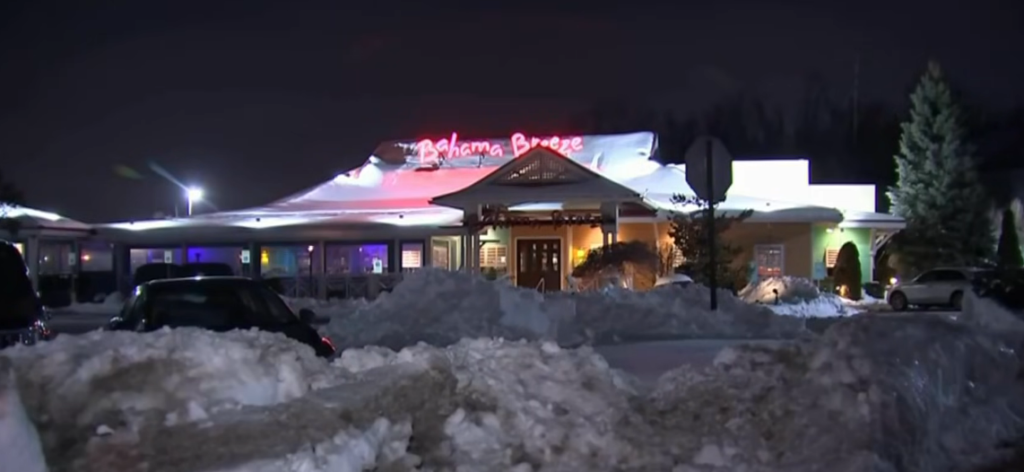
With a few exceptions, the fourteen locations that permanently went dark were dispersed throughout the South and the mid-Atlantic. Delaware’s Newark. Livonia, Michigan. Pennsylvania, King of Prussia. Pittsburgh. New Jersey’s Cherry Hill. Washington’s Tukwila. Five places in Florida. The loss is more tangible than any earnings statement can convey for the regulars in those communities—the people who had their birthday dinners at those specific tables and knew which server remembered their typical order. In fact, two of the planned closures—in Sanford and Kissimmee, Florida—closed early in the middle of March. Employees at both locations had already been transferred to other positions at Darden restaurants in the area. The efficient, functional machinery of a corporate wind-down.
While Darden decides what to do with the remaining fourteen sites, which are mostly located in Florida, including eight in the greater Orlando area alone, they are being kept alive for the time being. Community reports state that the Altamonte Springs location’s conversion to a Yard House is one confirmed conversion. Others go unnoticed, which is a form of commentary in and of itself. The areas are worth preserving. Apparently, the brand wasn’t.
Because the brand concept was unique in a way that made it both appealing and challenging to maintain, it is worthwhile to take a moment to consider what Bahama Breeze actually was. When it first opened in the mid-1990s, the concept was a Caribbean-inspired restaurant with handcrafted cocktails, real jerk chicken on the menu, and a visual identity that embraced the tropical concept rather than merely nodding. Wicker furnishings, outdoor features when the weather allowed, and a reggae and steel drum-heavy soundtrack. Priced more for a weeknight outing than a special occasion, the restaurant was marketed as an inexpensive haven that fell somewhere between a neighborhood bar and a vacation vibe.
That worked for a while. Throughout the 2000s and 2010s, the chain grew, eventually reaching a footprint of more than fifty locations. However, the last ten years were challenging in ways that the original idea was unable to fully comprehend. It became more challenging to defend the casual dining price point due to inflation. Chain restaurants like Bahama Breeze gradually lost customers to fast-casual eateries like Chipotle, Shake Shack, and their numerous offspring. Additionally, as consumer habits shifted toward speed and convenience, the experience itself, which relied on a particular kind of leisurely, sit-down occasion, lost ground. It’s difficult to ignore the fact that the same forces destroying Bahama Breeze are also affecting the remainder of the segment.
In this, Bahama Breeze is not by itself. In 2025, the Italian casual dining chain Bravo Brio filed for bankruptcy a second time. Ahead of a brand makeover, Outback Steakhouse was closing its locations. During that time, Hooters, Bar Louie, and Razzoo’s Cajun Cafe all closed their doors and declared bankruptcy. The list is long enough to read like an industry reckoning rather than as a collection of isolated business failures. Large footprints, intricate kitchens, and mid-market pricing that doesn’t offer the premium of fine dining or the value of fast food make the economics of casual dining extremely challenging at the moment.
Darden is not in danger. Strong same-store sales were reported by Olive Garden. LongHorn is still expanding. The business understands how to manage a restaurant business on a large scale and recognizes when a brand in its portfolio isn’t performing up to par. According to the official statement, closing Bahama Breeze would have “no material impact” on financial outcomes. It’s likely the most truthful statement made about the brand in years. Darden was not being broken by the chain. It was simply taking up time and space that could be spent on something more productive.
The majority of the employees were offered jobs elsewhere in the Darden system, and the locations being converted will eventually reopen as something else—a Yard House here, probably something different there. These are actual, useful results that matter to actual people. However, there is something to be said for the ultimate closure of a restaurant that sincerely attempted to convince Americans that, with the right cocktail and a steel drum playlist, a Tuesday night could feel like a vacation.
