

There are ambassadors whose presence becomes a flashpoint, and there are those who handle tension with subtle accuracy. Ariel Seidman, Israel’s top envoy to South Africa, found himself at the center of a diplomatic breach that unfurled with startling speed and unashamed clarity. In late January 2026, South Africa gave him 72 hours to leave the country.
The official language was undeniably sharp. The foreign ministry of South Africa said that Seidman had used official Israeli social media platforms to wage “insulting attacks” against President Cyril Ramaphosa. Additionally, he was accused of entertaining senior Israeli officials and coordinating contacts with local royalty—moves that were, curiously, not publicized through proper diplomatic channels.
Pretoria made it apparent that the rules of engagement must be upheld even in tense partnerships by justifying his dismissal as an essential protection of national sovereignty. In a particularly inflammatory statement, South African officials referred to Seidman’s activities as a “gross abuse of diplomatic privilege.” That language wasn’t selected lightly.
| Detail | Information |
|---|---|
| Name | Ariel Seidman |
| Role | Chargé d’Affaires of Israel to South Africa (2025–2026) |
| Diplomatic Incident | Declared persona non grata by South Africa on January 30, 2026 |
| Reason for Expulsion | Accusations of violating diplomatic norms and attacking President Cyril Ramaphosa on social media |
| Additional Tensions | Unauthorized Israeli outreach to South African traditional leaders |
| Background | Former Deputy Chief of Mission in Thailand and Bangalore; lawyer and economist |
| Official Reference | Israeli Chargé d’Affaires Declared Persona Non Grata – DIRCO |
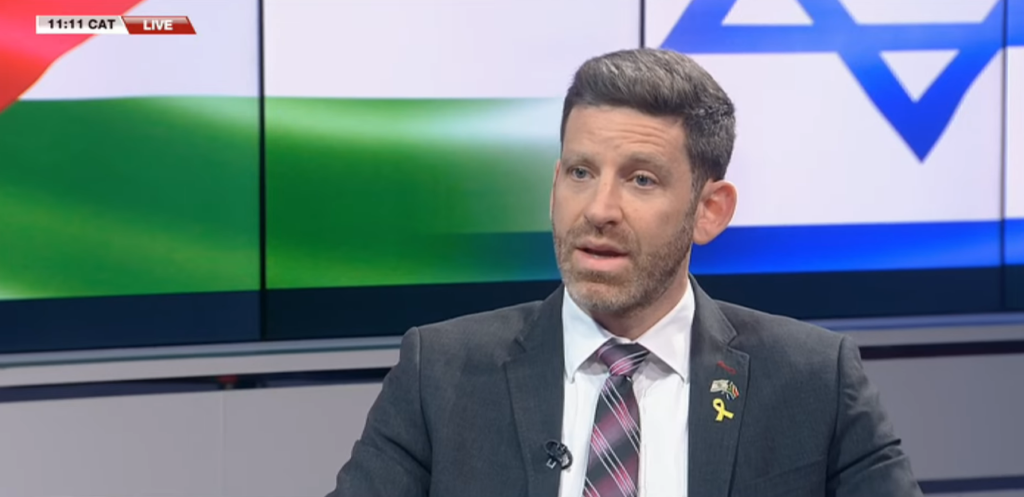
Seidman, though legally not an ambassador, was the highest-ranking Israeli diplomat in South Africa. His appointment as Chargé d’Affaires came amid already deteriorated relations, with both governments having removed ambassadors in prior years. In this vacuum of official engagement, every public comment and diplomatic gesture took on increased meaning. This time, those gestures prompted a full diplomatic expulsion.
His reign, however brief, was particularly eventful. One incident, in particular, garnered strong government censure. Nelson Mandela’s distant relative and controversial Thembu king, Buyelekhaya Dalindyebo, visited Israel in December. An Israeli delegation visited the Eastern Cape after he returned. They made promises. Aid was discussed. Images disseminated. But the South African government hadn’t been told.
For many observers, that visit crossed a diplomatic red line. Not because of what was promised, but because of how it was orchestrated—outside official structures, outside ministerial scrutiny. Videos of the tour were then posted by the Israeli embassy on X (previously Twitter), portraying the outreach as developmental and humanitarian. Officials in South Africa perceived something quite different: a foreign state circumventing formalities in order to get the support of local influential people.
Eastern Cape’s premier, Lubabalo Oscar Mabuyane, made a statement that was extremely emphatic. He denounced what he called a “sinister deal” and accused Israel of trying to undermine South Africa’s diplomatic autonomy. That rhetoric, strikingly similar to Pretoria’s announcement on Seidman’s expulsion, suggested a calculated political posture rather than a spontaneous outburst.
Not long after, South Africa’s Department of International Relations and Cooperation made its move. Within hours after announcing Seidman’s deportation, Israel retaliated in kind—ordering South Africa’s representative to Palestine, Shaun Edward Byneveldt, to leave Israeli territory within 72 hours. It was tit-for-tat diplomacy, with each side painting the other as the originator.
What makes this diplomatic episode particularly relevant isn’t merely the personal ramifications for Seidman or Byneveldt. It’s what the battle tells about the shifting language of diplomacy. Diplomats are typically expected to be measured, coded, and reserved while working behind closed doors. However, Seidman’s public persona represented a more recent, strong style that was frequently fearless of provocation and combined elements of influence and ambassadorship.
Some of his prior posts on X were straightforward to the point of provocation. In one, the Israeli embassy attacked South Africa’s legal challenge at the International Court of Justice as a “political stunt” costing taxpayers hundreds of millions. In another, it called Ramaphosa’s comments regarding boycotts “a rare moment of wisdom” while making fun of them. While such comments might attract retweets, they don’t gain diplomatic favor.
I recall reading one of those posts and experiencing an unsettling tension between strategy and spectacle.
Diplomacy, after all, isn’t simply about outcomes—it’s also about tone. Tone is especially important in a nation like South Africa, where historical solidarity with Palestine is closely linked to international relations. Since the apartheid era, when Nelson Mandela allied the African National Congress with the Palestinian Liberation Organization, South Africa’s stance has been steadfastly pro-Palestinian. This is a legacy for many in the government, not just a policy.
Israel’s reply to the genocide claim in the ICJ may be anchored in legal technicality, but for many South Africans, the issue vibrates with moral symbolism. To them, Palestinian freedom is connected with their own history of resistance. This isn’t only diplomatic friction—it’s existential identification. Seidman may have miscalculated how deep that current flows.
However, there is space to think about what might happen next despite the strain. Despite the intensity of the diplomatic consequences, history demonstrates that even deep disagreements eventually find a road to conversation. The lack of ambassadors could create space for cooler heads to come in, for new modes of engagement to emerge.
Through deliberate reevaluation and more disciplined channels, both countries may explore ways to reestablish trust—if not agreement, then at least decency. Isolated standoffs rarely help either side in the long run, especially in a global setting where multilateral cooperation is becoming more and more important.
Seidman, for his part, returns to a diplomatic apparatus likely still digesting the episode. It may be discussed behind closed doors whether his actions were a result of an individual error or a larger Israeli policy. But what remains obvious is that his departure represented a tipping point—one where formal diplomacy battled head-on with informal influence, and where etiquette ultimately shattered.
The role of the diplomat is changing, but respect for sovereign process remains non-negotiable. As this episode reveals, even a single envoy—if badly aligned with the expectations of his host—can reset a whole relationship.
In this way, Seidman represented more than simply Israel; he also represented the careful balance that contemporary diplomacy increasingly demands. One post, one meeting, one error at a time.
