

The first time I entered a rainforest at daybreak is still fresh in my mind. The sound of frogs croaking from muddy puddles, birds quarreling overhead, and insects grinding like invisible gears filled the air. That bright anarchy was its heartbeat. Now, researchers think, the beat is diminishing.
In recent years, research from the Brazilian Amazon have presented a startlingly similar picture: jungles that appear lush and pristine are strangely quiet underfoot. Frogs have stopped calling. Birds that once followed army ants in vibrant swarms now stay silent. Even the ants themselves—once abundant and essential—have fled from specific zones.
For decades, experts felt that maintaining bits of forest would be adequate. Yet what they’re learning now is that life doesn’t only need space—it needs connection. When ecosystems are sliced into isolated islands by livestock farms, highways, and forestry scars, the collapse begins not with a bang, but with a whisper.
| Item | Detail |
|---|---|
| Event | Sixth Mass Extinction (Holocene extinction) |
| Main Concern | Collapse of biodiversity in Amazon rainforest |
| Indicators | Vanishing insects, birds, frogs, primates, army ants |
| Drivers | Deforestation, climate change, habitat fragmentation |
| Consequences | Breakdown of food chains, loss of carbon sink, global climate impact |
| Estimated Species Loss Rate | Up to 10,000 times higher than natural background rate (per E.O. Wilson) |
| Area Most Affected | Amazon rainforest, particularly in Brazil |
| Key Research Projects | Biological Dynamics of Forest Fragments Project (BDFFP) |
| Notable Source | Kolbert, The Sixth Extinction |
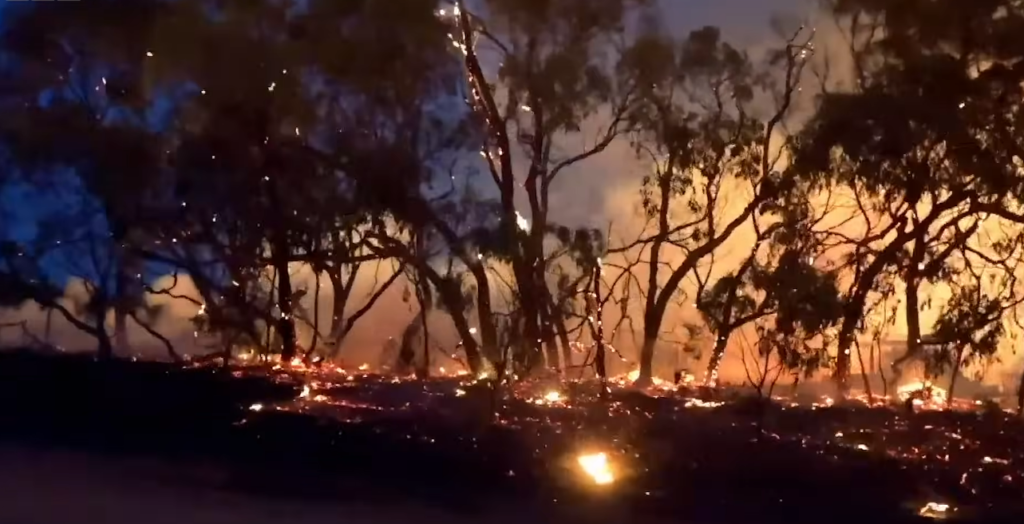
By investigating forest plots in BDFFP research zones, ecologists identified a particularly disturbing tendency. Even species that earlier seemed adaptable—those that stayed on after initial deforestation—are now disappearing. Space loss is not the only issue. It’s about systems unraveled.
Army ants, for example, play a highly flexible role. As they sweep through leaf litter, they force insects ahead of them. Because they feed on the flush, birds have evolved to follow them. Without the ants, those birds go famished. Then the butterflies that consume bird droppings vanish. Small mammals that hunted insects also decline. One gap sets off a chain reaction.
Through longitudinal fieldwork, researchers have tracked these subtleties across decades. One ornithologist described it as “watching a library burn—quietly, shelf by shelf.”
In the context of climate policy, these adjustments carry outsized weight. The Amazon has long operated as one of Earth’s most critical carbon sinks. But deforested or degraded parts not only stop absorbing carbon—they exude it. When animal life thins out, tree regeneration slows. And without giant fruit-eating primates like howler monkeys or tapirs, seeds aren’t distributed efficiently. The forest stops growing back.
By integrating satellite data alongside field observation, researchers now fear the Amazon is nearing a tipping point. Some estimates imply that if deforestation approaches 20–25% of the original forest, the biome may irreversibly transition into a drier, savanna-like habitat. Such a change will noticeably lower rainfall across most of South America and disturb weather patterns across the Atlantic.
During the last ten years, these findings have inspired increasingly active conservation lobbying. Still, forest fragments continue to diminish, while corporate land use demands rise. Species are vanishing faster than we can name them.
Butterfly researchers, working under canopies that once teemed with fluttering wings, have documented population reductions exceeding 70% in certain zones. Bees, beetles, moths—many vital to pollination cycles—are pursuing the same course. Without them, the very trees that define the rainforest become susceptible.
For early-career conservationists, the data can be emotionally overwhelming. Some speak about “ecological grief”—a word used to express the psychological toll of witnessing these losses firsthand. But some are channeling that urgency into inventive solutions.
By integrating drone surveillance, acoustic monitoring, and AI-based biodiversity modeling, numerous initiatives are gaining traction. These techniques enable for earlier diagnosis of population decreases and more targeted actions.
Incredibly, some parts of forest—even those harmed by past clearings—have showed resilience. Where corridors are re-established between fragments, species begin to return. Ants reemerge. Frogs call again. These cases emphasize a particularly important insight: action, when timely and science-led, can generate rebound benefits.
Through strategic alliances, indigenous communities have also played a prominent role. Equipped with ecological knowledge carried through generations, they’ve proven incredibly adept in protecting enormous regions of contiguous forest. Many locations where biodiversity remains intact are, not unexpectedly, those under indigenous management.
Both scientists and officials have started to reframe the issue in recent days, viewing it as a chance for swift action rather than merely a setback. Efforts like rewilding, agroforestry, and carbon-based land preservation schemes are receiving international interest.
And while the full weight of the sixth extinction approaches, so too does our capacity to respond. Each study, each data point, each rediscovered species tells us that collapse is not destiny. It’s a warning.
The rainforest isn’t merely a place packed with life. It’s a mechanism. An orchestra of interdependence. And though sections of the music may have quieted, the score isn’t finished.
We still have time to listen. And more crucially, to act.
