

When you enter the Chicago Loop on a typical Tuesday afternoon, you’ll notice the familiar urban weight of the area: commuters passing through underground passageways that connect buildings, the rumble of a CTA train somewhere below street level, and the glass towers of the financial district catching afternoon light. It appears sturdy. It appears to be permanent. After three years of placing sensors throughout that same district and mapping what was going on beneath it, Alessandro Rotta Loria and his team at Northwestern University discovered that the ground beneath it has been subtly deforming for decades, expanding and contracting in response to heat that has nowhere to go.
The phenomenon is known as subsurface heat islands, or more accurately, underground climate change. Contrary to what the name suggests, the mechanism is not as mysterious. Heat is released into the ground from basements. The same is true of parking garages, office building mechanical rooms, and subway tunnels. Because the buildings producing the heat are open all year round, it builds up over time in densely populated areas without any seasonal respite. Using 150 temperature sensors positioned above and below ground throughout the Loop, the research team discovered that the ground beneath the financial district was up to 18 degrees Fahrenheit warmer than the soil beneath Grant Park, an undeveloped, green area a few blocks away. 18 degrees. That’s not a small change. That is the distinction between the soil acting as intended and acting in a completely different way.
Climate Change & Urban Infrastructure: Key Facts
| Field | Details |
|---|---|
| Phenomenon | “Underground Climate Change” / Subsurface Heat Islands |
| Lead Researcher | Alessandro Rotta Loria, Assistant Professor, Northwestern University (Evanston, Illinois) |
| Study Published | July 11, 2023 — Communications Engineering journal |
| Primary City Studied | Chicago Loop district |
| Temperature Sensors Installed | 150 sensors across basements, tunnels, parking garages, and Grant Park |
| Data Collection Period | Three years |
| Underground Temperature Differential (Chicago Loop vs. Grant Park) | Up to 18°F (10°C) warmer beneath the Loop |
| Key Infrastructure at Risk | Building foundations, tunnels, water-retaining walls, subway tracks, sewer pipes |
| Simulation Period | 1950s through 2050 (computer modeled) |
| Fort Lauderdale Airport Flood | 2023 — historic rainfall turned runways into rivers |
| NYC Bridge Incident | Extreme heat caused metal expansion on a Harlem River bridge, leaving it stuck open |
| US Infrastructure Report Card Grade | Overall “C” (American Society of Civil Engineers) |
| Sectors With Worst Grades | Airports, power, telecommunications |
| Infrastructure at Major Climate Risk | 19% of power infrastructure, 17% of telecom, 12% of airports (First Street analysis) |
| US Infrastructure Spending Gap | $3.7 trillion over the next 10 years (ASCE estimate) |
| FEMA Program Cut | ~$1 billion Building Resilient Infrastructure and Communities program cancelled |
| Key Reference — CNN | ‘Underground climate change’ is deforming the ground beneath buildings — CNN |
| Key Reference — Scientific American | Underground Climate Change Is Weakening Buildings in Slow Motion — Scientific American |
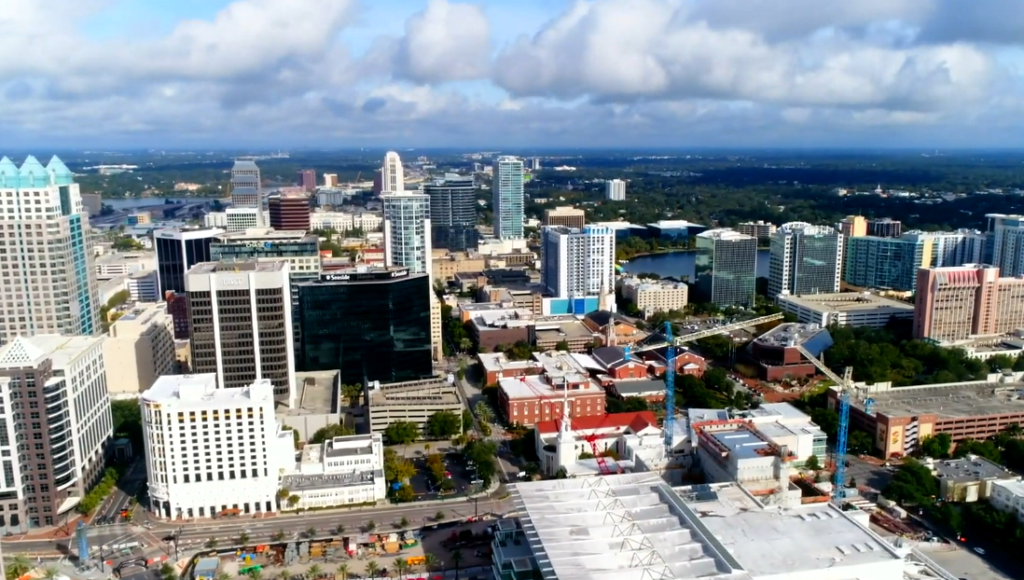
When exposed to prolonged temperature changes, soil expands and contracts unevenly, depending on its composition, in ways that civil engineers have not traditionally been asked to account for. The research team simulated these subterranean temperature effects from the 1950s to 2050 using a computer model of the Chicago Loop. They discovered that the ground beneath the city’s financial district had already been deforming for more than a century, resulting in stress in the walls of tunnels, water-retaining structures, and underground transit systems as well as “unwanted settlement” in building foundations, according to Rotta Loria. Anyone walking above them cannot see the deformations. Millimeters are used to measure them. However, they are persistent and cumulative, and over decades they produce precisely the kind of gradual structural compromise that results in cracks in foundations, tunnel linings, and the concrete walls of anything buried beneath a large city.
The next issue quickly arises after concrete cracks. Water seeks out the cracks. It penetrates. The stability of steel rebar within reinforced concrete is essential, but water accelerates corrosion in ways that compound over time, weakening the structural elements that were intended to last a century. According to Rotta Loria, Chicago is situated on soft, clay-rich soil close to Lake Michigan, which is precisely the kind of ground most vulnerable to this kind of heat-driven deformation. He carefully chooses the adjective “silent hazard” when referring to underground climate change. There is no incident, no obvious damage, and no alarm going off. Just foundations settling, ground shifting, and infrastructure aging more quickly than it was intended to.
It’s difficult to ignore the fact that American cities are facing this issue at the wrong time. In its most recent evaluation, the American Society of Civil Engineers, which regularly publishes an infrastructure report card for the United States, awarded the nation an overall grade of C. The worst ratings went to telecommunications, power infrastructure, and airports. 19% of all US power infrastructure, 17% of telecommunications infrastructure, and 12% of airports are at significant risk from flood, wind, or wildfire, according to a climate risk analysis commissioned from First Street Analytics. Even before taking into consideration the compounding costs of a climate that has already surpassed the capabilities of the majority of that infrastructure, ASCE estimates that there will be a $3.7 trillion spending gap over the next ten years to bring US infrastructure to a state of good repair. The airport in Fort Lauderdale flooded in 2023 as runways became rivers due to historic rainfall. The metal on a bridge over the Harlem River in New York expanded during a summer heat wave, causing the bridge to become stuck open. These are not risk model hypothetical situations. They have already taken place.
In this tale, northern cities are especially vulnerable. Infrastructure that was built for a climate with stable ground conditions, moderate summers, and predictable freeze-thaw cycles is now functioning outside of its design envelope. Cities like Chicago, Detroit, Cleveland, and Minneapolis were mostly constructed in the middle of the 20th century, and their engineering standards and building codes were based on outdated climate data that no longer accurately reflects the current state of the climate. The infrastructure wasn’t built for these kinds of activities, and it will only get more difficult, according to ASCE executive director Tom Smith. The puck has moved. Additionally, the infrastructure was constructed for its former location.
Climate researchers and civil engineers believe that the discussion of urban infrastructure and climate change has been too preoccupied with the dramatic and obvious, such as melting bridges and flooding airports, and not enough with what is happening underground, in slow motion, at a scale that doesn’t prompt emergency response until the damage is already costly to repair. According to Rotta Loria, there might have already been structural problems brought on by subterranean climate change that no one was aware of. Mysterious cracks are visible in buildings. foundations settling in peculiar ways. Water infiltration issues are occurring in tunnels that are not connected to ground temperature.
There are options for how to respond to this. In order to lessen the quantity of waste heat that permeates the surrounding soil, modern buildings are being built with improved thermal insulation on subterranean enclosures. Geothermal technologies can absorb waste heat and reroute it for building heating and cooling in older buildings that are difficult to retrofit, thereby partially solving an issue. However, retrofitting Chicago’s current building stock, which is largely from a time when subsurface thermal management was not taken into account, is a completely different kind of project. How much of the subterranean damage that has already been done can be evaluated, let alone undone, is still unknown. The ground beneath America’s oldest and densest cities is obviously not as stable as it appears from street level, and the longer this issue goes unreported, the more costly the reckoning will be.
