

Standing outside shortly after sunset and observing that the solar system is, for once, performing in unison is a subtly humbling experience. Six planets—Mercury, Venus, Jupiter, Saturn, Uranus, and Neptune—will appear strung across the evening sky on February 28, 2026, in what astronomers jokingly refer to as a “planetary parade.” The word “casual” is an intriguing one. After all, the sky is rarely casual.
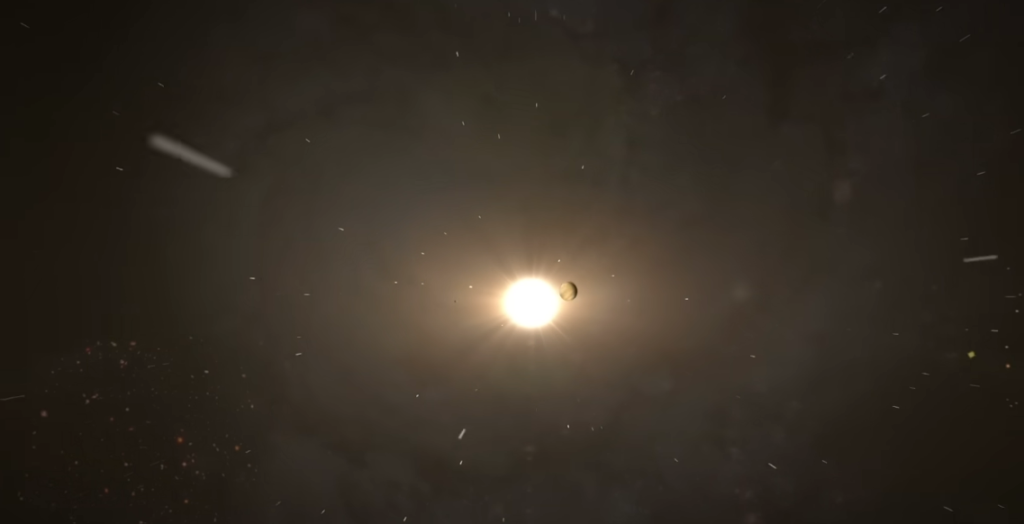
Despite the dramatic headlines, the alignment isn’t exactly a straight line. The planets aren’t huddled in space like people at a conference taking a group photo. From Earth’s perspective, they appear to cluster along the ecliptic because they are merely occupying the same side of the Sun and following the same flat orbital plane. Perhaps the illusion is more important than the geometry. What feels uncommon is what we see.
The show starts about 30 to 60 minutes after sunset in cities with a clear view of the west, such as Sedona, Flagstaff, or even a rooftop in Brooklyn with a good view. Jupiter and Venus will attract the most attention initially. Unlike stars, they don’t twinkle. They radiate steadily and self-assuredly. Jupiter will be brighter and more unrepentant as it sits higher in the sky. Venus will be brighter in the twilight and hover lower. Always evasive, Mercury will tinker with the horizon, setting swiftly and punishing latecomers.
| Category | Information |
|---|---|
| Event Type | Six-Planet Alignment (“Planetary Parade”) |
| Peak Date | February 28, 2026 |
| Visible Planets | Mercury, Venus, Jupiter, Saturn, Uranus, Neptune |
| Naked-Eye Planets | Mercury, Venus, Jupiter, Saturn |
| Optical Aid Needed | Uranus (binoculars), Neptune (telescope recommended) |
| Best Viewing Time | 30–60 minutes after sunset |
| Direction to Look | Western horizon (low and clear) |
| Duration | Visible for several days before and after peak |
| Related Event | Total Lunar Eclipse on March 3, 2026 |
For official astronomical guidance and sky maps:
As twilight deepens, Saturn will need a little more patience, fading into the darker blue. The bonus round is Uranus and Neptune, which are far away, dim, and require binoculars or a small telescope to see. The possibility alone creates intrigue, though it’s still unclear how many casual observers will actually try to locate Neptune.
Planetary alignments don’t happen only once in a lifetime. Because the planets orbit in a roughly identical plane, they occur on a regular basis. However, seeing six at once feels significant. Like scaffolding behind a theater set, there’s a sense that the sky is momentarily exposing its architecture.
The term “planet alignment 2026” has already become mythic on social media. Influencers talk about changes in cosmic energy. Forums for astrology are ablaze with predictions. Meanwhile, scientists subtly remind everyone that this is not fate, but orbital mechanics. For centuries, astronomy has been characterized by the conflict between wonder and explanation.
Under a February sky, the argument seems less pressing. The physicality of the moment is striking. Jackets are getting cold air. The subtle scent of wood smoke in suburban areas. At intersections, cars slow down as drivers look up. Kids pointing. Someone fumbles with gloves while adjusting a tripod.
It’s difficult to ignore how situations like this momentarily reorder priorities. For a few evenings, people look up at their phones rather than down, though many are, admittedly, using astronomy apps to find Uranus. Red-light filters preserve night vision by emitting a gentle glow. It has an almost ritualistic quality.
Alignments have historically caused unrest in civilizations. Omens were seen by ancient observers. Warnings were whispered by court astrologers. NASA compares the flattened disk of planetary formation to spinning pizza dough in its clear diagrams released today. Even when the fear subsides, the poetry endures.
A lot of the experience will depend on the weather. The skies in late February can be erratic. Cloud cover over London or Mumbai may be a stark contrast to Arizona’s clear air. We’ll be checking forecast apps nonstop in the days before February 28. The payoff when the sky finally clears may be enhanced by the anticipation created by ambiguous weather reports.
Additionally, the timing is convenient. On March 3, a total lunar eclipse will bring the Moon into Earth’s shadow, just a few days after the alignment. 2026’s February and early March seem like a carefully planned, almost decadent period of skywatching. Astronomers oversee orbital choreography, while investors monitor quarterly profits.
This is part of a larger context. A planetary alignment is obstinately analog in a time of digital spectacle. No subscription is necessary. Who sees it is not determined by an algorithm. You are welcome if your sky is clear and your horizon is to the west.
There seems to be a slight shift in perspective as you watch this play out. Although they are farther apart in space, the planets seem closer to us. Every 88 days, Mercury circles the Sun. Neptune, which takes 165 years to complete one orbit, is drifting at the edge of darkness. Huge timescales condensed into a single evening look.
Mercury will gradually dissolve the alignment by slipping below the horizon in early March. On March 7 and 8, Venus and Saturn will get closer to one another, providing a more subdued finale. Like all parades, this one fades.
