

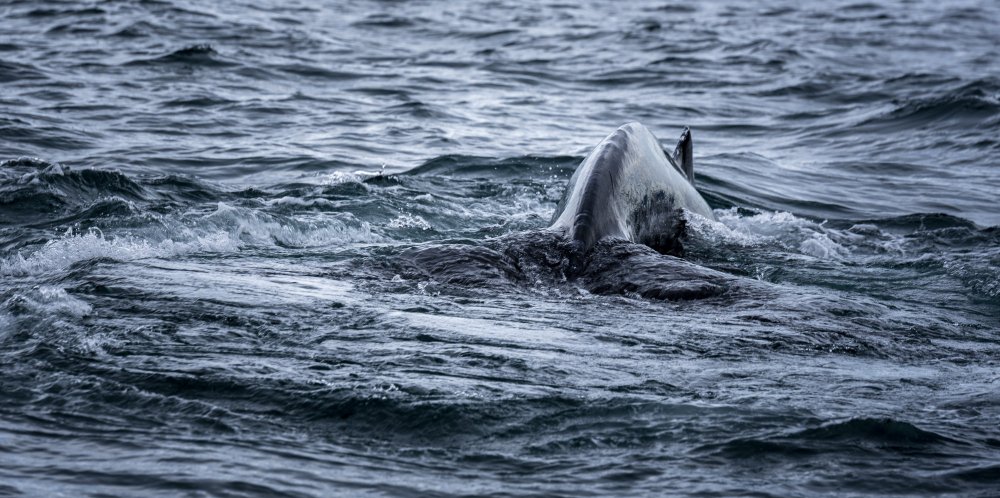
It starts with a clunk, dull and hollow. The type that makes people stiffen their backs and cut off small talk. Then, a jolt. A swirl of black and white muscle moving purposefully beneath the surface is followed by the moan of fiberglass beneath the waterline. And somewhere off the stern, the rudder is gone.
These interactions have become more frequent since 2020. A tiny subpopulation of Iberian orcas has began hunting sailboats along the coast of Spain and Portugal. Their action is precise, synchronized, and plainly intentional. They go directly for the rudder, sometimes snapping it completely off before drifting away, work seemingly done.
| Aspect | Details |
|---|---|
| Behavior Start Year | 2020 |
| Location | Strait of Gibraltar, Portugal, Spain (now spreading to France, Morocco) |
| Primary Orca Group | Iberian orcas (critically endangered; <50 individuals) |
| Focus of Interaction | Rudders of sailboats |
| Human Injuries | None reported |
| Notable Individual | “White Gladis” (suspected origin of behavior) |
| Scientific Consensus | Socially learned behavior, not aggression |
| Suggested Sailor Response | Stop boat, turn off engine, keep rudder still |
| Source of Concern | Boat traffic, stress, possible trauma, or learned “fad” behavior |
Even though at least seven boats have sunk, they are remarkably effective in rendering them inoperable. Marine biologists don’t call them attacks. They prefer the milder term: interactions. Because what’s happening isn’t necessarily violence—it’s communication.
A female orca that biologists have dubbed White Gladis is the main character in this tale. She may have undergone a traumatic event—entanglement in illicit fishing gear, a collision with a vessel, or something more mysterious. Whatever it was, it signified a transition. Not only did she begin engaging with boats, but others in her pod began to follow.
Young orcas were observed imitating her, picking up the choreography-like behavior. By 2022, the number of incidents had passed 200. In several circumstances, adolescents pulled rudders while older orcas flanked the vessel. It’s not chaos. It’s a group with a pattern. And they are teaching each other.
At first, scientists wondered if this was revenge. But orcas, for all their intellect, aren’t penning a thriller. The more likely reason is simpler: play. A game that also involves the delicate hardware of human sailing and three-ton bodies.
One researcher compared it to a six-year-old with a crowbar and a favorite toy. Rudders, especially the moving ones, are irresistible. They twitch and vibrate. They break with satisfying power. And in some cases, they come off totally, which appears to mark the end of the interaction.
When given with dummy rudders in controlled experiments, orcas responded the same way—nose first, then repeated nudges, sometimes increasing to full-force shoves. They aren’t biting or tearing. They’re dismantling.
I remember reading about the “salmon hat” trend—a moment in the 1980s when orcas in the Pacific Northwest began wearing dead fish on their heads for no obvious reason. It lasted for months, then faded. This current phenomenon might have a similar trajectory. but at greater danger.
The boats are not the only ones at risk. The orcas are also in grave danger of extinction. Their life is threatened by injuries from boat propellers, reprisals from terrified sailors, and elevated stress from frequent close contacts.
Yet the message they’re giving is plain, even if it lacks words: We notice you. We’re reacting. We’re adjusting.
Orcas are arguably of the most intelligent animals on Earth. Their brains are bigger than ours. They establish matriarchal societies, pass down hunting tactics, grieve their deceased, and employ dialects within their pods. When a behavior like this spreads, it’s not by luck. It’s culture.
And that compels a painful introspection. We have made the water a louder, more dangerous environment. Ships get bigger, routes busier, fish scarcer. Once a productive feeding place for bluefin tuna, the Strait of Gibraltar is now bustling with tourists and business travelers. For orcas, the soundscape alone must be overwhelming.
These exchanges may be a form of protest, according to some experts. Not with slogans or flags, but with behavior. How to stop the incursion. To remind us that the ocean is not ours alone.
Sailors are being trained to adapt. If orcas approach, they’re ordered to disable the engine, stop steering, and prevent noise. It contradicts what instinct might tell you. However, participation just makes the game better. Stillness, it seems, is the clearest clue that the game is over.
Alternative rudder designs are being tested by technicians in the hopes that their texture or shape may make them less alluring. Meanwhile, biologists are watching the pod’s movements with increasing urgency, hoping to prevent accidents and avoid harm.
The exchanges continue for the time being. Boats are damaged. Some are sunk. But no human has been wounded, and none of the orcas appear to attack with the intent to damage. That distinction is important.
This is not about violence. It’s about agency.
And perhaps that’s the most humbling part—recognizing that these animals, frequently seen through the prism of documentaries and amusement park tanks, are teaching us something. Not via voice, but through action. They do so because they are thinking, not because they are malevolent.
In 2026, it’s not enough to marvel at their intelligence. We need to grasp what they’re showing us about our shared ecosystem, and how our presence disrupts its equilibrium.
If this is a message, it’s not whispered. It’s carved into fiberglass with three-ton grace and a clarity that’s hard to overlook.
