

It started with a soft buzz that sounded like a slow-motion paper printer, but instead of toner and ink, it layered living cells that were carefully stacked, properly positioned, and suspended in gel. There was more than simply tissue visible. It offered an insight into a future in which surgeons create their own organs rather than waiting for donations.
Previously limited to laboratory and theoretical papers, this concept is now gaining real traction. Through the use of robotics, cell biology, and medical imaging, bioprinting creates three-dimensional objects that closely resemble human tissue. Researchers make “bioinks” from a patient’s own cells and extrude them layer by layer onto a scaffold. These cells start to act like they would within a human body with time, heat, and nourishment.
Small but important steps have already been taken by surgeons to avoid traditional transplantation by recreating skin, cartilage, and even portions of the trachea. A patient in South Korea was given an airway that was bioprinted using her own cells. Printed from cardiac muscle, small fragments of heart tissue have started to pulse on their own in lab settings in the United States. It was more than just a milestone when the printed cells began to beat in time. It symbolized life reassembled rather than transferred.
KEY FACTUAL CONTEXT: Surgeons Using Living Cells to Print Replacement Organs
| Aspect | Details |
|---|---|
| Technology | 3D bioprinting using living cells and bioinks |
| Current Use | Skin grafts, cartilage, blood vessels, and airway scaffolds |
| Breakthroughs | Beating mini-hearts, bioprinted corneas, bone scaffolds |
| Key Challenge | Creating viable vascular networks for complex organs |
| Implantation Status | Some tissues tested in trials; full organ implants not yet routine |
| Future Promise | Eliminate donor waitlists and immune rejection risks |
| Ethical Considerations | Access inequality, regulatory oversight, and cellular sourcing |
| Research Leaders | Wyss Institute, Tsinghua University, Wake Forest, Organovo |
However, difficulties still exist, and one of the more obstinate ones concerns blood. The networks of capillaries and arteries that supply oxygen and nutrients are crucial for complex organs like the kidneys and heart. Printed organs cannot survive in the absence of those microvascular systems. Researchers have developed a technique known as “sacrificial ink printing” in response, which involves creating transient channels in tissues and then flushing them out to reveal hollow vessels. Although this approach shows promise, it still lacks the consistency required for full-scale organs.
Harvard Wyss Institute researchers have used a very creative strategy. In a surprisingly successful step toward resolving the oxygen barrier, they have made it possible for genuine blood flow to occur in thick tissues by employing a technology known as SWIFT to build tissue with embedded vascular patterns. Together with sophisticated bioreactors that replicate actual physiological settings, tissue maturation has significantly improved.
Bioinks have also undergone significant change. Early models couldn’t keep a shape since they were brittle and mushy. These days, hybrid gels that include collagen, alginate, and even nanocellulose provide flexibility and strength. These materials are very effective at maintaining structure while promoting cell division and communication. What’s the best? Once native tissue takes over, they are intended to break down, leaving only recuperation in their wake.
A tiny structure that resembled a lattice of gelatin was displayed by a researcher during an observation at a German university lab. In a few weeks, this might turn into bone, she explained. The stem cell-seeded tissue was reacting to environmental mechanical stimuli. It was becoming aggressively, not passively.
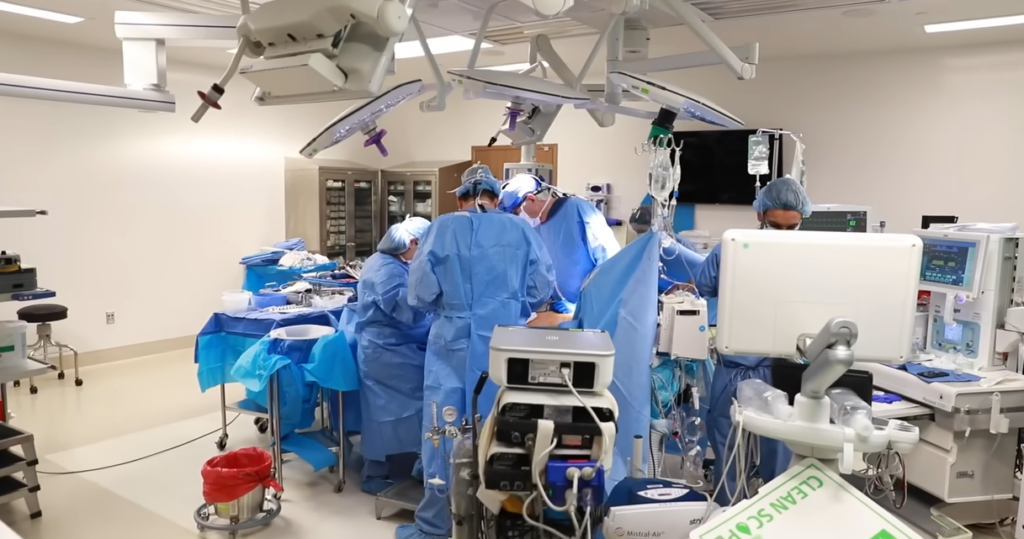
This sentiment also holds true in operating rooms. 3D bioprinting provides a completely new method of preparation for surgeons. Rather than deal with the unknowns of a donor organ, they practice. Practice is already being conducted using replicas that are custom-printed using patient images. These models have remarkable clarity and versatility. Particularly in pediatric or high-risk instances, they aid surgeons in identifying vascular malformations, planning incisions, and boosting confidence.
Bioprinted tissue provides pharmaceutical companies with an opportunity to get out of the statistical and ethical maze of animal research. Enzyme responses from printed liver and kidney slices are almost exactly the same as those from living human organs. This is especially helpful for dosage calibration and toxicological investigations because these models provide repeatable results without putting people in jeopardy. Medicine becomes safer and more intelligent in this setting.
Naturally, innovation cannot exist without its shadows. Accessibility concerns are still prevalent. Will only those who can afford them benefit from bioprinted organs? Are illicit clinics going to take use of the technology before regulators catch up? These worries are real. There are innumerable instances throughout history of innovations occurring before the systems necessary to control them are prepared. It will be necessary to redefine gene privacy, equitable distribution, and informed consent.
The optimism, however, is not without merit. Printed mini-organs will probably be utilized as interim support devices during transplant delays in the upcoming years. Patients are already being stabilized by hybrid structures, which combine mechanical and biological components. These bridges to full recovery are a reflection of a healing philosophy that views the body as flexible, changeable, and even printable rather than as fixed.
The pace has quickened thanks to smart collaborations between biotech companies and hospitals. In addition to publishing, universities in Boston, Singapore, and Tel Aviv are vying to print organs that can function for months inside animals and possibly soon inside humans. Although regulation moves slowly, the goal is obvious.
Bioprinting has evolved over the last ten years from a theoretical concept to a practical application. These gadgets are more compact. Bioinks have more intelligence. The surgeons have more courage. Additionally, people who were previously resigned to lengthy waitlists or declining health are starting to see possibilities that weren’t even available five years ago.
