

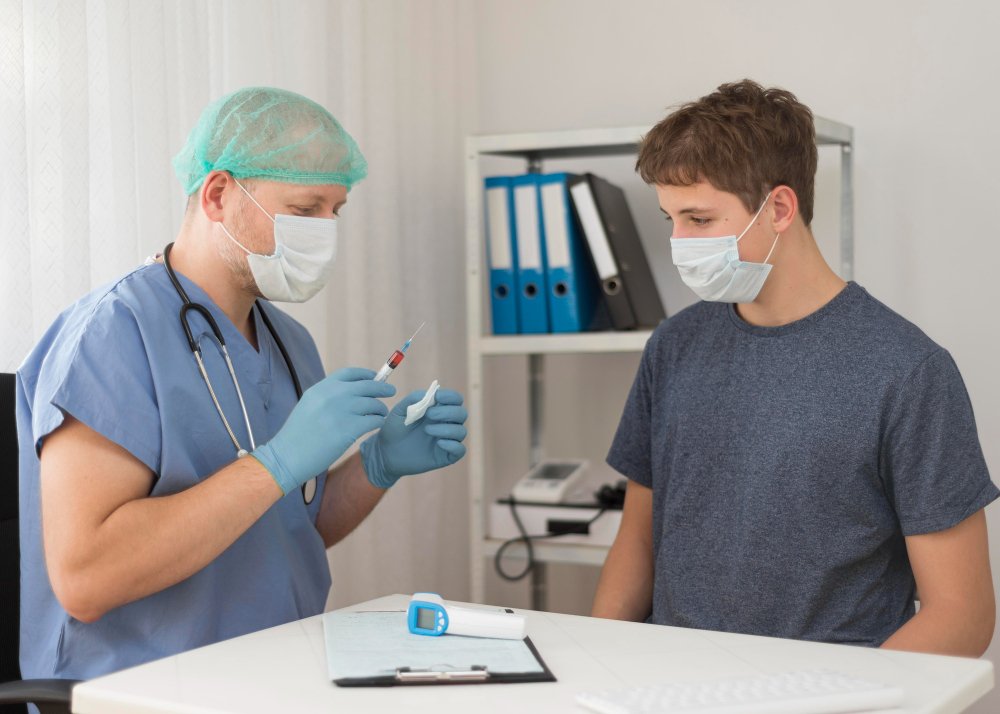
At 7:40 a.m. on a recent Thursday, a young associate at a Karachi fintech firm rolled up his sleeve in a private clinic tucked behind a café. No fanfare. No social media post. Just a quick subcutaneous injection of NAD+, followed by a glass of water and a return to spreadsheets.
He told me, almost casually, that coffee had become unreliable. It lifted him briefly, then dropped him just as quickly. NAD+, he insisted, was remarkably effective in keeping his concentration steady through twelve-hour forecasting sessions, significantly reducing the mental haze he once accepted as normal.
| Category | Details |
|---|---|
| Molecule | NAD+ (Nicotinamide Adenine Dinucleotide), a coenzyme found in all living cells |
| Core Function | Converts nutrients into ATP, supports DNA repair, activates sirtuins |
| Age Impact | Levels may decline by up to 50% by age 40 |
| Delivery Methods | IV infusions (250–1000 mg), subcutaneous or intramuscular injections, oral precursors (NR, NMN) |
| Reported Benefits | Improved focus, reduced brain fog, sustained energy, mood stability |
| Public Attention | Discussed by Hailey Bieber, Jennifer Aniston, Dr. Andrew Huberman |
| Medical Status | Ongoing research; stronger evidence for precursors than direct injections |
In recent years, the conversation around performance has shifted decisively. Young professionals are no longer satisfied with temporary stimulation. They want sustainable clarity, energy that behaves less like a spark and more like a steady current powering a city grid.
NAD+, short for nicotinamide adenine dinucleotide, sits quietly inside every cell. It functions as an extremely effective messenger, delivering electrons to mitochondria, generating ATP, mending DNA, and triggering sirtuins that control aging processes. Without it, energy production slows, signaling weakens, systems falter.
By age forty, researchers estimate, NAD+ levels may have declined by nearly half. That decline is accelerated by stress, alcohol, erratic sleep patterns, and unrelenting deadlines, progressively exhausting reserves that once seemed endless.
This decline is real for professionals in the fields of technology, finance, consulting, and medicine. It shows up as foggy afternoons, slower recall, emotional reactivity. In the context of hyper-competitive industries, even small cognitive slips can feel disproportionately costly.
NAD+ functions upstream at the cellular level, in contrast to caffeine, which stimulates the nervous system and frequently results in a spike-and-crash cycle. By supporting mitochondrial function and activating repair enzymes, it aims to create energy that is particularly innovative in its steadiness.
A venture capitalist I interviewed described it using a surprisingly mechanical analogy. He grinned and said, “It’s like upgrading the battery instead of pushing the accelerator harder.” The comparison felt strikingly similar to how executives describe server optimization: fix the infrastructure, and performance follows.
Delivery methods vary.
IV infusions, typically ranging from 250 to 1000 milligrams, promise maximum bioavailability, often administered over several hours in clinics that resemble boutique lounges. More recently, self-administered subcutaneous or intramuscular injections have become surprisingly affordable and highly efficient alternatives, allowing busy professionals to avoid lengthy appointments.
Through direct injection, users believe absorption is faster and effects are notably improved compared to oral supplements, which must pass through digestion. Although research is still evolving, the perception of immediacy carries undeniable appeal.
Over the past five years, online searches related to NAD+ therapy have surged dramatically, reflecting a broader shift toward proactive health optimization. This is less about vanity and more about resilience.
Celebrity visibility has amplified the trend. When celebrities like Jennifer Aniston and Hailey Bieber publicly discuss NAD+ infusions, the treatment seems less cutting edge and more commonplace. Dr. Andrew Huberman’s podcast discussions, delivered in exceptionally clear scientific language, have further legitimized the biochemical logic.
However, beneath the polished endorsements is a reality that is more grounded.
Medical experts emphasize that evidence in young, healthy adults remains limited. Instead of direct injections, the most reliable data relate to NAD+ precursors such as nicotinamide riboside and NMN. Some doctors subtly speculate that treatment-related expectations, rituals, and better lifestyle discipline may contribute to the reported benefits.
Side effects, while generally mild, exist. Flushing, headaches, nausea, or a burning sensation at the injection site are occasionally reported. When people buy goods from unregulated suppliers, quality control issues surface, underscoring the significance of expert supervision.
During one clinic visit last autumn, I watched a row of young professionals sitting in recliners, laptops open, IV lines attached, reviewing pitch decks while fluids dripped steadily. The scene felt both futuristic and strangely ordinary.
I remember thinking how quietly radical it is to treat focus as something injectable.
For many users, the appeal extends beyond energy. NAD+ is described as incredibly versatile, supporting mood stability, reducing neuroinflammation, accelerating recovery after travel or intensive work sprints. Some report feeling significantly faster in cognitive processing, particularly during complex analytical tasks.
In conversations, I repeatedly heard the phrase “no crash.” That absence is powerful. It implies steadiness instead of volatility and control instead of reliance.
Still, responsible practitioners consistently frame NAD+ as a supplement to fundamentals, not a substitute. Sleep is still a very effective way to restore mental clarity. Balanced nutrition provides precursor molecules naturally. Exercise stimulates mitochondrial growth, strengthening cellular capacity organically.
Some experts think they are optimizing performance within their own biology by combining NAD+ therapy with disciplined habits, much like businesses optimize supply chains through data analytics.
The broader pattern is difficult to ignore.
In the coming years, as industries demand sustained mental output and rapid adaptation, tools that enhance cellular efficiency may become increasingly normalized. The goal is practical endurance rather than reckless immortality.
For early-career professionals juggling ambition and exhaustion, NAD+ injections represent something symbolically potent: agency. Rather than waiting for burnout to force change, they are acting early, seeking notably improved resilience.
Whether the long-term data will fully justify the enthusiasm remains uncertain. Clinical trials continue. Regulations change over time. Experts advise moderation, caution, and openness.
Yet there is also a distinctly optimistic undercurrent.
Young professionals are thinking about cellular health decades earlier than previous generations did. They are reading scientific literature, consulting physicians, tracking biomarkers. That shift alone feels particularly innovative, reflecting a culture that values prevention over repair.
In this situation, the needle becomes more about upkeep and less about vanity.
And while NAD+ may not be a miracle, it represents a compelling chapter in a larger narrative: a generation choosing to upgrade its internal infrastructure, building capacity carefully, methodically, and, they hope, sustainably.
