

The size of Saint Kitts and Nevis is not the first thing that comes to mind. It’s the silence. When you stand by Basseterre’s harbor and watch ferries glide in and out, there’s a sense of calm that seems almost intentional, as if the nation has chosen to slow down while the rest of the world speeds up.
One could easily refer to it as paradise. The water is exceptionally calm, the beaches are spotless, and Mount Liamuiga can be seen rising in the distance, its slopes covered in green that almost seems staged. However, even a short visit here reveals a deeper level of complexity. It seems as though the nation is actively negotiating its future behind the picture-perfect scenery.
These islands were among the first in the Caribbean to be colonized by Europeans, a fact that is still evident in the architecture, which includes narrow streets that appear to have been planned for a different century, stone churches, and plantation ruins. It’s difficult to ignore how history has been repurposed here, sometimes in an elegant way and sometimes in an unsettling way, as you pass an old sugar estate that has been transformed into a boutique hotel. The past may have been softened but not completely erased by tourism.
Naturally, a large portion of the economy is driven by tourism. When cruise ships arrive, waves of tourists are released, moving in predictable patterns through markets, beaches, and gift shops. Locals observe; some are hospitable, while others are reticent. Arrivals in the morning, departures in the afternoon, and evenings that revert to a more subdued state all have a rhythm. Although investors appear to think this model is viable, it’s still unclear if relying solely on tourism can endure in an increasingly uncertain world.
| Category | Details |
|---|---|
| Country Name | Saint Kitts and Nevis |
| Capital | Basseterre |
| Population | ~46,000 |
| Independence | 1983 (from UK) |
| Currency | East Caribbean Dollar |
| Geography | Two volcanic islands in the Caribbean |
| Key Features | Rainforests, beaches, dormant volcanoes |
| Economy | Tourism, citizenship-by-investment, agriculture |
| Social Issues | Youth employment, drug awareness initiatives |
| Reference Links | Official Tourism Site • BBC Country Profile |
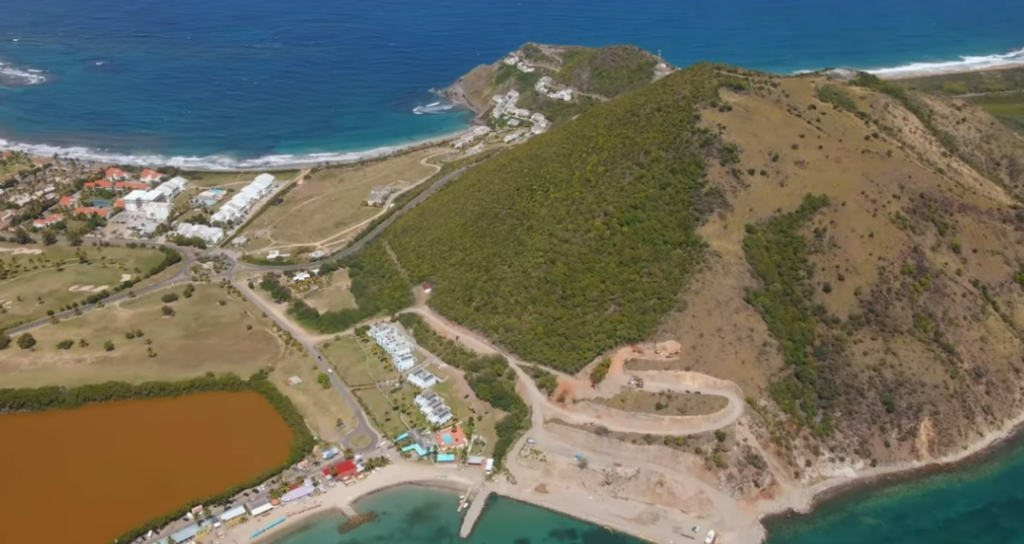
One of the most talked-about features of the nation is the citizenship-by-investment program. It has generated substantial income, drawn in foreign investment, and changed some aspects of the real estate industry. Along the shoreline, brand-new, contemporary villas occasionally stand in stark contrast to older neighborhoods a short distance away. Wealth seems to be coming in, but it’s not always settling evenly.
The tone changes slightly when speaking with locals. Unmistakably, pride is present, but so is caution. In particular, young people appear to be torn between opportunity and constraint. Although connectivity and education have improved, there may still be a shortage of jobs, particularly outside of the tourism industry. It’s unclear what will happen to the groups of teenagers gathered around a roadside store, laughing but lingering.
Recent community initiatives, such as partnerships between public organizations and churches, have concentrated on problems like youth drug use. Although it is not immediately apparent to tourists, it is a topic of discussion within the nation. It is acknowledged that small countries are more directly affected by social issues and cannot afford to ignore them.
However, there is no sense of stress in this place. It has a measured feel. People congregate outside homes, on beaches, and along quiet roads in the late afternoon as the sun sets and the temperature drops a little. Talking goes on. Time slows down. Despite everything, the nation seems to have managed to hold onto something that many other places have lost: a sense of pace that defies urgency.
The islands’ cultures are a patchwork of African, British, and Caribbean influences that aren’t always easily classified. The sound of passing cars fills the air. Food vendors offer dishes that are both recognizable and unique. Festivals temporarily change the atmosphere from one of calm to one of celebration with their bursts of color and vitality. It’s a place that knows how to be alive and at ease at the same time.
The future is still unclear, though. As with many island nations, climate concerns are on the back burner. Stronger storms and rising sea levels are not abstract concepts in this context. Even if they do so subtly, these possibilities influence planning. Although economic diversification is frequently discussed, progress seems to be slow and occasionally unpredictable.
The issue of identity is another. The nation is becoming more visible as interest from around the world increases due to tourism, investment, and even international sporting events. However, visibility creates pressure. Finding it is one thing. Managing the attention that comes with it is a different matter.
There’s a sense that Saint Kitts and Nevis is carefully balancing as this develops. Not opposing change, but also not jumping right into it. maintaining its speed despite outside pressure to accelerate.
