

Eid mornings are rarely peaceful. The streets start to change even before dawn: children pulling at sleeves, men walking quickly in pressed clothing, and the subtle scent of starch and perfume permeating the air. The typical traffic hum in places like Faisalabad or Karachi seems to be muted, as though the day itself knows it needs to act differently. Yes, Ramadan is coming to an end, but more than that, it’s a measurable but unmistakable release.
After a month of fasting from sunrise to sunset, Eid Al-Fitr is the first day of Shawwal. That is a fairly straightforward fact. However, it’s difficult not to feel that the significance goes beyond religious duty when you’re standing outside a mosque with rows of worshippers and unevenly stacked shoes close to the entrance. People seem to be coming not only to pray but also to breathe. It’s possible that the strictness of Ramadan causes a kind of subdued tension, which eventually eases on Eid.
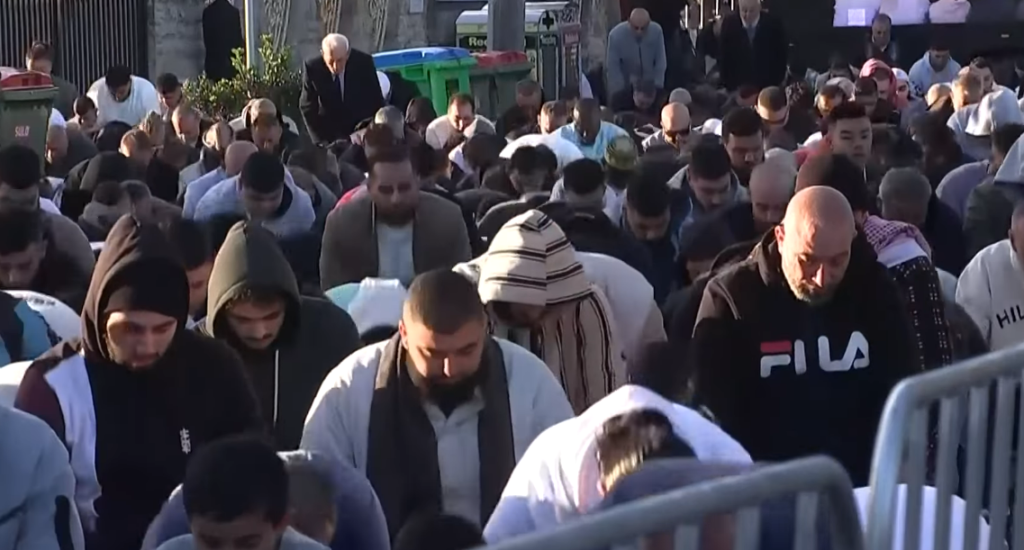
It’s almost surprising how short the prayer is. Thousands of people bowed together, raising and lowering their voices before swiftly dispersing into hugs and handshakes. There’s a rhythm to this as you watch it happen: structure giving way to spontaneity, ritual followed by warmth. It’s difficult to ignore how quickly the mood changes from solemn to joyous, as though the distinction between the two was never that clear in the first place.
The little things start to matter more when you’re outside. Balloon vendors, kids comparing clean banknotes in their pockets, and someone straightening a slightly crooked cap. These moments seem commonplace, almost insignificant, but they have significance. There’s a sense that these smaller, transient interactions—brief smiles, informal greetings, the quiet acknowledgment of shared experience—are what make Eid so special.
| Category | Details |
|---|---|
| Event Name | Eid Al-Fitr |
| Religion | Islam |
| Significance | Marks the end of Ramadan fasting |
| Islamic Month | 1st of Shawwal |
| Observances | Eid prayer, charity (Zakat al-Fitr), feasting, gatherings |
| Duration | Typically 1–3 days depending on country |
| 2026 Date | Evening of March 20 – March 21, 2026 |
| Key Ritual | Congregational Eid prayer |
| Cultural Practices | New clothes, sweets, visiting relatives, Eidi (gift money) |
Naturally, food follows shortly after. Sheer khurma, biryani, and kebabs—dishes made with such careful attention to detail that they seem to have been anticipated for weeks—fill tables. The kitchen becomes the focal point of many homes, attracting and retaining people. It’s still unclear if the act of gathering around meals is more important than the meals themselves. Maybe they are both inseparable.
However, the wider world is not unaffected by Eid. Images of prayers in conflict-marked locations, such as streets converted into places of worship and open fields where mosques once stood, are circulating in 2026. That contrast is tense. On the one hand, the festivities go on. However, reality interferes. It’s possible that this duality has always existed on Eid, but it feels more apparent and immediate now.
At the heart of it all is charity, which is frequently less obvious than the celebrations. Giving zakat al-Fitr prior to the prayer guarantees participation even for those on the periphery. That practice has a certain humility and serves as a reminder that a celebration is incomplete without participation. However, it is unclear how consistently this ideal is upheld outside of the ritual.
Eid Al-Fitr is a reflection of a wider cultural pattern in many respects. People look for moments of release following times of restraint, whether they be seasonal, religious, or economic. Consider harvest festivals following months of work or Christmas following winter. Perhaps the precision is where Eid differs. It arrives through the sighting of the moon rather than just the calendar, adding a tiny bit of uncertainty that somehow makes it feel more human.
The question of how Eid is evolving is another. Younger generations celebrate it in a different way because they grew up with social media and global influences, sharing carefully chosen photos that combine tradition and modernity. Whether this change makes the festival stronger or weaker is still up for debate. Even though the surface changes, there’s a feeling that the core stays the same.
However, it’s difficult to ignore the fact that the most memorable Eid moments are rarely the ones that are scheduled. An extended conversation. A child in new clothes dozing off. After a hectic day, there’s a quiet moment when the noise subsides and something softer takes its place. As I watch this happen, I get the impression that Eid is more than just a way to celebrate the end of Ramadan. It’s about giving people a fleeting, imperfect reminder of what connection feels like when it’s not hurried.
