

The initial indication of trouble wasn’t very dramatic. There was only a flicker.
The E-mini S&P 500 futures contract was trading close to 6,793 at 1:16 a.m. Chicago time, down about 1.4% from the previous close. Long before the coffee carts in Manhattan arrived, the numbers were glowing red on trading dashboards all over Asia. Near 6,820, futures had opened. Almost instantly, sellers leaned in, causing prices to drop toward the session low of 6,783.
The texture of overnight markets is different. Liquidity decreases. Price changes seem more abrupt and occasionally inflated. However, people take notice when the S&P 500 futures fall more than 1% before sunrise. These contracts are more than just hypothetical agreements. They represent how investors feel about everything from interest rates to oil, and they are the beating heart of the world’s appetite for risk.
Naturally, oil has played a role in the narrative. A new level of tension has been introduced into equity markets by rising crude prices, bringing back memories of previous inflation scares. Investors appear to think that rising energy prices might make the Fed’s already difficult balancing act more difficult. Rate cuts could be postponed if oil prices continue to rise. Every tick lower is subtly impacted by that possibility, which lurks in the background.
| Category | Details |
|---|---|
| Contract Name | E-mini S&P 500 Futures (Ticker: ES) |
| Exchange | Chicago Mercantile Exchange (CME) |
| Contract Size | $50 × S&P 500 Index |
| Current Price | 6,792.75 (Mar 2026 contract) |
| Day Range | 6,783.00 – 6,820.25 |
| 52-Week Range | 4,832.00 – 7,043.00 |
| Settlement Type | Cash |
| Average Annual S&P 500 Return | ~11.9% since 1957 |
| Reference Sources | CME Group, Yahoo Finance |
The move has weight in theory. The futures contract fell below the 100-day simple moving average, which traders pay close attention to almost religiously. Breaking it changes the tone but does not ensure a greater decline. A prolonged decline below this line might invite tests of deeper support close to the 200-day average, which is at 6,420. When confidence wanes, markets tend to move toward those institutional landmarks.
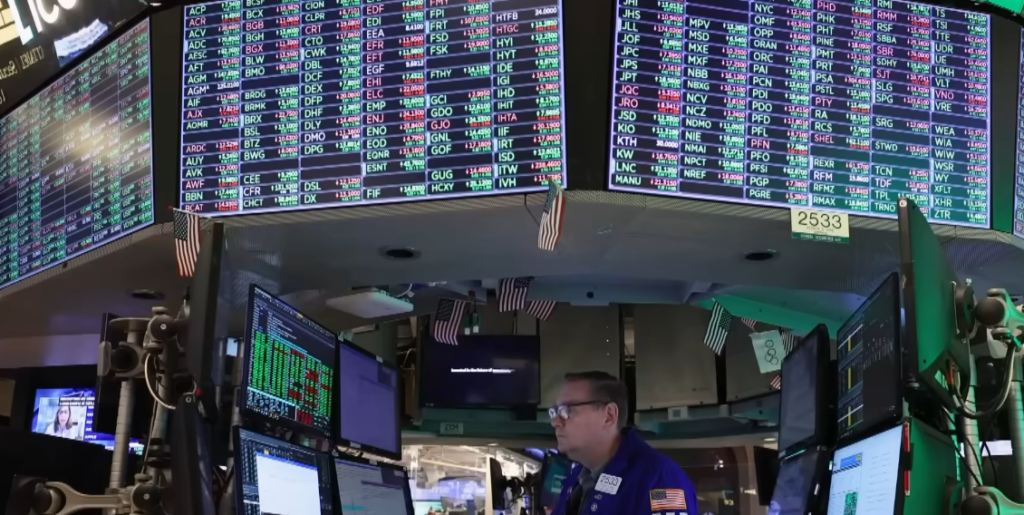
When I once passed a trading floor in lower Manhattan, the sound of phones ringing, keyboards clacking, and televisions whispering financial news was deafening. Nowadays, algorithms handle a large portion of that activity in silence. In milliseconds, automated models react to news headlines by readjusting portfolios, hedging exposure, and selling futures. It seems as though machines react first and humans interpret later when watching the screens during volatile sessions.
The story is made more difficult by the larger background. Over the past year, the S&P 500 has risen by almost 14%. Returns after five years appear even more remarkable. The index has reached multiple highs thanks to the efforts of tech behemoths Nvidia, Microsoft, and Apple, which have fueled optimism about AI and business profitability. However, zeal, particularly when focused, can conceal weakness.
Fatigue was suggested by recent sessions. Questions were being raised about AI valuations. Unease was sparked by an inflation print that was hotter than anticipated. Then another factor was introduced by geopolitics. Whether the current decline is a structural change or just a break in a robust trend is still unknown.
Futures declines are frequently framed as predictive by investors. Futures markets, however, are impulsive. They take in information fast, sometimes going overboard. Moves in thin overnight trading have the potential to exacerbate anxiety. It’s possible that sentiment will have stabilized by the time the New York cash market opens.
Additionally, there is a noteworthy divergence. In contrast to the cap-weighted index, equal-weight ETFs that track the S&P 500 have remained comparatively stable. That implies that breadth isn’t eroding. Alarms are raised when weakness is distributed equally across sectors. As of right now, selling seems to be concentrated in high-growth names that are volatile and susceptible to rates.
The speed at which narratives change is difficult to ignore. Just a few weeks ago, the talk was about record highs and strong profits. These days, discussions center on inflation risk and support levels. The movements of markets are not linear. They have breath. They swell, shrink, and pause.
When considering past geopolitical shocks, such as the early stages of the conflict between Russia and Ukraine or abrupt escalations in the Middle East, equity futures frequently experienced a steep decline before rebounding once more information became available. Recurrence is not guaranteed by history. It does, however, provide perspective.
Tonight’s S&P 500 futures traders are probably more realistic than panicked. Many are purchasing protective options, lowering leverage, and limiting exposure. They’re not making collapse predictions. They’re adapting to the unknown. That difference is important.
The phrase “the market is paying for insurance, not apocalypse” is making the rounds on desks. The mood is captured. A 1% or slight decline in futures indicates caution rather than surrender. The volatility has slightly increased. The VIX is gradually rising. Credit markets, however, continue to be stable. The Treasury yields are reacting gradually.
Nevertheless, psychology has a significant impact. A technical level stays in traders’ thoughts after it breaks. Algorithms adjust themselves. Stop-loss orders come into effect. Sometimes the process feeds on itself, and other times it does so continuously.
Screens will get brighter and conference call voices will return as the sun rises over Wall Street. Futures might level off. They might get even more sloppy. In a bull market that is still going strong, this incident might end up being forgotten. It might also signal the beginning of a longer period of consolidation.
