

Some selloffs seem to be routine. On some days, a stock appears to fall through the floor. After management halted full-year guidance, Odd stock, or the public shares of Oddity Tech Ltd., recently closed at $11.77, down almost 50% in a single session. The decline feels more like a rupture than volatility for a company that reached a high of $79.18 in the last 12 months.
The odd thing is that the quarter wasn’t all that bad. Revenue reached $152.7 million, up 23.5% from the previous year. At $0.20 per share, earnings exceeded forecasts. Despite a slight compression, gross margins were still healthy. This isn’t a failing company on paper. Looking at the numbers, it almost seems like a business that ought to be stabilizing rather than collapsing.
The vulnerability revealed by a single algorithm, however, is not captured by spreadsheet numbers.
The management revealed that the cost of acquiring new customers doubled as a result of a change made by its biggest advertising partner. Clever, data-driven, and based on AI personalization, the company’s “Try-Before-You-Buy” model abruptly lost effectiveness in auction-based ad placements. Initial purchases were no longer profitable. A 30% decline in sales is anticipated in the next quarter.
| Company Name | Oddity Tech Ltd. |
|---|---|
| Stock Ticker | ODD (NASDAQ) |
| Founded | 2013 |
| Headquarters | Israel |
| Employees | 489 (2024) |
| Market Cap | ~$675 Million |
| 52-Week Range | $11.61 – $79.18 |
| Latest Price | $11.77 (Feb 27 Close) |
| Q4 2025 Revenue | $152.7 Million (+23.5% YoY) |
| Net Margin | ~14% |
| Official Website | https://www.oddity.com |
| Nasdaq Listing Page | https://www.nasdaq.com/market-activity/stocks/odd |
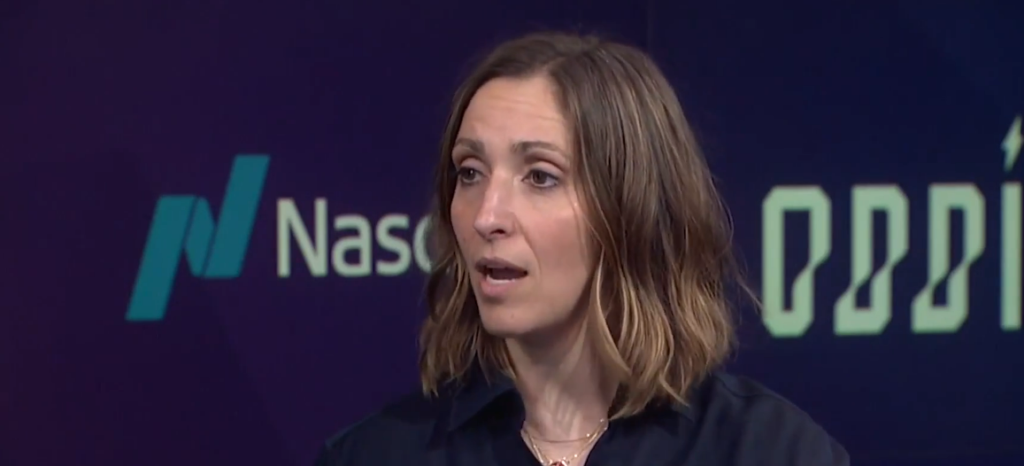
The vulnerability of contemporary growth engines is unsettling. Teams that previously optimized marketing funnels are now readjusting budgets, reducing campaigns, and saving money inside Oddity’s Tel Aviv offices. The company’s dependence on a single advertising channel may have been underestimated by executives. This dependence is shared by many tech-enabled consumer brands. Seldom do people come clean about it.
The investors responded quickly. The stock was downgraded by Bank of America to “underperform,” with a price target of $10. The expectations of other analysts were lowered. Hedge funds are reevaluating the large positions they had taken during the company’s IPO boom. Although it’s still unclear if the panic is warranted, there is a sense that it may have outrun analysis as the stock chart plummets from the mid-teens to almost $11.
Oddity isn’t your average beauty brand. It runs digital-first brands like SpoiledChild and IL MAKIAGE, matching products with customers through machine learning. In 2025, repeat business accounted for about 70% of its total sales. That figure is significant. It implies that once clients join the ecosystem, they typically remain, producing steady cash flow.
However, first impressions are crucial in both business and beauty. The pool of potential users is reduced if acquisition costs stay high for several months. A poor first-half acquisition could result in poorer repeat sales later in the year, according to CFO Lindsay Drucker Mann. The flywheel of growth slows down. Momentum wanes.
Additionally, a legal cloud is gathering in the sky. Investigations into potential misstatements have been started by a number of law firms. Although many of these investigations end in failure, they contribute to the climate of skepticism. Uncertainty spreads swiftly in a market already leery of tech firms that depend on outside platforms.
Oddity’s balance sheet adds complexity to the narrative. According to reports, the company has little debt and more than $700 million in cash on hand. It is still profitable. In consumer technology, net margins of about 14% are enviable. This is not a startup that is struggling to raise money. It is structurally sound, at least for the time being.
This moment is difficult to avoid comparing to previous platform-dependent shocks. Digital publishers were once shook by changes to Facebook’s algorithm. Ad tech companies were squeezed by Apple’s privacy changes. A few adjusted. A few of them faded. Oddity is now at a similar juncture. Investors appear to be inquiring as to whether management can reconstruct its acquisition strategy or if this indicates a more serious weakness in the company’s architecture.
On the ground, the company is still working on dermatological products, proprietary peptides, and ODDITY LABS. AI agents that are intended to increase personalization are being improved by engineers. Workers continue to visit the office to examine dashboards and evaluate performance indicators. The equipment is still running. It’s simply operating with greater caution.
According to estimates, the price-to-earnings ratio of odd stock is currently between 6 and 8, which suggests skepticism that verges on disbelief. It seems that investors are factoring in extended disruption. Perhaps they are correct. They might also be extrapolating a brief period of turbulence into a long-term disability.
Markets, particularly in the technology sector, fluctuate remarkably quickly between optimism and pessimism. Oddity was a rapidly expanding disruptor a year ago, praised for fusing data science and beauty. It serves as a warning about platform risk today. Most likely, the truth lies somewhere in the middle.
Observing this development, one gets the impression that the stock’s decline speaks as much about Wall Street’s willingness to accept uncertainty as it does about the business. Up until it falters, growth is rewarded. It is then promptly punished.
