

The glass towers surrounding Park Avenue in Midtown Manhattan frequently have an odd, peaceful glow in the late afternoon. Coffee cups pile up, analysts gaze at spreadsheets, and discussions veer between doubt and optimism. The HPS Corporate Lending Fund has been a recurring topic in those discussions in recent days.
Despite the fund’s size (roughly $26 billion), its prominence cannot be explained by its size alone. What appears to be going on around it is more like a tiny glimpse into a larger financial narrative.
The HPS Corporate Lending Fund is a private credit company that is commonly referred to by its ticker, HLEND. That expression sounds technical, perhaps even uninteresting. However, its workings are surprisingly straightforward. The fund makes direct loans to businesses, primarily those operating in the middle tier of the economy. These are not massive conglomerates like Apple or Amazon, but rather smaller companies that manage logistics networks, produce parts, or operate local service providers.
It’s simple to envision the kinds of businesses these loans reach when strolling through industrial parks in states like Ohio or Texas. The loading docks at a warehouse are being expanded. A distributor of medical equipment is expanding its facilities. Funds like HLEND are frequently the source of the funding.
In any case, that is the theory.
| Fund Name | HPS Corporate Lending Fund |
|---|---|
| Ticker | HLEND |
| Fund Type | Non-exchange traded Business Development Company (BDC) |
| Fund Size | About $26 Billion |
| Strategy | Direct lending to middle and upper-middle market companies |
| Managed By | HPS Investment Partners |
| Parent Company | BlackRock |
| Investment Focus | Senior secured, floating-rate corporate loans |
| Investor Feature | Monthly income distributions |
| Liquidity Structure | Quarterly repurchase program (up to 5% of shares) |
| Industry | Private Credit / Alternative Investments |
| Reference | Fund overview on HPS Corporate Lending Fund Official Website |
| Market & Corporate Info | Parent company profile on BlackRock Official Website |
Private credit has expanded quickly over the last ten years. Following the financial crisis, banks reduced their lending to corporations, in part because of regulations and in part because of caution. Asset managers took over. With the promise of alluring yields in return for patience, companies such as HPS Investment Partners started to raise billions from wealthy individuals and institutional investors.
Additionally, the trade appeared to be almost effortless for a while.
Investors enjoy hearing about stable income, which is what the HPS Corporate Lending Fund promotes. It usually offers senior secured loans with variable rates, which change in tandem with rising interest rates. In some instances, that structure has generated annual yields close to ten percent, which is significantly higher than those of conventional bonds sold during the period of nearly zero interest rates.
Investors took notice.
Private credit funds were added to client portfolios by financial advisors. Additional allocations were made by pension funds. The asset class was characterized by wealth managers as a means of diversifying away from fluctuations in the stock market.
However, funds such as HLEND have a unique structure. Investors are unable to take their money out at any time.
Though only up to 5% of the fund’s total shares may be repurchased, the fund technically permits share repurchases every quarter. The design incorporates a guardrail. Without it, managers might be forced to sell long-term loans quickly and frequently at unfavorable prices due to a spike in redemption requests.
That guardrail has recently come into sharper focus.
Investors asked to redeem about 9.3 percent of the fund’s shares in the most recent quarter, which is nearly twice the permitted amount. In accordance with its regulation, which set a five percent withdrawal cap, the fund returned roughly $620 million rather than the approximately $1.2 billion that investors had requested.
It appears from observing the response in various markets that some investors were reminded of the true nature of private credit.
This stock cannot be sold right away. It is more akin to a long-term loan agreement, linked to companies whose cash flows and balance sheets develop over many years. The industry likes to say that liquidity is “managed.” The timing of the redemption requests, however, seems telling.
Approximately $1.8 trillion is currently controlled by the private credit sector worldwide. For years the sector expanded almost uninterrupted, benefiting from strong economic growth and low default rates. Higher borrowing costs, sporadic corporate bankruptcies, and mounting concerns about how resilient certain borrowers might be in the event of a downturn in the economy are some of the concerning signs that have emerged recently.
This does not imply that the system is failing. Not at all.
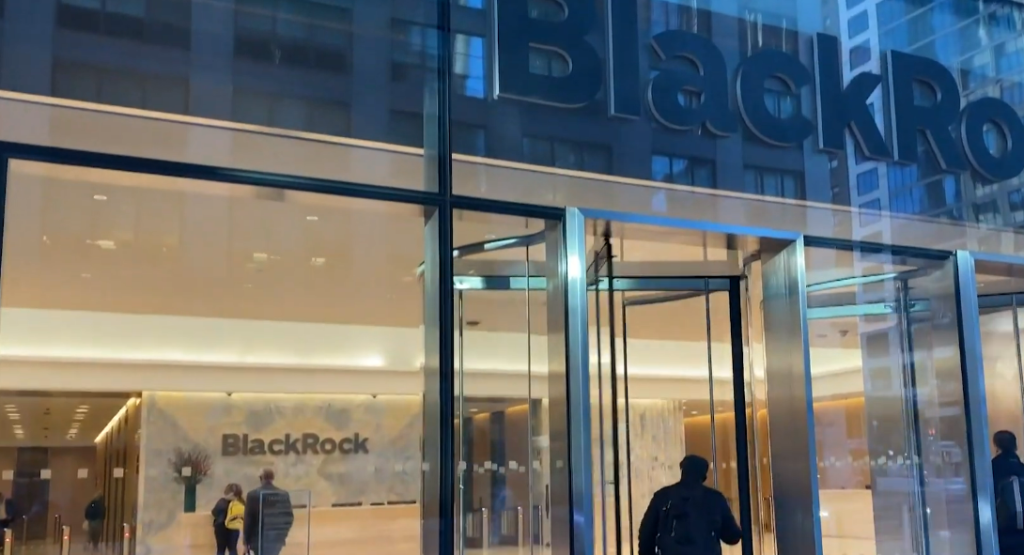
However, there is a noticeable change in tone as you stand outside BlackRock’s New York headquarters and observe staff members rushing between meetings. Talks seem more circumspect. Sharper inquiries concerning loan quality, leverage levels, and liquidity structures are made by analysts.
The recent spike in redemptions might just be the result of transient market anxiety. When headlines become ambiguous, investors frequently act swiftly, shifting funds to safer assets until the situation calms down. However, there is still another possibility.
In a decade when capital was plentiful and risk appeared to be controllable, private credit grew. The industry may be entering a stage where its design elements—the very structures intended to protect investors—become more apparent as long as interest rates stay high and international tensions cause erratic economic repercussions. Additionally, people may feel uneasy about visibility.
The HPS Corporate Lending Fund seems to be more than a single offering in a competitive financial market. It might resemble a stress indicator, discreetly displaying how investors act when uncertainty and liquidity collide.
It’s unclear if that tension subsides or develops into something more significant. Seldom do financial markets move in a straight line. However, one thing is clear from observing the response to HLEND.
