

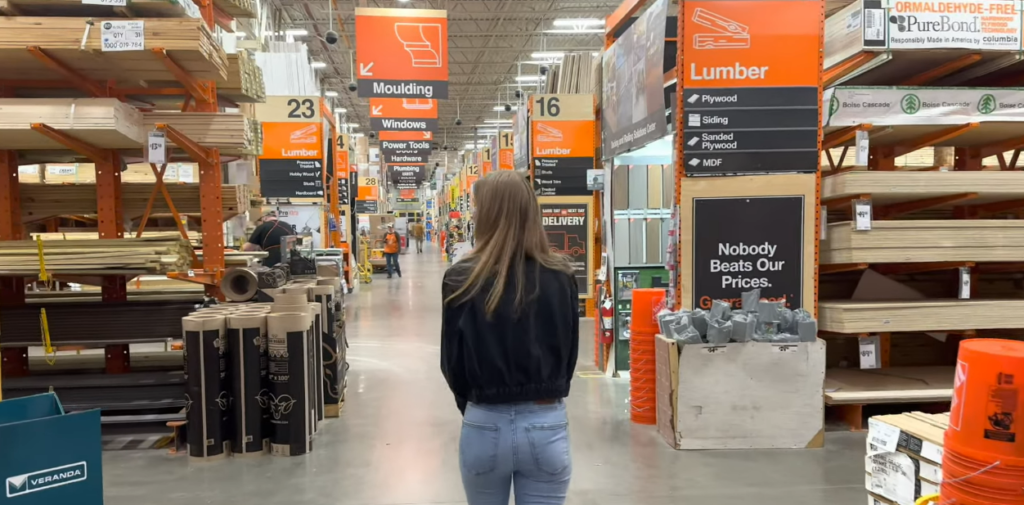
Taking a moment to look away from the chart and visualize the store is the most honest way to understand HD stock. The expansive concrete aisles, the fluorescent lighting, and the scent of freshly cut lumber coming from the rear. It’s not exactly busy on a weekday afternoon, but it’s also rarely deserted—contractors moving flatbeds filled with plasterboard, a homeowner gazing at a wall of faucets for too long as though the choice would affect their financial situation.
That same attitude pervaded Home Depot’s most recent quarter: stable, competent, and somewhat restrained. Comparable sales managed to slightly increase despite the company’s fourth-quarter sales of $38.2 billion, which was a 3.8% decrease from the previous year. The “extra week” that was missing from last year’s calendar is the kind of accounting oddity that makes earnings season seem like a joke, but it matters in this case because the underlying demand appears to be more like hesitation than collapse.
The theme that permeates practically everything about HD at the moment is that hesitancy. Executives reported that clients were delaying big projects because they were concerned about job losses and the affordability of housing. Because it translates into real-life scenarios—someone pushing a cart with paint and a new door handle, then forgoing the kitchen renovation they’ve been talking about for months—it’s an oddly personal admission for a retailer this size. When people do show up, investors appear to think they’re spending sensibly rather than extravagantly.
| Company Overview | Details |
|---|---|
| Company Name | The Home Depot, Inc. |
| Ticker | HD |
| Exchange | NYSE |
| Headquarters | Atlanta, Georgia, USA |
| CEO | Edward “Ted” Decker |
| Founded | February 6, 1978 (Marietta, Georgia) |
| Employees | ~470,000 (2025) |
| Market Cap | ~$386B (recently reported) |
| Dividend Yield | ~2.3% (recently reported) |
| Latest Dividend Move | Quarterly dividend raised ~1.3% to $2.33/share (annualized $9.32) |
| Store Footprint | 2,359 retail stores + 1,250+ SRS locations across North America |
| Official Investor Site (reference) | Home Depot Investor Relations |
| Official Earnings Release (reference) | Fiscal 2025 Results & 2026 Guidance |
In a way that seems almost human, the numbers support that. The average ticket increased while transactions decreased. Fewer trips and slightly larger baskets indicate that consumers are combining errands, purchasing necessities, and possibly adding a little extra weight to their carts due to rising prices or a desire to avoid returning the following weekend. Additionally, big-ticket transactions over $1,000 increased, which may seem positive until you consider how easily inflation rather than zeal can drive “up.”
Nevertheless, HD stock increased, rising about 2.8% in a single day. Because it doesn’t require a thriving housing market to appear competent, Home Depot gives investors a strange sense of comfort. It requires constancy. While the homeowner is debating whether a renovation is a necessity or a luxury, it must preserve margins. The leadership of Home Depot appears to be placing a wager that stability in and of itself is valuable at the moment, and Wall Street, which is typically impatient, has been surprisingly cooperative.
The dividend contributes to that willingness. For the 156th consecutive quarter, Home Depot has paid a cash dividend, increasing its quarterly payout by roughly 1.3% to $2.33 per share. That’s just a line item in the abstract. In the real world, it serves as a signal to long-term shareholders that management believes the company is strong enough to continue making money even when customers are being cautious.
Though not so optimistic as to make you spill your coffee, the company’s fiscal 2026 guidance is cautiously optimistic. Approximately 2.5% to 4.5% growth in total sales. Similar sales were flat to up 2%. 15 new stores or so. It is anticipated that earnings per share will be between flat and up 4%. In terms of housing turnover, mortgage rates, and the general attitude of customers as they gaze at their monthly payments, it reads like a retailer attempting to be forthright about what it can and cannot control.
Another is the subtle change in Home Depot’s identity. The store continues to serve weekend do-it-yourselfers, but as its supply and distribution network grows, the company is depending more and more on experts and larger projects. You can sense the seriousness of that clientele when you see early-morning contractors lining up close to the pro desk, drinking coffee from the gas station and looking over order sheets. These are not rash purchases. They are individuals who follow cycles and have crews, deadlines, and schedules.
However, the market might be giving Home Depot too much credit for its patience. Even diligent shoppers will eventually run out of projects they can put off if the housing market remains “frozen” for longer than anticipated. Leaks occur in roofs. Water heaters break down. Buckles in flooring. It remains uncertain whether a significant thaw will occur soon enough to boost the entire category, and whether those essential repairs can support growth in the same way that optional remodels did in the past.
In other words, HD stock is trading on a well-known American paradox: maintenance and anxiety. People care about their homes even if they don’t feel wealthy. They will fix what breaks, even if they don’t refinance. That unglamorous reality has served as the foundation for Home Depot’s empire, which sells competence by the box and by the gallon.
