

Long regarded as the lifeblood of competitive cheerleading, Cheer Athletics-Plano is currently embroiled in a moral and legal uproar. Just one day before a jury trial for disturbing sexual abuse claims against a former coach, the gym filed for Chapter 11 bankruptcy. Many in the cheer community felt that this action was eerily similar to strategies employed by influential groups to evade direct responsibility in the face of damaging lawsuits.
Nationally renowned athletes Hannah and Jessica Gerlacher, twin sisters, had sued their former coach Jason “Jay” McCartney in civil court, claiming that he had sexually abused them as children. They also claimed that despite being aware of possible wrongdoing, Cheer Athletics and the U.S. All Star Federation did not take any action to protect them. Their trial was essentially put on hold by the bankruptcy filing, which made their quest for justice more difficult and financially focused.
The Gerlacher sisters’ lawyer, Michelle Simpson Tuegel, said she was extremely disappointed in the bankruptcy’s timing. “A calculated move to avoid accountability,” she said. Given her involvement in other well-known abuse cases, such as those involving USA Gymnastics and the Boy Scouts of America, her viewpoint carries emotional weight. It’s difficult to overlook the similarities: organizations claiming financial strain when their real fear is the public revelation of their internal shortcomings.
Cheer Athletics – Case Summary and Key Details
| Category | Details |
|---|---|
| Organization Name | Cheer Athletics–Plano |
| Founders | Angela Rogers, Joseph “Jody” Melton, and Brad Habermel |
| Year Established | 1994 |
| Headquarters | Plano, Texas, United States |
| Case Title | Gerlacher v. Cheer Athletics–Plano, Jason “Jay” McCartney, and U.S. All Star Federation |
| Allegations | Sexual abuse by former coach and institutional negligence |
| Plaintiffs | Hannah and Jessica Gerlacher |
| Filing Type | Chapter 11 Bankruptcy (Eastern District of Texas) |
| Attorney for Plaintiffs | Michelle Simpson Tuegel |
| Estimated Assets | Less than $50,000 |
| Estimated Liabilities | Between $1 million and $10 million |
| Court Hearing | Civil trial postponed due to bankruptcy filing |
| Legal Impact | Automatic stay halts all ongoing litigation |
| Official Statement | “We made the strategic decision for reorganization after five years of legal expenses.” |
| Reference Link | FOX 7 Austin – Cheer Athletics Lawsuit Coverage |
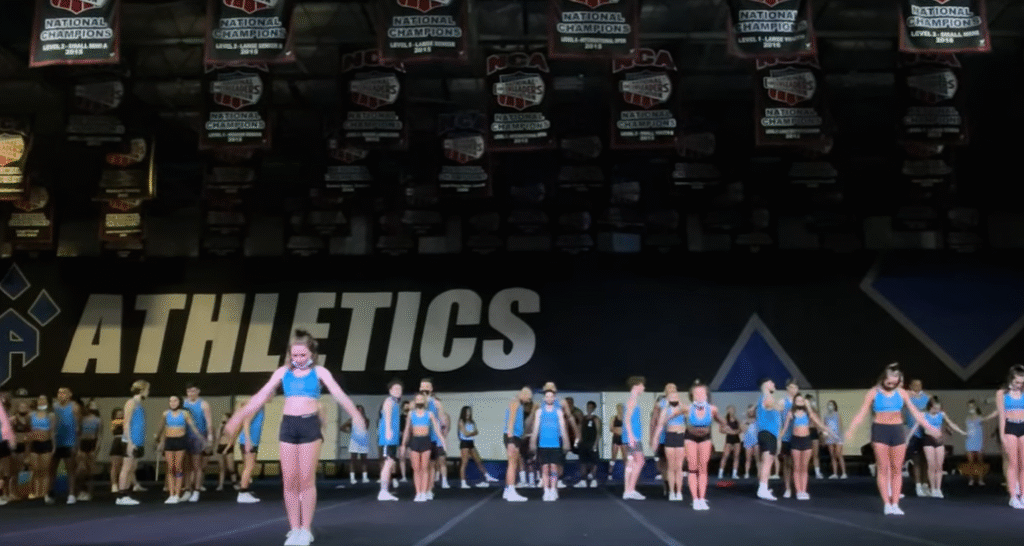
According to the gym’s Chapter 11 filing, its liabilities ranged from $1 million to $10 million, while its assets were less than $50,000. It immediately triggered the automatic stay, putting a halt to all legal proceedings, including the sisters’ case. Following five years of high legal costs, Cheer Athletics publicly presented the move as a “strategic reorganization.” The statement, which emphasized stability in the midst of chaos, reassured parents and athletes that practices and competitions would go on as planned.
The general public, however, has a different perspective on this. The timing is seen by many as representative of a culture in the industry that values appearance over honesty. Stunning performances and championship titles have been the foundation of the cheerleading industry’s success, which is now a billion-dollar business. However, there is a recurring problem of oversight that has been noticeably overlooked behind the glistening uniforms and planned routines.
In addition to being courageous, the Gerlacher sisters’ choice to come forward is especially important. Their voices, which were previously recognized for their accomplishments rather than their suffering, are now resonating on social media platforms as a call to reform youth sports. “They did not want to do this, but they wanted to protect others from going through the same trauma,” their lawyer said in a very clear and concise manner. Such declarations demonstrate how a more general call for systemic change is being shaped by deeply personal courage.
Despite being calm, Cheer Athletics’ response hasn’t done much to appease detractors. The gym’s management maintains that the bankruptcy was solely for financial reasons, with the goal of protecting staff and maintaining operations. However, survivor advocates contend that financial restructuring can be a very successful delay strategy that can drastically lower an organization’s immediate legal risk. The public narrative surrounding the case is still shaped by this conflict between corporate survival and moral obligation.
McCartney, who has not been charged with a crime and denies any wrongdoing, is at the center of the controversy. However, his name is listed as restricted and ineligible by the U.S. All Star Federation. The seriousness of the charges is demonstrated by that fact alone. Stronger federal oversight of youth sports is being demanded by advocates, who contend that private organizations’ voluntary compliance has not been enough to shield athletes from abuse.
There are a lot of similarities between this and what happened with USA Gymnastics. There, bankruptcy was employed as a procedural tool to manage payouts through a reorganization plan, delay trials, and combine lawsuits. That strategy is reflected in Cheer Athletics’ decision, which has reignited discussions about whether the bankruptcy process is being abused to protect influential organizations from damage to their reputation.
There is still cautious optimism in spite of the legal issues. Advocates for survivors and legal experts are still fighting for transparency because they think that court records and bankruptcy filings will eventually reveal the truth. Even though the process takes longer, it keeps the case going and compels Cheer Athletics to reveal its managerial and financial activities, which is a first step in determining whether this filing was actually required or just a calculated move.
The cheerleading community has already been forever changed by the case. It has prompted more families to inquire about background checks, safety procedures, and accountability systems in sports programs. More scrutiny is now being placed on coaches and gym owners, and governing organizations such as USASF are coming under increasing pressure to update their safeguards. Despite its pain, the scandal has spurred advancement, demonstrating that widespread indignation can result in significant change.
