

When Alm stock pushed past $17 earlier this week, reaching its 52-week high before easing slightly in after-hours trading, the trading floor was silent. No fireworks. No shaky TV commentary. Even though it’s just numbers rising on a screen, there’s a growing sense that something more significant is happening underneath the ticker.
One of the most talked-about names in the critical minerals industry is Almonty Industries, a Canadian mining company that created the ALM symbol. The catalyst is tungsten, a metal that industrial manufacturers and defense contractors suddenly care a great deal about but that most retail investors hardly ever consider. The market might just be starting to price in what that implies.
| Category | Details |
|---|---|
| Company Name | Almonty Industries Inc. |
| Stock Ticker | ALM (NASDAQ) |
| Founded | 2009 |
| Headquarters | Toronto, Ontario, Canada |
| CEO | Lewis Black |
| Industry | Tungsten Mining & Critical Minerals |
| 52-Week Range | $0.99 – $17.31 |
| Market Cap | Approx. CAD 6.37B |
| Flagship Asset | Sangdong Tungsten Mine (South Korea) |
| Official Website | https://almonty.com |
| Nasdaq Listing Page | https://www.nasdaq.com/market-activity/stocks/alm |
The stock has risen dramatically. ALM rose from almost $1 to over $17 in the last year as a result of tightening global supply and rising tungsten prices. Such an action draws notice — and suspicion. Despite the fact that commodity rallies tend to cool just as enthusiasm peaks, investors appear to think that geopolitics has fundamentally changed the tungsten market.
The background is important. In 2025, China, the world’s largest producer of tungsten, imposed export restrictions. Meanwhile, beginning in 2027, the U.S. Department of Defense plans to prohibit the purchase of tungsten that has been mined or processed in North Korea, China, or Russia. Western consumers are being forced to search elsewhere as a result of that policy change, which some analysts refer to as a supply squeeze.
Citing long-term price assumptions for ammonium paratungstate that are significantly higher than those used in earlier models, Couloir Capital more than doubled its fair value estimate for Almonty in a recent note. The news caused shares to jump more than 8%. It was evident from the day’s price movement that traders were responding to the notion that tungsten had turned into a strategic commodity in addition to valuation calculations.
A different narrative weight is assigned to strategic minerals. They enter the realm of national security and transcend industrial supply. Investors’ perceptions of risk are altered by that framing. These days, geopolitical alignment, supply chain resilience, and defense spending are more important than quarterly earnings alone. A similar model was provided by Rheinmetall’s rise in Europe during periods of increased defense spending: commodities linked to policy can fluctuate rapidly.
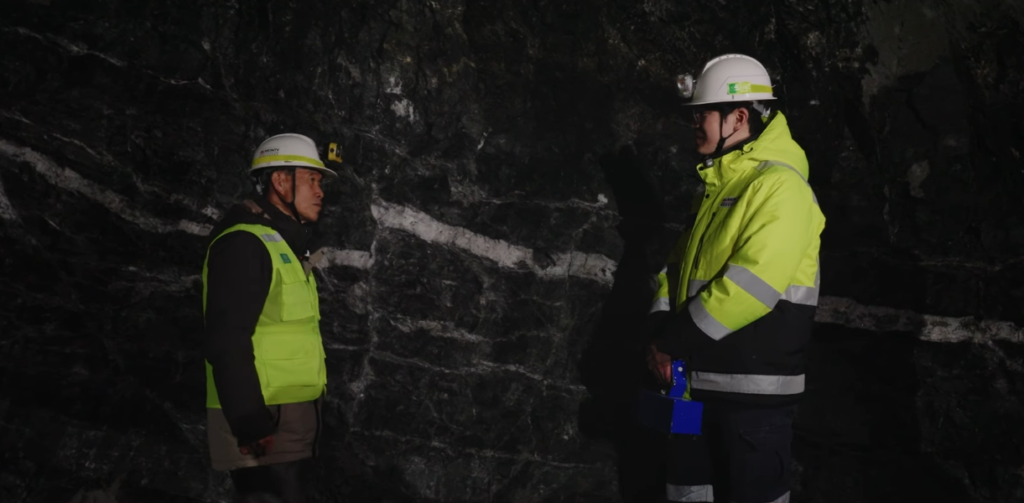
In late 2025, Almonty’s flagship Sangdong mine in South Korea went into production. By 2027, the company hopes to have increased production to full capacity. Images of large machinery slicing through mountainous terrain and conveyor belts stretching under chilly winter skies can be seen when visiting the site, at least virtually through investor presentations. It’s not glamorous to mine. It requires a lot of capital and is reliant on execution.
Optimism meets reality in execution.
Almonty is not yet a reliable source of income. The P/E ratio reflects expectations rather than actual gains, and its earnings per share continue to be negative. By purchasing ALM now, investors are essentially placing a wager on future cash flows that will be fueled by stable tungsten prices. That is a forward-looking bet, and it carries the typical mining risks of financing pressures, commodity volatility, and operational delays.
Nevertheless, the timing has a certain allure. Both investor decks and political speeches now include critical minerals. In the same sentence as semiconductors, rare earths, lithium, uranium, and now tungsten are mentioned. Domestic production is being subsidized by governments. Resources are being used to rotate funds. It’s difficult to ignore the change. However, markets don’t always move in a straight line.
Booms in commodities often go overboard. Quick price increases eventually cause supply to adjust. New initiatives are launched. The margins get tighter. Whether tungsten prices can stay high enough for Almonty to turn momentum into long-term profitability is still up in the air. Export-control-driven spikes may subside if regulations shift or a substitute supply becomes available.
Additionally, valuation psychology is involved. Alm stock has risen more than 1,500% since its 52-week low, and it is currently trading with higher expectations. Price targets have been raised by analysts. Forums are being used by retail traders to discuss it. The story is moving forward. However, stories can go the other way.
As this is happening, it seems like ALM is caught between two strong forces: geopolitical realignment and commodity scarcity. The upside case gets stronger if defense demand increases and tungsten supply stays limited. At the same time, sentiment may change if prices decline or there are delays in ramping up.
Themes like renewable energy, electric cars, and artificial intelligence are frequently pursued by investors. The next chapter in that sequence might be critical minerals. Almonty is situated inside that story by coincidence of time and place.
Whether it can sustain it is the question.
Production volumes, cost structures, and revenue trends will become the focus as March earnings draw near. Until they’re not, markets are patient. Although the current price conveys confidence, certainty is not the same as confidence.
