

There has been a noticeable shift in the tone of tech conferences throughout Europe, with the focus now being on rewriting the terms of engagement rather than chasing Silicon Valley. The days of attempting to replicate Palo Alto’s startup culture in Helsinki or Berlin are long gone. It is being replaced by something more subdued, stable, and grounded in many respects.
This change wasn’t abrupt. Years of trial and error led to its gradual emergence as researchers, policymakers, and founders realized that replicating Silicon Valley’s strategy—fast exits, breakneck expansion, and venture-first economics—wasn’t simply useless in this context. It was not in line with the true nature of innovation in Europe.
An ecosystem that prioritizes depth over speed and public value over hypergrowth is something that Europe has been incredibly successful at creating over the last ten years. This entails making investments in technologies that address structural issues rather than just customer annoyances. It also entails accepting complexity, something Silicon Valley tends to shun in favor of quick iterations.
Consider the Netherlands’ Brainport region. Despite being a center of cutting-edge engineering and industrial design, it hardly ever makes news in the tech world. Here, precision manufacturing, sustainable mobility, and microelectronics are the main topics. Blitzscaling isn’t appropriate for these industries. They are advancing steadily and have strong linkages to governmental institutions, SMEs, and universities.
| Strategy Element | What It Means | European Advantage | Notable Examples | Contrast with Silicon Valley |
|---|---|---|---|---|
| Deep Tech Focus | Prioritizing fundamental breakthroughs over fast consumer apps | Strong universities, research institutes | Brainport (Netherlands), biotech in France & Germany | Less emphasis on quick scale, more on long-term value |
| Strategic Autonomy | Reducing dependence on U.S. tech platforms | Sovereign cloud, EU chips act | Gaia-X, EPI, European Battery Alliance | Valley model relies heavily on U.S. infrastructure |
| Mission-Driven Innovation | Tackling real-world challenges through tech | Climate, health, public infrastructure | Horizon Europe, EIT Health | Valley favors disruptive apps over systemic change |
| Integrated Ecosystems | Connecting academia, industry, and public funding | EU-wide programs and legal coherence | Horizon Europe, Digital Innovation Hubs | Valley relies on private networks, VC ecosystems |
| Cultural Shift | Promoting sustainable, inclusive growth | Quality of life, regulation, long-termism | Revolut, remote-first startups, AI research labs | Silicon Valley thrives on blitzscaling and exits |
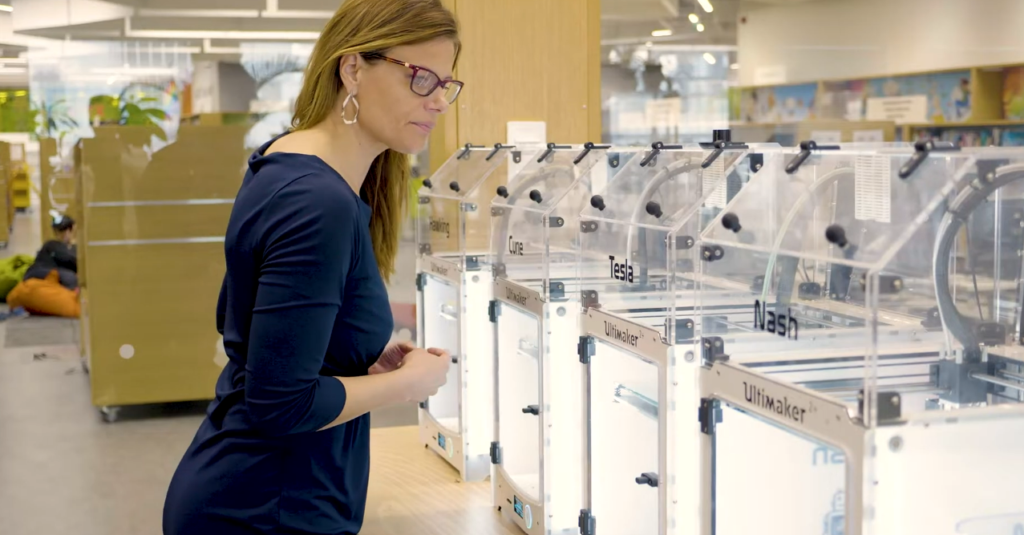
In contrast, Europe’s more methodical pace frequently feels incompatible with Silicon Valley’s rhythm, which is to pivot quickly, fail quickly, and raise faster. Europe frequently makes up for its lack of unicorn valuations with incredibly resilient infrastructure and technology that can grow carefully over time.
Deep tech is one important area where this difference is glaringly obvious. Fields like biotech, quantum computing, and energy storage require years of research, stable financing, and high-trust partnerships, in contrast to app development, which can be prototyped immediately. For decades, European nations—particularly Germany, France, and the Nordics—have fostered research environments that are specifically tailored to these fields.
Importantly, this focus on deep technology is a conscious reaction to changing geopolitical and economic circumstances rather than merely a niche tactic. Europe has realized that it is no longer optional to manage its own essential infrastructure, including cloud services, AI models, and processors, in the face of growing digital protectionism.
In this sense, projects like the European Processor Initiative and Gaia-X are very inventive. More than simply symbolic sovereignty is what they stand for. They want to create a digital environment in which interoperability, transparency, and data rights are not sacrificed for immediate gain.
The way that innovation is directed has significantly improved thanks to mission-driven funding initiatives like Horizon Europe. These initiatives consider whether issues are worth addressing rather than following every emerging consumer trend. The questions are based on public interest, ranging from healthcare equity to climate resilience, and the solutions are frequently found through long-term R&D collaborations rather than spectacular premieres.
At an innovation forum in Brussels, I recall hearing an Austrian researcher say, “We want to decarbonize steel, not create the next photo filter app.” The point was made, but the audience laughed.
Startups’ perspectives on scaling are also changing due to Europe’s renewed emphasis on strategic autonomy. Selling out too soon is becoming less popular, particularly with overseas buyers. More entrepreneurs want to expand sustainably while maintaining jobs and intellectual property in their native areas. This greatly raises the local value they keep, even though it might hinder their path to billion-dollar prices.
Businesses like Revolut and Klarna have grown by combining regulatory compliance with user experience rather than removing it, even in fintech, a traditionally disruptive industry. When confidence is crucial, that balance is especially advantageous.
This change in perspective is also being reflected in talent flows. More and more engineers and researchers are picking places for meaningful projects, housing, healthcare, and intellectual freedom rather than just raw pay. Instead of copying Silicon Valley, cities like Lisbon, Zurich, and Tallinn have drawn attention because they provide a more compassionate innovation culture.
Simultaneously, Europe’s regulatory framework, which is frequently perceived as a barrier, is being rethought as a competitive advantage. For example, the Digital Markets Act and the AI Act give developers more predictable guidelines. For sectors like cybersecurity, health technology, and driverless cars, where ambiguous or antiquated regulations elsewhere cause conflict, that is a huge advantage.
Governments, academic institutions, and businesses are already coordinating their agendas through strategic alliances in a way that seemed improbable only a few years ago. Through this collaboration, inefficiencies have been greatly decreased, and new funding channels for early-stage concepts that would have otherwise gone unnoticed have been established.
Of course, problems still exist. Fragmentation is still a problem, particularly for companies attempting to expand beyond legal and linguistic boundaries. Even if VC investment is growing, it still trails China and the United States in terms of both volume and risk tolerance. However, momentum is changing—and not by coincidence.
Europe is quietly building an innovation paradigm that doesn’t require speed to be better by utilizing its assets, which include talent variety, public ideals, and in-depth research. It must be inclusive, robust, and built for results beyond quarterly profits.
Success in the upcoming years won’t be determined by the number of unicorns that come out of Munich or Paris. It will depend on how well the tech ecosystem can support the development of ethical AI, robust supply chains, and clean cities.
