

The Supreme Court will hear a case in the fall that has the potential to change the rules for student loan relief. Perhaps more structurally significant than a general loan cancellation, the long-term sustainability of tailored forgiveness programs that assist students who have been misled by their schools or who are caught in unmanageable debt cycles is at risk.
In Department of Education v. Career Colleges and Schools of Texas, the Biden administration’s policies regarding income-driven repayment and borrower defense, notably the SAVE Plan, are being contested. These regulations were created in response to the Court’s 2023 ruling that the administration had overreached its power under the HEROES Act by overturning a comprehensive loan forgiveness program. A change in approach ensued, with a focus on legally limited but practically useful tools for relief.
The forthcoming review will concentrate on determining whether these more recent regulations, especially those pertaining to borrower defense claims, exceed the executive authority granted by the Higher Education Act. The restrictions’ proponents contend that they are necessary to shield students from dishonest organizations and abusive loan practices. For-profit college interests are frequently represented among the critics who feel that the regulations unfairly single out their industry and place undue costs on it.
| Key Detail | Description |
|---|---|
| Supreme Court Case | Department of Education v. Career Colleges and Schools of Texas |
| Review Scheduled | Fall 2026 |
| Focus of Case | Legality of borrower defense and SAVE Plan regulations |
| Original Biden Plan | Struck down by Supreme Court in 2023 |
| Legal Authority Challenged | Use of HEROES Act and Higher Education Act for debt cancellation |
| Affected Borrowers | Over 200,000 with pending Borrower Defense claims |
| Settlement Deadline | January 28, 2026 (Sweet v. Cardona applicants) |
| Broader Legal Landscape | Ongoing legal fights over SAVE Plan, IDR rules, and relief mechanisms |
| Notable Court Position | Standing for states based on economic harm via loan servicing entities |
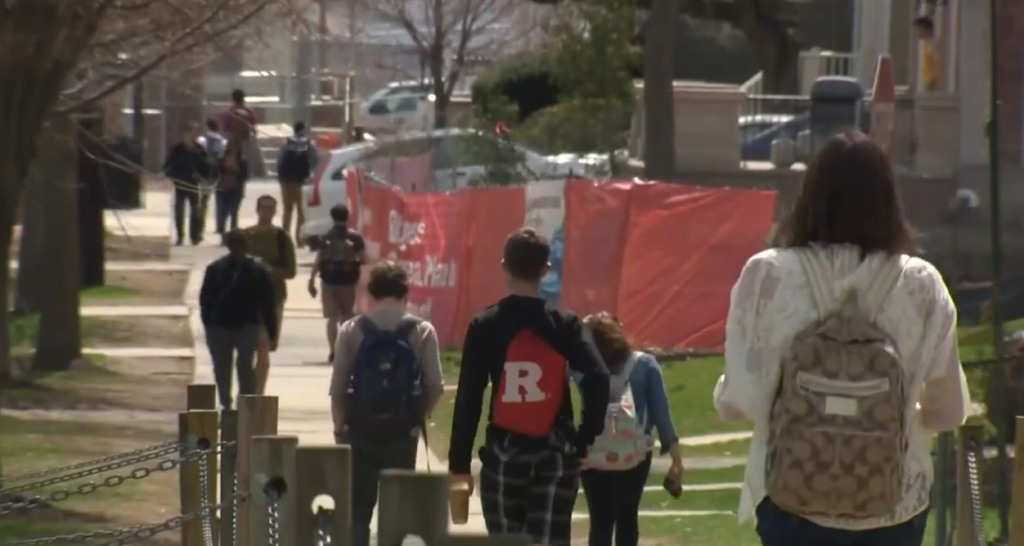
Deadlines for the Sweet v. Cardona settlement have caused tensions to significantly increase in recent months. Under the 2022 accord, debtors who brought claims against specific banks by the middle of 2022 would receive loan relief. A delay of 18 months in processing applications was requested by the Department of Education for the group that applied soon after, between June and November 2022. Their defense was a lack of administrative ability.
William Alsup, a federal judge, was not pleased with that request for a postponement.
He rejected it bluntly, saying that the years of delays by the administration had already caused a great deal of damage. His comments, “It’s just not right,” went viral on social media and in legal circles. In addition to maintaining the January 28 deadline for borrowers to be eligible for full settlement benefits, he directed the Department to process these outstanding applications by April 15, 2026. For tens of thousands of debtors, whose futures had been in bureaucratic limbo, the decision provided much-needed clarity.
In the hopes of receiving long-term assistance, many borrowers put off making payments during the pandemic. The consequences were intensely personal when that more general pledge was eventually thwarted. I talked to a borrower who was a thirtysomething nurse, and she described the feeling of “watching your balance climb even though you haven’t touched it.” The feeling of attempting to climb out of a ditch that keeps refilling—that quiet frustration—has become a regular theme.
In one of the court documents, I recall hesitating over the phrase, “Borrowers are not seeking mercy; they are enforcing a contract.” Despite its subtlety, I thought that distinction was really significant.
The legality of the contingency plans implemented by the Biden administration is now up to the Supreme Court to judge. For many, the SAVE Plan has been a lifeline because it links payments to income and speeds up the forgiveness timelines for low-income debtors. But there is strong opposition to it as well. The program’s de facto cancelation procedure, according to critics, operates without the required legal sanction.
Their arguments are based on the “major questions doctrine,” a legal theory that contends that Congress must have made a clear statement when an agency takes choices that have significant economic ramifications. This theory was crucial in the 2023 decision and will probably influence the Court’s strategy once more.
The conflict between responsive governance and procedural restraint is at the heart of this legal dispute, which goes beyond laws and agencies. Administrative flexibility may be incredibly efficient in meeting urgent requirements in a time when millions of people are burdened with student loan debt. Additionally, it ought to be transparent, tenable, and firmly grounded in the law.
The case’s timing heightens the drama even further. Campaign platforms, media narratives, and legislative agendas will all be impacted by any Supreme Court decision as the 2026 election cycle draws near. A ruling in the Department’s favor would encourage such attempts to alleviate debt loads in the future. For borrowers already negotiating a complicated system, a loss may halt or undo important relief programs, adding to the uncertainty.
Borrowers are advised to keep an eye on their accounts via official means, such as StudentAid.gov, in the interim. Smaller forgiveness schemes are still in operation despite the cacophony of litigation, sometimes through amended regulations and other times under court orders. Relief for public servants, educators, and borrowers who were duped by closed or dishonest organizations are among them.
Although noticeably unequal, progress has been made. Department records show that approximately $132 billion in student loan debt has been forgiven through various processes in the last year. This covers closed school releases, relief from borrower defense claims, and enhancements to income-driven repayment records. Although it’s movement, it’s not a complete reset.
By means of strategic litigation, policy modification, and unrelenting advocacy pressure, the system is gradually changing. The Supreme Court’s fall review may provide clarity on whether the existing methods being employed to handle student debt can withstand legal scrutiny, but it won’t definitively resolve the matter.
And maybe more crucially, whether such instruments can continue to serve those who need them the most.
