

Singapore was still developing its industrial edge in the early 1990s, increasing its production of chemicals and electronics while pushing its institutions to focus more on applied sciences. However, a more profound goal—converting knowledge into capital and research into capability—was concealed in policy documents and covertly distributed National Technology Plans.
That idea has developed into an incredibly successful ecosystem decades later, which Singapore today refers to as its “Research, Innovation and Enterprise” engine. Its RIE plans, which are released every five years, outline not just what should be invested in but also why it is important for national identity. The most recent, RIE2030, closely combines public research with business strategy, allocating S$37 billion to topics like sustainability, health, and digital innovation.
The biomedical effort was very important. Singapore proclaimed the life sciences a fourth industrial pillar rather than a specialized academic discipline. There was no rhetoric here. They constructed laboratories. To promote translational work, the Agency for Science, Technology, and Research (A*STAR) underwent a reorientation. Once uncommon, clinical trials are now ubiquitous. In retrospect, it was a very daring gamble for a nation with little natural resources and no pharmaceutical history.
| Element | Details |
|---|---|
| National Strategy | Research, Innovation and Enterprise (RIE) Plans (e.g., RIE2025, RIE2030) |
| Key Institutions | A*STAR, National Research Foundation (NRF), Economic Development Board (EDB) |
| Focus Areas | Biomedical sciences, urban solutions, sustainability, digital economy, advanced manufacturing |
| Commercialization Channels | Venture builders, co-investment platforms (e.g., A*StartCentral, Xora Innovation) |
| Talent Strategy | National Science Scholarships, liberal immigration policy for scientists |
| Funding Commitment | Around 1% of GDP annually toward research and innovation |
| Outcome | High-skilled job creation, FDI attraction, high-value economic clusters |
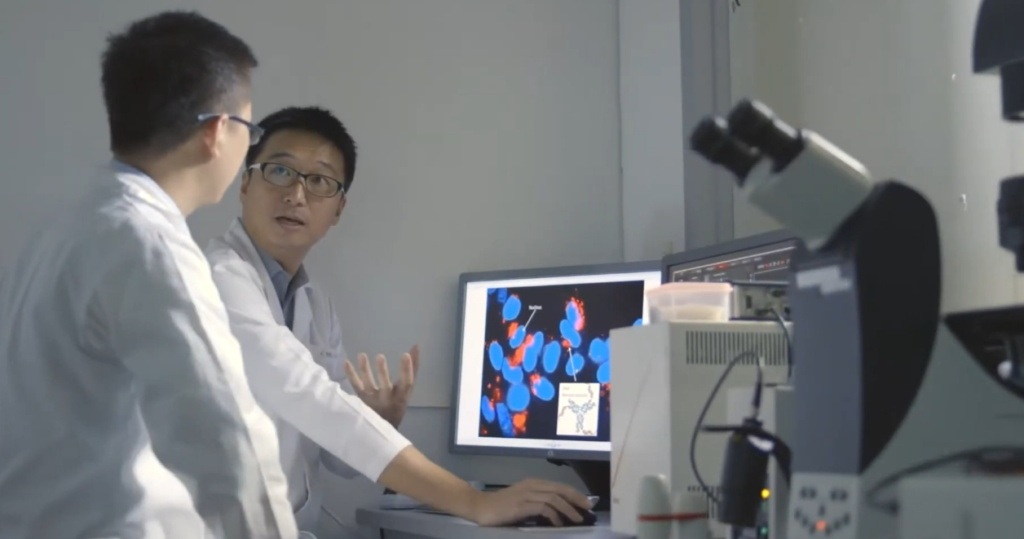
Singapore’s commercialization-focused scientific policy not only provided funding for labs but also established channels for bringing innovations to market. Government-affiliated organizations assisted researchers in transforming intellectual property into profitable companies through startup platforms like A*StartCentral and venture builders like Xora Innovation. Despite being small on a global scale, this ecosystem became very effective. Because of this, deep-tech businesses are now graduating from colleges with the assurance of seasoned businesspeople.
The way Singapore manages talent has been one really creative aspect. Promising students can study PhDs overseas with the knowledge that they would return and build here thanks to the early awarding of National Science Scholarships. Liberal immigration laws also allow top scientists from throughout the world to lead institutes or serve as advisors to spinouts. As a result, there is a local and global research base.
The clarity of intent is what all these initiatives have in common. Universities, financing organizations, and economic agencies all seem to be operating from the same page. Here, coordination is a process, not just a catchphrase. The National Research Foundation, for example, serves as a strategic node that directs resources to match industrial demands and national vision rather than just awarding grants.
During a roundtable I attended in 2019, a senior policymaker mentioned in passing that one of their major metrics is the time from lab discovery to commercial prototype. That incident stuck with me because it was a tiny but telling sign of how seriously they take innovation—not as inspiration, but as infrastructure.
This strategy has produced noteworthy outcomes within the last five years. Numerous biotech and IT companies, many of whom have direct partnerships with local universities, now have their regional headquarters in Singapore. Basic assembly has given way to high-value output in manufacturing. The city-state’s economic structure incorporates advanced robotics, green chemistry, and AI applications; these are not merely theoretical endeavors.
Singapore’s case is especially strong because of the close alignment between research, enterprise, and policy, not because of the amount of money it spends—many countries invest more in absolute terms. A scientist working in a government-funded lab and a venture capitalist financing a spinout are extremely similar. This closeness has significantly shortened time-to-market across industries and enhanced commercialization results.
Here, the Economic Development Board (EDB) is a significant enabler, directing multinational corporations through joint ventures and serving as an anchor for important actors in developing clusters. Singapore supports platforms where several breakthroughs can grow, such as digital health, clean energy, and urban mobility, rather than attempting to forecast every emerging invention.
By integrating research into its economic story, Singapore has accomplished something that most other countries can only hope for: an academic system that creates businesses, jobs, and more than just papers. Naturally, it isn’t flawless—some academics complain about the focus on metrics, while others are concerned about intellectual freedom—but as a national model for progress driven by science, it continues to be remarkably observant.
The next frontier—AI safety, quantum computing, and synthetic biology—will be observed by observers in the years to come. Ethics and regulation will be just as important in these fields as scientific advancement. However, if the last three decades are any guide, the city-state will keep adapting, updating, and investing—not just in new information, but also in the systems that enable that knowledge to function.
