

In his 2019 cinematic reverie, Quentin Tarantino transformed late 1960s Los Angeles into a brilliant, fading snapshot. It was a study in nostalgia and creativity. Sharon Tate, played memorably by Margot Robbie, was at the center of it all. However, Jennifer Lawrence claims that before the internet made a different decision, she was originally considered for the part.
In an open discussion on the Happy Sad Confused podcast, Lawrence disclosed that she had been considered for the position. She thought Tarantino was sincere. Then, however, there was a startling change—a tornado of internet criticism that, in her own words, “went out of their way to call me ugly.” It still hurt, but she said it without feeling sorry for herself. In an instant, the role vanished.
It was not a creative critique. It was not about performance or tone. When used as currency, the word “beauty” can be awkward and abrasive. “She’s not attractive enough to portray Sharon Tate,” the story said. It was especially hurtful because it wasn’t mentioned in private; rather, it was yelled over platforms and inscribed in comment sections. Everything changed because of the judgmental and unrelenting noise.
| Topic | Detail |
|---|---|
| Film in Question | Once Upon a Time in Hollywood (2019) by Quentin Tarantino |
| Role at Stake | Sharon Tate (ultimately played by Margot Robbie) |
| Jennifer Lawrence’s Claim | Lost the role due to public perception of being “not pretty enough” |
| Source of Quote | Happy Sad Confused podcast interview (2026) |
| Public Commentary | Sharon Tate’s sister Debra previously stated she preferred Robbie |
| Resulting Casting | Margot Robbie portrayed Sharon Tate in the final film |
| Notable Quote | “The internet just went out of their way to call me ugly” – J.Law |
| Reference | Variety article link |
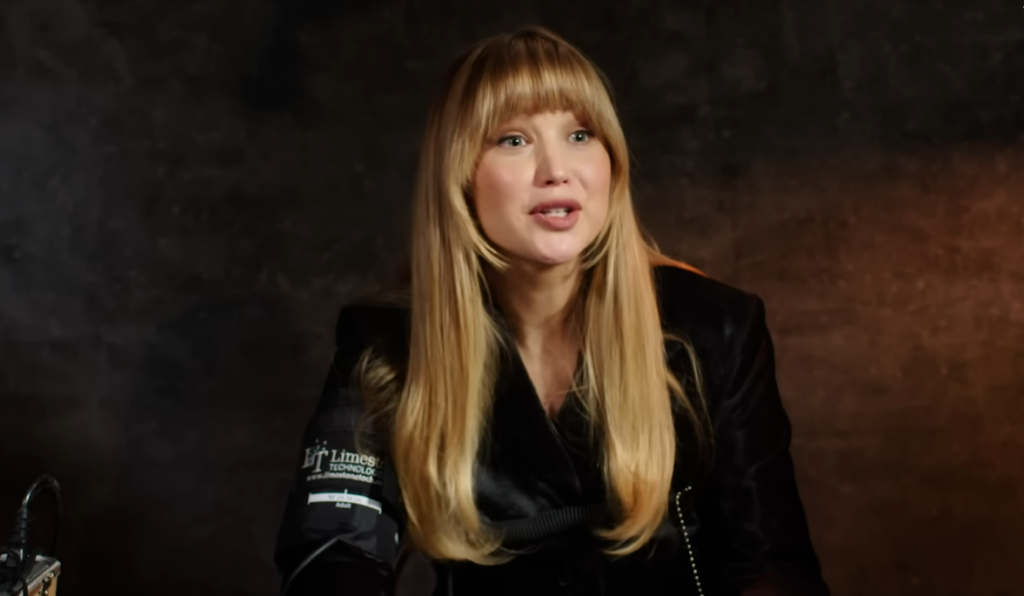
There was more to this than mere conjecture. In 2017, Debra Tate, Sharon’s sister, made a statement. Citing Margot Robbie’s uncanny likeness to Sharon and her elegant demeanor, she stated that she chose Robbie for the part. Although she didn’t mean any harm, her remarks were harsh: She had remarked, “Jennifer is just… not attractive enough to play Sharon.” “It’s terrible to say that, but I have my standards.”
Jennifer Lawrence is an Oscar winner, a box office attraction, and an actress whose work includes sharp comedy, psychological thrillers, and action franchises. By most industry standards, she is incredibly successful. None of that, however, applied in this case. She was unable to overcome the obstacle posed by her appearance, or rather, how others saw it.
It poses more profound queries regarding vision and memory. Being perpetually captured in still images and heartbreaking news stories, Sharon Tate has evolved into a persona influenced more by her eyes than her words. It is not merely a part to play her; it is an inheritance. Additionally, the standard might have been more about iconography than fact for an actress like Lawrence, who is renowned for her toughness, tension, and emotional spontaneity.
Lawrence also acknowledged that she had previously turned down a chance to collaborate with Tarantino, declining to play Daisy Domergue in The Hateful Eight, a role that was ultimately given to Jennifer Jason Leigh. “I should have avoided doing that,” she stated bluntly. It seemed like an honest, unadorned regret. Her tale was not overshadowed by it, but it did add a distinctly human touch.
I started to feel a twinge of recognition at that moment in the conversation. How many decisions you took in confidence later feel like missed trains you were unaware you had to board?
The internet has a particularly cruel influence on how people see beauty. Platforms reward strong opinions, prioritizing sweeping statements over subtleties. Lawrence was subjected to criticism from individuals who felt she didn’t “look” the part, not from casting directors or movie experts.
It says something about how public opinion subtly permeates private memory that she is still thinking about it years later. The digital era keeps doors open and compels you to pass them every day rather than allowing you to close them.
Regarding if Lawrence was given serious consideration, Tarantino never made a clear comment. Furthermore, it could no longer be relevant. Lawrence thought she was in the running, but a group of invisible judges informed her she wasn’t good enough. That’s what matters.
Sharon Tate deserved respect for her life and consideration for her legacy. The distortion occurs when “beauty” turns into a gatekeeper to legacy. They are not mannequins. Contradiction, texture, and interpretation are what they bring. Tate might have been portrayed differently by Lawrence, more as a person and less as a fantasy.
A part lost is not the subject of her story. It’s about the peculiar confluence of performance and projection, talent and mystique. More importantly, it serves as a warning that no woman, no matter how successful, is impervious to being belittled by a chorus of demands she never consented to perform for.
The manner in which Lawrence told the narrative has merit. She didn’t want compassion. She had no anger. She was only following the contours of a memory to show us the painful spots.
The most interesting aspect is that she did it without resentment. It was Robbie she didn’t blame. She refrained from portraying herself as the victim. She merely described what had occurred and the sensation. That honesty works really well in its own right.
And in a world where actors are frequently praised for simply portraying the role rather than creating it, Jennifer Lawrence’s portrayal of her reflection might be the most honest she has ever given.
