

With this careful casting, Seven Dials’ creators produced a human puzzle, with each voice and face purposefully placed to convey meaning. Mia McKenna-Bruce, who plays Bundle Brent, strikes a balance between sincere resolve and aristocratic wit. Her presence doesn’t feel staged; it feels lived. Unexpected but strategic, she travels in diagonals like a knight on a chessboard without making an announcement.
Her opponent is Martin Freeman, whose Superintendent Battle balances a shrewd skepticism with a jaded professionalism. A sort of observational gravity is brought by Freeman, who frequently allows quiet to linger just long enough to cause unease. His acting is emotionally grounded and well-timed, and it works especially well in quiet encounters where his reserve lands like a verdict.
| Name | Role/Title | Character/Function |
|---|---|---|
| Mia McKenna-Bruce | Actor | Lady Eileen “Bundle” Brent |
| Martin Freeman | Actor | Superintendent Battle |
| Helena Bonham Carter | Actor | Lady Caterham |
| Edward Bluemel | Actor | Jimmy Thesiger |
| Corey Mylchreest | Actor | Gerry Wade |
| Hughie O’Donnell | Actor | Bill Eversleigh |
| Ella-Rae Smith | Actor | Loraine Wade |
| Nabhaan Rizwan | Actor | Ronny Devereux |
| Nyasha Hatendi | Actor | Dr. Cyril Matip |
| Guy Siner | Actor | Tredwell (Butler) |
| Alex Macqueen | Actor | George Lomax |
| Dorothy Atkinson | Actor | Lady Maria Coote |
| Mark Lewis Jones | Actor | Sir Oswald Coote |
| Iain Glen | Actor | Lord Caterham |
| Robinah Kironde | Actor | Dela |
| Josef Davies | Actor | Alfred |
| Valerie Antwi | Actor | Number Two |
| Paul Bigley | Actor | Number Five |
| Ella Bruccoleri | Actor | Socks |
| Jake Davies | Actor | Detective Potter |
| Tristan Gemmill | Actor | Doctor Jackman |
| Liz White | Actor | Emily |
| Lucy Backhurst | Actor | Young Bundle |
| Chris Chibnall | Creator / Executive Producer / Writer | Series Creator and Screenwriter |
| Chris Sweeney | Director / Executive Producer | Directed all 3 episodes |
| Suzanne Mackie | Executive Producer | |
| James Prichard | Executive Producer | Agatha Christie Ltd. |
| Anne Nikitin | Composer | Original Score |
| Robert Sterne | Casting Director | Casting |
| Amy Roberts | Costume Designer | Wardrobe & Period Styling |
| Louise Coles | Hair and Make-Up Designer | Key Hair/Make-up Artist |
| Sarah Hauldren | Production Designer | Set and Production Design |
| Emma Oxley | Editor | Edited all 3 episodes |
| Luke Bryant | Cinematographer | Director of Photography |
| Joanna Crow | Series Producer | |
| Rebecca Roughan | Producer | |
| Ben Purcell | Gaffer | Lighting Department |
| Tom Kelly | Orchestrator | Music Production |
| Stuart Bloomfield | Crowd Hair & Make-Up Artist | |
| Tabitha Kyprianou | Crowd Hair and Makeup Junior | |
| Jessica Hof | Script Supervisor | Continuity |
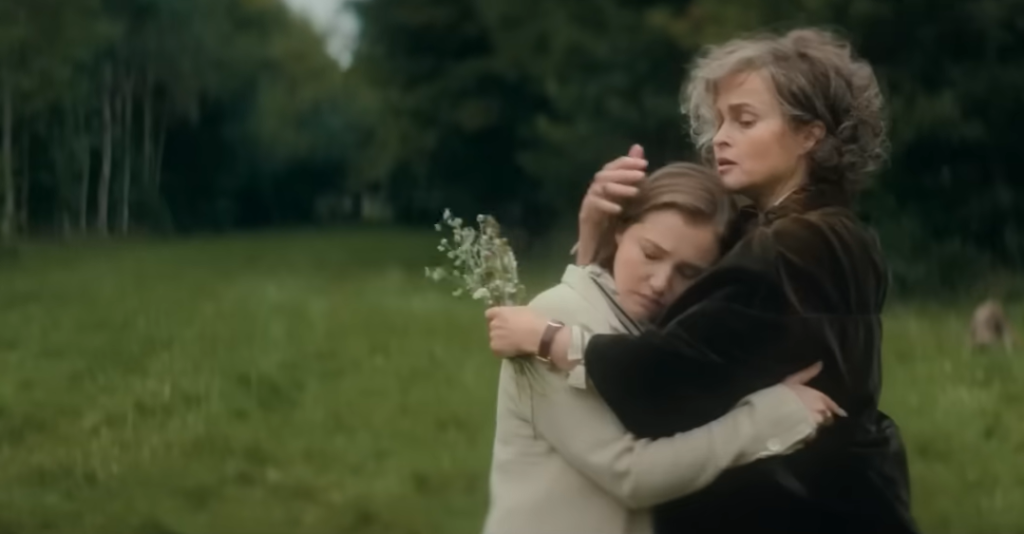
Lady Caterham, played by Helena Bonham Carter, creates a sumptuous discord. Her mastery of rhythm and space, even in brief exchanges, serves as a reminder of why she is always a welcome anomaly. She uses privilege both as a weapon and as a defense. The energy in a room seems to lose equilibrium when she leaves, as though she were a force of gravity.
Edward Bluemel’s portrayal of Jimmy Thesiger in the supporting cast lends an air of self-assured deceit. You can never quite unwind with his charisma. Though he only has a small amount of screen time, Corey Mylchreest’s portrayal of the doomed Gerry Wade makes a lasting impression—it’s like perfume on linen that has been forgotten. While Ella-Rae Smith (Loraine Wade) provides a tenderness that deftly complements the macho intrigue surrounding her, Hughie O’Donnell gives Bill Eversleigh authenticity.
These casting decisions seem more intentional the closer one looks. Ronny Devereux benefits from the layered intensity of Nabhaan Rizwan, who carefully manipulates uncertainty. In his role as Tredwell the butler, Guy Siner effortlessly blends into the skeleton rhythms of ancient English estates—constantly present, hardly observed, yet indisputably crucial. And in a genre that is sometimes plagued by repetition, Nyasha Hatendi’s portrayal of Dr. Cyril Matip subtly innovates. The invention made by his character serves as a metaphor for change rather than merely a plot device.
Upon viewing episode two late one evening, it was evident that Helena Bonham Carter often said more with her quiet than many do with monologues.
The craft is just as accurate behind the scenes. The plot lines in Chris Chibnall’s work are clearly arranged, running parallel until they intertwine at the appropriate point. The pace is shaped by director Chris Sweeney, who acts as a conductor, holding back the strings until the last movement. It is not hurried. It’s not luxurious. It’s under control.
The composition by Anne Nikitin emphasizes subtlety while maintaining tension. The music is very effective since it is kept just beneath the surface, almost like a breath you forget you’re holding. Amy Roberts’ costumes convey class, emotional transitions, and periods of loss in addition to dressing bodies. Every fabric has a voice, from whispering lace to tailored jackets.
Sarah Hauldren’s production design layers rooms with lived-in tranquility rather than ostentatious grandeur. The illusion is enhanced by details like half-stacked books, slightly off-center vases, and drawing rooms that seem utilized rather than created.
The editing by Emma Oxley is especially restrained. There is space to breathe. Cuts are intentional, transitions natural. Someone with less skill might have overexplained the mystery or relied too much on flashbacks. Oxley meets the audience in the middle of the narrative.
Remarkably audacious was Netflix’s choice to restrict the series to three episodes. Without sacrificing subtlety, it imposed urgency. Some viewers were left with unresolved questions. For others, it provided an exceptionally succinct experience in a genre that frequently uses filler.
The cast and crew created something extremely unique by relying more on emotional intelligence than exposition: a mystery in which each character serves as both a suspect and a storyteller in equal measure.
Period whodunnits may resemble Seven Dials in the future: concise, well-written, and sharply cast. Explosions are not required. It doesn’t demand praise. It just requires your attention, and the click is very pleasurable when the parts eventually lock into place.
