

A thriller that knows it’s pulpy is almost nostalgic. Paul Feig’s The Housemaid doesn’t try to be high art. It leans into its shiny surfaces, its dramatic reveals, and the way it looks at you from across marble kitchen islands. And for some reason, that honesty makes it a lot more fun than it should be.
The idea is pretty simple. Sydney Sweeney plays Millie, who gets a job as a live-in maid for the rich Winchester family. Amanda Seyfried plays Nina Winchester, who greets her with overly polite manners that feel a little too sharp. Andrew, the husband, has a quiet charm about him. The house itself, with its clean white counters, big windows, and faint smell of lemon polish, almost feels like a character, watching everything happen.
The first act moves slowly, maybe too slowly. Millie cleans the tubs and folds the laundry while Nina’s mood swings from warm to cold hostility during a single dinner conversation. Some people may have thought this part was too slow. But there’s a growing tension beneath the polished floors, and it’s hard not to feel that something bad is being carefully hidden.
| Title | The Housemaid |
|---|---|
| Release Date | December 19, 2025 (USA) |
| Director | Paul Feig |
| Based On | Novel by Freida McFadden |
| Lead Cast | Sydney Sweeney, Amanda Seyfried |
| Genre | Psychological Thriller / Mystery |
| Runtime | 2h 11m |
| Budget | $35 million |
| Worldwide Gross | $385.8 million |
| IMDb | https://www.imdb.com/title/tt |
| Rotten Tomatoes | https://www.rottentomatoes.com/m/the_housemaid_2025 |
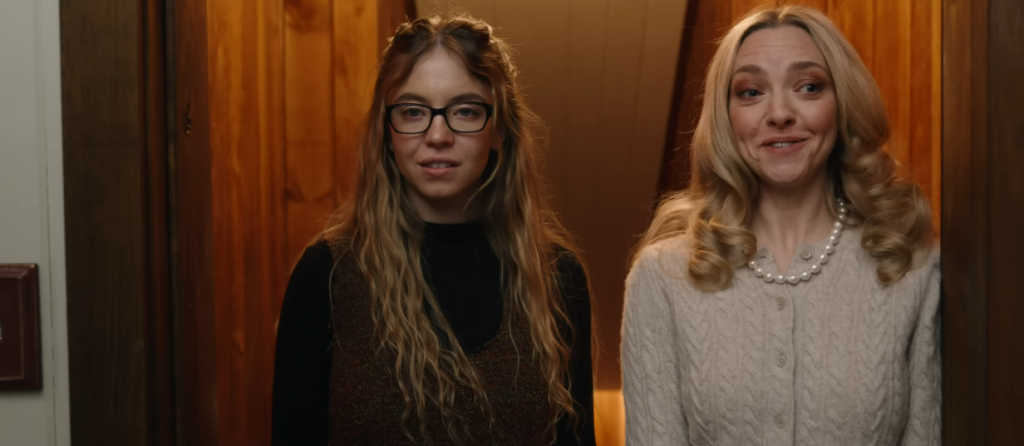
Amanda Seyfried gives a performance that reminds people why she’s still in Hollywood. Her Nina is crazy but not over-the-top; she can take over a room with just a tilt of her head or a sudden, piercing stare. At a PTA meeting, with fluorescent lights buzzing above, she smiles for just a little too long. The effect is scary. It looks like she’s playing three different games at the same time.
Sydney Sweeney, on the other hand, is more quiet. Her Millie starts out quiet and almost shy, speaking softly and looking down. Critics have argued about whether that restraint is a deliberate choice of character or a lack of range. We still don’t know where that line is. But as the story goes on, Sweeney’s performance gets sharper, showing flashes of calculation and hidden anger that make the later acts more satisfying.
The tone of the movie is like a deliberate throwback to the erotic thrillers of the 1990s, like Basic Instinct or early Gone Girl. There is nudity, seduction, and a lack of morals. But there’s also something sneaky about it. The Housemaid knows that people like to watch rich people act badly. It gives that pleasure with a wink.
The movie has done very well at the box office. It made almost $386 million worldwide on a small budget, which shows that there is still an audience for mid-budget thrillers. It looks like investors think there is still room for suspenseful adult stories that aren’t part of a franchise. In a market full of superheroes and sequels, that alone seems important.
The adaptation is not perfect, though. People who like Freida McFadden’s book have said that some parts are missing and some character arcs are too short. Some subplots, especially those with secondary characters like Enzo, seem to be cut short. There are times when the dialogue gets too melodramatic, which makes the movie more campy than deep.
But Seyfried and Sweeney’s chemistry keeps things interesting. Their fights are electric. The air is thick in one late-night kitchen scene, and the only sound is the refrigerator humming. Two women are standing on opposite sides of a granite counter, each pretending not to know what the other can do. It’s hard not to lean forward.
Director Paul Feig, who is mostly known for comedies, does something unexpected here. The visual style is sleek but not showy; it uses tight framing to trap characters in the house’s architecture. As secrets come out, hallways seem smaller. Battlegrounds are in bedrooms. As this happens, it feels like the house is in on it.
The Housemaid plays with ideas about power and how people see things. Who gets to tell the story in a relationship? Who do people believe? There may be a sharper commentary on gender roles and domestic performance hidden behind the shocking twists. Or maybe that’s reading too much into what is, at its core, a very fun thriller.
People who saw it have had much stronger reactions than critics. The audience score on Rotten Tomatoes is much higher than the critic average. That gap seems significant. Viewers seem willing to overlook plot holes if they lead to tension and payoff. As expected, critics want more detail.
But it’s hard to ignore the movie’s effect when you’re in a packed theater with popcorn crunching and gasps rippling during the big reveal. Watching secrets blow up is a thrill for everyone. A shared understanding of how silly and brave it is.
It’s clear by the end of the movie that The Housemaid doesn’t want to be subtle. It wants to be fun. For two hours, it does just that, getting rid of realism in favor of drama that is fun to watch.
