

Early in the Chiraiya series, a wedding room is depicted as a place of fear rather than joy. The arrangement of the bed, the marigolds, and the diyas are all present, but the mood has cooled into something that lingers in the stomach long after the show is over. Shashant Shah, the director, doesn’t take his time. He is not required to. The entire six-episode series revolves around the weight of what transpires in that room and the decisions made by the women surrounding it.
SVF Entertainment is the writer and producer of Chiraiya, an adaptation of the Bengali web series Sampurna that debuted on JioHotstar on March 20, 2026. Divy Nidhi Sharma, the showrunner, created the Hindi version. The story takes place in the rural heartland of India, where rivers and regressiveness coexist, frequently dressed up in the language of tradition and family honor. The main character, Kamlesh (played by Divya Dutta), is a loving daughter-in-law who comes into the story completely molded by the demands made of her since she was a young girl. She is conservative, submissive, and deeply committed to the notion of family loyalty over personal truth. Everything Kamlesh believed she understood about the world she lives in starts to fall apart when her newlywed sister-in-law, Pooja (played by Prasanna Bisht with quiet devastation), confides what happened on her wedding night.
A Bird That Refuses to Be Caged: The Chiraiya Series and the Story Indian OTT Needed to Tell
| Category | Details |
|---|---|
| Series Title | Chiraiya (transl. “Bird”) |
| Language | Hindi |
| Genre | Social Drama |
| Release Date | March 20, 2026 |
| Streaming Platform | JioHotstar |
| Number of Episodes | 6 |
| Episode Duration | 26–39 minutes |
| Director | Shashant Shah |
| Writer & Showrunner | Divy Nidhi Sharma |
| Production Company | SVF Entertainment |
| Lead Cast | Divya Dutta (Kamlesh), Sanjay Mishra (Sukumar Bhramar), Prasanna Bisht (Pooja), Siddharth Shaw (Arun) |
| Supporting Cast | Faisal Rashid, Tinnu Anand, Sarita Joshi |
| Based On | Bengali web series Sampurna |
| IMDb Rating | 6.7/10 |
| Times of India Rating | 3.5/5 |
Reference Links: Chiraiya — IMDb Page Chiraiya — Wikipedia
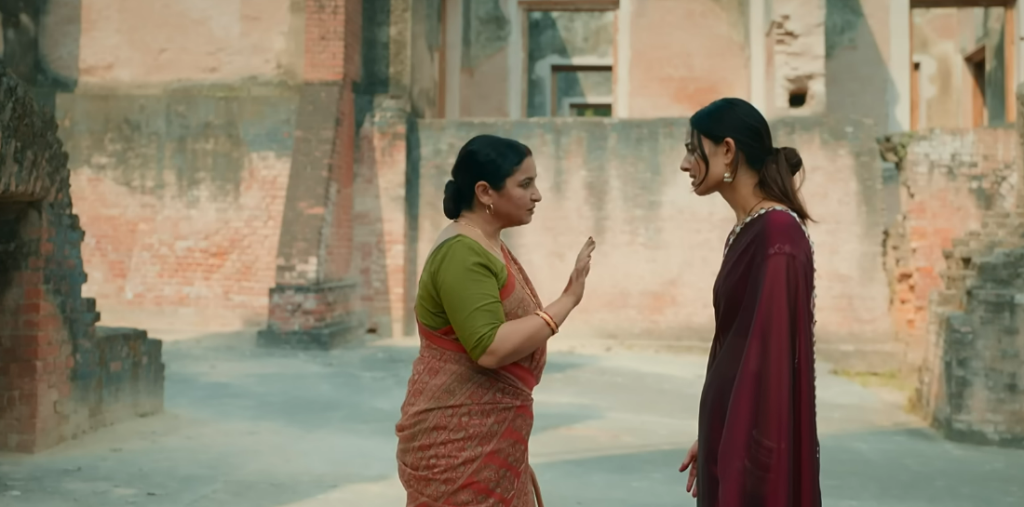
Over the course of her more than thirty years in the Hindi film industry, Dutta has progressed from supporting parts in movies like Veer-Zaara and Heroine to a position where she manages whole projects by herself. It’s difficult not to think of this performance as one of the pivotal moments in her later career when you watch her here. It is really challenging to play with subtlety the character arc she traverses, from complicit traditionalist to a woman standing in the middle of a village nautanki giving a speech about how women were respected in the Ramayana before something fundamental broke. It’s mostly handled by Dutta. She says, “Lugaai ke paas sirf uska tan reh gaya… phir woh bhi chala gaya,” which has the kind of subdued devastation that good acting creates. There is no theatrical moment or raised voice, just the sheer horror of the statement.
Equal consideration is given to the supporting work. Sanjay Mishra, who portrays Sukumar Bhramar, is still one of the most dependable actors in Indian streaming; even in serious roles, he exudes a lively, almost mischievous quality that he channels into something more nuanced and morally dubious than his typical parts. Sarita Joshi and Tinnu Anand carry the burden of seasoned actors who are adept at using economy of gesture in their supporting roles. Perhaps the most significant performance in the series is that of Prasanna Bisht, who plays Pooja. She must portray trauma without the show allowing her to externalize it too loudly, and she does so with a restraint that makes the character’s circumstances feel real rather than performatively painful.
Although critics have pointed out both the series’ strengths and its actual shortcomings, the show has generally received positive reviews. It was rated 3.5 stars by The Times of India, which described it as “a quietly powerful mirror to an uncomfortable truth.” While praising the storytelling, the Hindu pointed out that “the presentation lacks finesse, making it clunky in some portions.”” The most obvious structural problem, according to Scroll.in, is that Chiraiya “leans so heavily on its message that it begins to feel less like a story and more like a lesson.”” The show’s instincts are progressive, but its execution sometimes reverts to the grammar of the very daytime serials it seems to be criticizing, according to the Hollywood Reporter India, which called it “a liberal mind undone by a conservative body.” As Firstpost pointed out, some of the dialogue is hammered into the audience’s mind with the tenacity of a sermon when a whisper would have done more harm.
These are valid criticisms, and the show’s occasional heavy-handedness may be startling to those who are expecting the tonal control of something like the 2016 movie Pink, which handled related material about consent with remarkable precision. However, one could argue that viewers or critics who are already familiar with the discussion are not Chiraiya’s intended audience. The show takes place in and speaks to communities where marital rape is both socially unremarkable and legal under Indian law. For many women, this is the first time they have seen the dynamic portrayed on screen in a way that matches their own lived experience without euphemism, according to many viewers on threads like r/TwoXIndia. The Reddit conversation surrounding the series has been particularly active. Subtlety is not necessary for that audience. It must be made clear.
The iDiva critic correctly pointed out that the series’ discomfort is both the method and the point. Chiraiya doesn’t ask viewers to view the world it portrays from a different angle. It invites them to observe what they haven’t been observing while sitting in a world that may be completely familiar to them, such as the expectations placed on a new daughter-in-law, the silence enforced as respect, and the way concerning behavior is assimilated into daily life. This specific storytelling goal is more difficult to accomplish than it seems, and the show succeeds more often than it fails.
Depending on how far inside or outside of its particular cultural world a viewer is, the series may appear differently to them. It might seem didactic to viewers in large Indian cities or in the diaspora. It might feel familiar to viewers in smaller towns where the social dynamics it portrays are just called marriage. In their own ways, both responses attest to the show’s worthwhile endeavors.
Bird is what Chiraiya means. The name conveys the sense of something confined, something that was meant to fly but hasn’t been given the freedom to do so yet. Despite all of its flaws, the series deserves that title.
