

Somewhere in an unassuming lab in Zurich, a robotic arm lowered a pipette into a vial, made a correction mid-motion, and carried on. There was no hesitancy. Don’t wait for directions. That day, the lab was run by an autonomous AI pipeline that had read, created, tested, and improved its own theory overnight rather than being staffed by researchers. The future is no longer this. It’s the present. And it’s spreading.
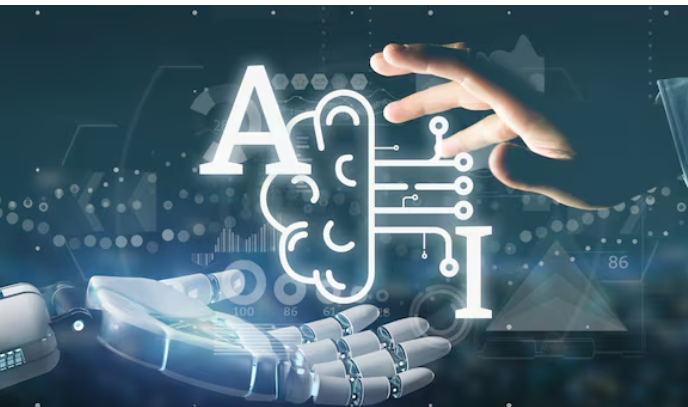
AI is subtly changing scientific research across continents. What originally depended on intuition, trial-and-error, and decades of sweat has now begun to speed under the guidance of machine intelligence. Systems that were previously only data processors have become amazingly effective collaborators, making suggestions not just faster, but notably wiser.
Key Developments in AI-Driven Scientific Discovery
| Area of Innovation | Breakthrough Description |
|---|---|
| Protein Prediction | AlphaFold predicted 200M+ protein structures with atomic-level accuracy |
| Material Discovery | GNoME forecasted 380,000 lab-ready stable materials, compressing 800 years’ work |
| Autonomous Laboratories | AI labs now run 24/7, designing and executing experiments without human input |
| Physics Research | AI revealed new plasma dynamics and discovered fresh mathematical laws |
| Drug Development | AI-generated molecules are accelerating clinical pathways and reducing costs |
| Core Challenges | Explainability, data bias, energy usage, and essential human validation |
Over the past five years, the velocity of change has become particularly astonishing. Take AlphaFold, DeepMind’s protein-predicting technology. In a period of months, it accomplished what the biomedical research world had wrestled with for half a century. It predicted approximately 200 million protein structures with atomic precision, substantially decreasing the need for costly lab simulations. Researchers now received answers they hadn’t expected for another generation.
In the area of material science, the leap has been just as enormous. A system known as GNoME employed graph-based neural networks to predict approximately 2.2 million novel chemicals, among which 380,000 are considered stable and ready for experimental confirmation. These aren’t trivial contributions—they transform how chemists even think about the unknown. GNoME essentially compacted 800 years’ worth of trial-and-error lab work into a few computational weeks.
Even more exciting is how AI is helping rethink the nature of research itself. Rather of following the conventional cycle of proposing a hypothesis and carefully collecting evidence, today’s AI-driven labs begin by specifying a desired objective and then work backwards to determine the optimal path forward. Inverse design is a highly creative method that allows researchers to imagine bigger and test more quickly.
Autonomous laboratories are one of the most dramatically transformative effects of this movement. These labs are now highly interconnected systems that can read scientific material, generate ideas, and test them on their own. They are no longer just robotic arms moving glassware. Facilities like FutureHouse and Lila Sciences act like tireless teammates, continuously cycling through experimental variations and changing in real time depending on input.
When I visited a mid-sized lab in Utrecht, the principal researcher—an astrobiologist—told me, half-amused, that her machine had improved the result margin by 14% overnight by redesigning her original technique. She didn’t feel replaced. She felt relieved.
One especially elegant development has occurred in the sphere of physics. AI models utilizing symbolic regression have started extracting natural laws from raw datasets—no input equations, no human clues. In one study on dusty plasma, an AI model revealed a hitherto unaccounted-for non-reciprocal force, effectively rewriting elements of an existing theory. This wasn’t simply a different angle—it was an entirely new equation.
Particularly intriguing is the capacity to go from pattern recognition to theory development. It hints at a new cognitive dimension: one where machines don’t merely analyze—they imagine.
Even more powerful, however, is AI’s capacity to cross disciplines. Through cross-domain analysis, AI machines are integrating esoteric discoveries from biochemistry, climate physics, and materials engineering—creating a rich web of potential that few human minds could map unaided. This is where large language models (LLMs) shine. They synthesize knowledge with an intensity and scope that is remarkably clear and significantly better than previous tools by parsing thousands of scholarly papers in a matter of hours.
Still, all this promise is surrounded by actual tensions.
Many of these systems remain black boxes—effective but opaque. When an AI recommends a chemical structure or a novel substance, the logic isn’t necessarily evident. This lack of openness creates difficulties, particularly when accuracy and confidence are crucial. A research team may be holding a possible breakthrough—but still feel reluctant to publicize until human reasoning can validate the path.
Equally concerning is the quality of training data. AI systems are only as good as the datasets they are trained on, and a lot of scientific archives contain partial samples, out-of-date rules, or biases from the past. That possibility of baked-in inaccuracy implies that human oversight isn’t just helpful—it’s vital.
And then there’s the cost. Training these enormous models—especially the multi-modal ones integrating vision, language, and mathematics—demands huge amounts of energy. Calls for more energy-efficient infrastructure are being sparked by computational labs starting to assess their environmental impact. Some researchers are now constructing foundations for “green AI,” guaranteeing scientific acceleration doesn’t come at the planet’s expense.
The trajectory is evident despite these obstacles. The relationship between AI and science is no longer experimental—it’s structural. The most productive researchers today aren’t merely brilliant at asking questions. They’re extraordinarily fluent at cooperating with intelligent systems that can test, model, and refine ideas at superhuman speed.
What is emerging is a reshaping of the process rather than a replacement for human insight. Scientists are increasingly freed from monotonous testing and manual literature reviews, allowing them to focus more fully on judgment, creativity, and ethical reasoning. A dedicated, code-driven partner has joined the lab bench.
In the future years, this collaboration will certainly deepen. Models will become more explainable. Data pipelines will improve. And validation cycles will tighten. We may even witness a shift in how we characterize a scientific contribution—not only in terms of results, but in terms of how insight was developed.
Fanfare is not necessary for this subtle change. Its impact will be measured not just in breakthroughs, but in pace, breadth, and collective intelligence. And somewhere—perhaps this very minute—a robotic system is already planning tomorrow’s experiment, amazingly efficient, exceptionally durable, and just a little bit innovative.
