

A group of parents waited to be informed that the program their children relied on was being reviewed on a Tuesday evening in February in a West London school hall with fluorescent lighting, rows of plastic chairs, and a projector screen that no one had bothered to lower. Once more. In local government parlance, the word “review” hardly ever means what it sounds like. The majority of the parents present were aware of it.
They were advocating for a bilingual creative education partnership, which is the kind of program that links kids to language, art, drama, and music instruction in ways that the standard curriculum, which is increasingly shaped by exam metrics and league table pressures, has methodically squeezed out. It had taken years to develop the program. instructors who supported it. connections with cultural organizations and partner schools. Quietly, there was a waiting list for families who were interested. And now that there are rumors that the partnership that made it possible will be discontinued, the parents have done what West London parents usually do when they believe something worth protecting is in danger. They made plans.
| Location | West London, United Kingdom |
|---|---|
| Issue | Threat to bilingual creative education partnership programmes in West London schools |
| Key Publication | My London (Ben Lynch, February 2026) |
| Core Conflict | Parents fighting to protect their children’s bilingual and creative education amid plans to end existing school partnerships |
| Broader Context | UK-wide decline in arts subjects; EBacc accountability pressure reducing creative curriculum hours in state schools |
| Arts GCSE Entries | Fallen from 13.4% of all entries (2010) to 7.1% (2024) — nearly halved in 14 years |
| Related Pressure | More than 40% of English state schools entered no pupils at all for GCSE Music or Drama in 2024 |
| Public Support | 82% of UK adults believe all children should have routine access to high-quality creative activities in school (OAE/Opinium, 2025) |
| Parent Coalition Type | Community-driven advocacy; petitions, school meetings, local council engagement |
| Key Risk | Loss of established bilingual creative programme serving children across multiple West London schools |
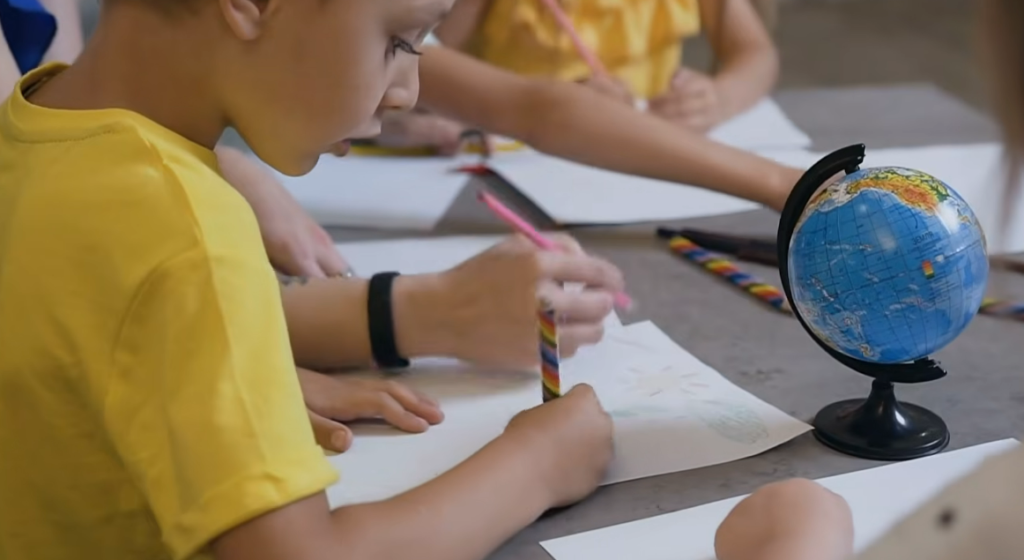
My London’s February 2026 story focused on a named program, a named threat, and a named set of parents, but it is part of a much bigger and more concerning issue. For more than ten years, the creative curriculum has been declining throughout England. Between 2010 and 2024, the percentage of GCSE entries in the arts decreased from 13.4% to 7.1%. Last year, over 40% of English state schools had no students enrolled in GCSE Music or Drama. These are not slight decreases. They are the outcome of a school accountability system that, whether intentionally or unintentionally, rewards narrow academic performance and has made it structurally challenging for head teachers to safeguard creative subjects during tight budgets and impending Ofsted inspections.
Even though they don’t always express it in those terms, the parents fighting in West London are aware of this context. They discuss their kids—the ones who came to life in the art classroom, who gained self-assurance during a performance, and who developed new listening skills when music was taught as more than just extracurricular noise. They discuss how things are changing, and not in a positive way. When parents describe these struggles, there’s a sense that their motivation comes from real concern about what their kids are losing rather than nostalgia for a particular program.
They also have some leverage. The policy response may not accurately reflect public opinion on this issue. According to research done in the summer of 2025, 82% of UK adults, regardless of age, demographics, or political views, think that all children should regularly have access to high-quality creative activities in school. The generation that is currently at the bottom of the state school system, Gen Z, was the most outspoken in stating that their resilience and self-assurance were shaped by their access to the arts in school. In this way, the parents fighting in West London are advocating for the opening of a door that the majority of the nation wants.
Whether the partnership they are defending will endure is still up in the air. Parental campaigns don’t always succeed in overcoming the finality of local authority decisions regarding school program funding, particularly when the numbers being cited and the budgetary pressures are real. However, there is something noteworthy about the campaign itself: the letter-writing, the presence, and the refusal to acknowledge that the choice had already been made before they sat down. It wasn’t by accident that these schools produced the students who are currently pursuing careers in theater, music, film, and design. They arrived because, at some point, someone—a parent, a teacher, or a leader—decided that this was important enough to fight for.
Disclaimer
Nothing published on Creative Learning Guild — including news articles, legal news, lawsuit summaries, settlement guides, legal analysis, financial commentary, expert opinion, educational content, or any other material — constitutes legal advice, financial advice, investment advice, or professional counsel of any kind. All content on this website is provided strictly for informational, educational, and news reporting purposes only. Consult your legal or financial advisor before taking any step.
