

Economist and longtime watcher of British education Richard Murphy describes a pivotal moment in a piece that circulated quietly before abruptly becoming anything but quiet. He claims that if you ask a five-year-old to tell you a story, they will. Right away. Without a doubt. When you ask an eighteen-year-old the same question, most of them will say they can’t, apologize, or go blank. He recently asked a group of A-level students, “When was the last time you wrote something creative?” They were almost all in agreement when they said they hoped they would never do so again. That part of them was done with school.
It’s a minor observation. However, when you consider the data that has been gathered for years regarding Britain’s educational system and what it does to kids who think differently, make things, draw outside the lines, or just draw at all, it takes on a special significance.
Miranda Stephenson wrote about what it was like to sit for A-Levels in a system that had already spent years narrowing her down in an article published in Varsity, the independent student newspaper at Cambridge. She wrote that she felt as though her personality had been stripped away by the end of sixth form. She recorded every minute she spent studying on a piece of paper that she kept on her desk. She no longer read for enjoyment. She began going without meals. She received the grades she desired. She had a hollow feeling. Reading it now paints a picture of a system that confused education with performance and referred to this confusion as a tactic.
| Publication | Varsity — Independent student newspaper, University of Cambridge (est. 1947) |
|---|---|
| Key Voice | Miranda Stephenson, Cambridge student writer |
| Supporting Commentator | Richard Murphy, economist and education blogger |
| Core Concern | Britain’s exam-led curriculum systematically eroding creative confidence |
| Key Policy Referenced | English Baccalaureate (EBacc), introduced under Michael Gove |
| Measurable Impact | A-Level English entries fell by one fifth (2016–2019); sciences rose by equivalent |
| Mental Health Stat | More than 1 in 5 British girls experienced depression or emotional disorders before age 19 |
| PISA Rankings | UK rose into top 20 in maths, science and reading in 2018 — but emotional wellbeing data was largely ignored |
| Broader Argument | Creative education sacrificed for international ranking performance |
| Regional Context | England specifically; Scotland’s Curriculum for Excellence seen as partially more progressive |
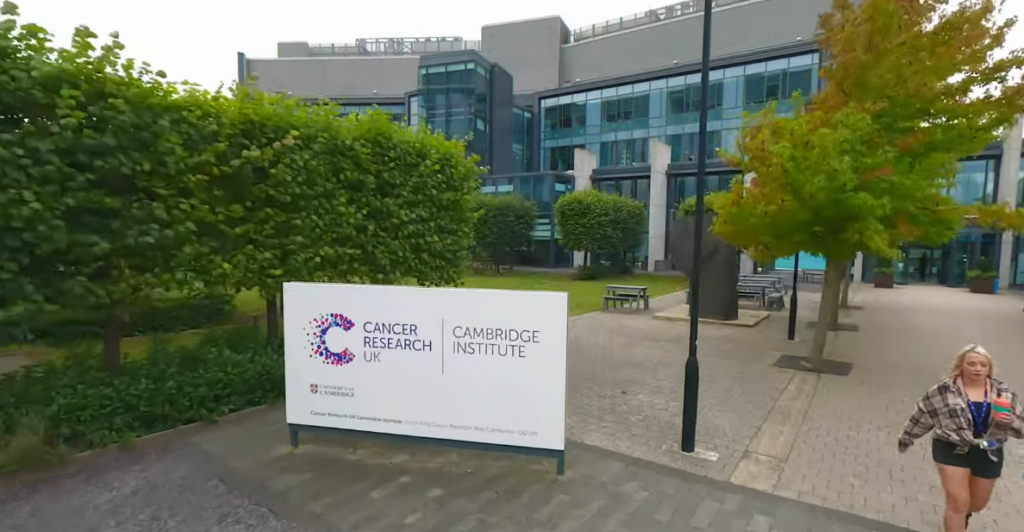
The statistics supporting her experience are clear. A-Level English enrollment decreased by a fifth between 2016 and 2019. Over the same time period, sciences increased by the same amount. Similar reductions were observed in A-Level Drama, Art, and Design Technology. This was not an accident. It occurred as a result of the English Baccalaureate, the government’s favored indicator of school quality, which was instituted under Michael Gove and has since been enthusiastically defended by all education secretaries, effectively excluding creative subjects from the important metrics. Schools are evaluated, ranked, and financed in a way that favors directing students toward the humanities, sciences, and math at the expense of other subjects. The creative subjects remained on the schedule. They simply stopped being as helpful, as Stephenson so eloquently puts it.
The way this was disguised as rigor is particularly cruel. Gavin Williamson was correct to say that omething had changed in British schools when he celebrated the country’s rising PISA rankings in 2018—the UK entering the top 20 in math, science, and reading. He omitted to mention the same report’s findings that more than one in five British girls suffered from depression or emotional disorders before turning nineteen, and that they were the fifth most fearful of failing their exams globally. higher ratings. Anxiety has increased. There are fewer paintings on the wall. Someone in Westminster might have thought that was a reasonable compromise. It’s difficult to accept that they said it aloud.
This is more than just a cultural loss, as Cambridge researchers and education writers have been pointing out, sometimes cautiously and sometimes not. It’s a useful one. Murphy’s argument is simple: people who can envision alternatives are needed in a world that demands change. Students are not being prepared for uncertainty by schools that spend thirteen years teaching them to obey rules, replicate knowledge under time constraints, and treat any subject that cannot be reduced to a mark scheme as a pastime. They are getting them ready for a world that has already vanished.
The resemblance to economic theory is not accidental. A system that is based on efficiency metrics, standardized benchmarks, and measurable output will always have a tendency to defund what it is unable to measure. By its very nature, creativity opposes this. It is impossible to assign a grade to the courage to try something unsuccessfully, start something new, or learn by doing rather than by memorization. As a result, it is eventually cut. The GCSE timetable that subtly eliminates art to make room for another science, the careers advisor who steers a trilingual child toward chemistry, and the sixth form that discourages drama because it doesn’t sit on a UCAS form correctly are just a few examples of the thousands of small institutional decisions rather than one big one.
Stephenson concluded her essay with a statement that reads more like a plea than an argument. She wrote, “Learn the capitals of every country for fun.” At forty, start learning Russian. When you should be doing something else, code video games. In its most basic form, it is an argument for learning as something other than a transaction. It remains to be seen if those in charge of creating the educational system in Britain are paying attention. However, they noticed long ago that the kids were losing their creativity in the process.
Disclaimer
Nothing published on Creative Learning Guild — including news articles, legal news, lawsuit summaries, settlement guides, legal analysis, financial commentary, expert opinion, educational content, or any other material — constitutes legal advice, financial advice, investment advice, or professional counsel of any kind. All content on this website is provided strictly for informational, educational, and news reporting purposes only. Consult your legal or financial advisor before taking any step.
