

When the presenter clicked to the slide that everyone had come to see at a recent education conference in Boston, the auditorium was remarkably silent. It has a bar chart on it. Students receiving human tutoring are on one side. Conversely, students are tutored by a laptop-based AI system. The AI bar was higher. Just tall enough to cause the room’s seats to shift, not dramatic or theatrical.
The study, which was published this spring, monitored about 2,000 middle school students over the course of an academic term in multiple districts. Particularly in algebra readiness and problem-solving speed, students who worked with an adaptive AI math tutor reported improvements that surpassed those taught in traditional classroom settings.
| Detail | Information |
|---|---|
| Study Focus | AI tutors vs. human teachers in secondary-school mathematics |
| Reported Student Improvement | 91% reported better clarity and confidence |
| Teacher Adoption (2024–25) | 85% of teachers, 86% of students used AI in classrooms |
| Average Human Tutor Cost | $70–$120 per hour |
| Market Growth | $5.18 billion in 2024 projected to $112.30 billion by 2034 |
| Weekly Time Saved for Teachers | Around 5.9 hours using AI for admin tasks |
| Efficacy Boost for New Teachers | AI tools narrowed the gap with experts by 9 percentage points |
| Educators Who See Net Harm | 25% believe AI causes more harm than good |
| Educators Who See Net Good | Only 6% |
| Primary Educator Concern | Loss of human interaction and mentorship |
Five years ago, this kind of outcome would have seemed ridiculous. Teachers are now being asked to defend themselves while it is published in peer-reviewed journals.
Walking through schools these days gives you the impression that something has already changed without any official announcement. The AI assistant on Khan Academy is opened by children in the same manner that earlier generations opened a textbook.
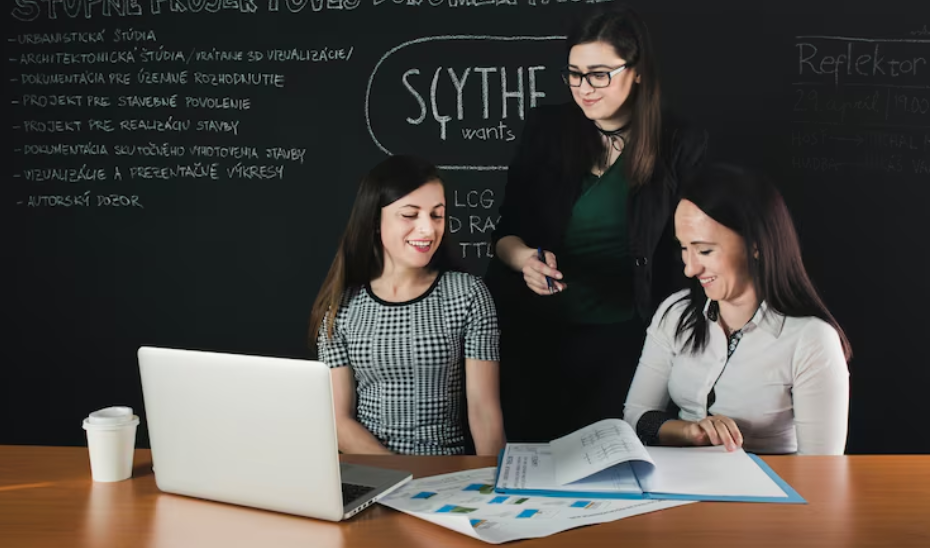
In part because the AI doesn’t sigh and in part because it doesn’t remember their previous incorrect response, they pose questions to it that they would never pose to a teacher. Strangely, people seem to value that kind of patience more than they anticipated.
However, educators’ reactions have been anything but cohesive. The results are viewed by some as a long-overdue reckoning, demonstrating that the conventional one-teacher-to-thirty-children model was never going to be successful on a large scale.
Some, and this is the more vocal group, contend that the study’s measurements are incorrect. An AI can teach a student how to solve a quadratic equation more quickly, but they won’t comprehend the purpose of math. Teachers fairly point out that delivery was never their only responsibility. It involved observing a child’s dejected expression following a quiz failure and determining when to encourage and when to give them space.
There is more to the skepticism than just philosophy. When AI mediated the lessons, half of the students surveyed said they felt less connected to their teachers. Nearly 75% of educators said they spent additional time confirming that the work that students turned in was genuinely their own. There are also the more subdued concerns, such as algorithmic bias impacting non-native English speakers, data privacy, and what happens when a twelve-year-old’s main intellectual interaction is with a chatbot that has been trained on the entire internet.
The similarities to earlier panics are difficult to ignore. Reading was supposed to be destroyed by television. Calculators were meant to destroy math. Neither prediction was totally off, but it also didn’t quite come true. Perhaps the speed is different this time. In just a few short years, the global AI-in-education market has grown from a niche to a multibillion-dollar industry, and infrastructure is being developed before everyone has decided what we want from it.
Last month, an Ohio math teacher revealed to a reporter that she has begun utilizing an AI tutor as a silent co-teacher. She answers the questions her students ask for drills and deals with their anxieties, such as dropped pencils, quiet panic before an exam, and questions a child only asks when they are by themselves with a caring adult. “It does the repetition better than I ever could,” she replied. “I do the rest.” Even though it sounds messy, that arrangement might be closer to the real future than any tidy replacement story that the media continues to pursue.
It’s unclear if the benefits will last over time, whether they lead to deeper thinking, or whether students who grew up with AI tutors will embrace or detest them as adults. It’s evident that the long-standing debate over whether or not machines are capable of teaching has been subtly supplanted by one about whether or not they already are and whether or not we’ve been too preoccupied to acknowledge it.
Disclaimer
Nothing published on Creative Learning Guild — including news articles, legal news, lawsuit summaries, settlement guides, legal analysis, financial commentary, expert opinion, educational content, or any other material — constitutes legal advice, financial advice, investment advice, or professional counsel of any kind. All content on this website is provided strictly for informational, educational, and news reporting purposes only. Consult your legal or financial advisor before taking any step.
