

There’s a reason why the S&P 500 now feels more like a mood ring for the US economy than a straightforward stock index. Before anyone has finished their coffee on a Monday morning, the screens in any brokerage office are already blinking red or green. Traders look up, shrug, and recline in their seats. This quiet anxiety has almost become second nature. Due to renewed tensions between the United States and Iran as well as an abrupt 5.7% increase in West Texas Intermediate crude, the index ended the week slightly lower. Not particularly dramatic by itself. However, nothing occurs in a vacuum these days.
As of the last day of 2025, the S&P 500, which tracks 500 of the largest publicly traded American companies, had an aggregate market capitalization of over $61.1 trillion. That is a startling number that has gotten heavier at the top in ways that aren’t always openly discussed. Together, ten businesses make up about 38% of the index: Nvidia, Alphabet, Apple, Microsoft, Amazon, Broadcom, Meta, Tesla, Berkshire Hathaway, and Eli Lilly. Ten years ago, Nvidia’s weighting would have seemed ridiculous, but today it stands at 7.17%. Investors may feel at ease with this concentration. They might not have given it enough thought.
| Detail | Information |
|---|---|
| Full Name | Standard & Poor’s 500 |
| Launch of Current Form | March 4, 1957 |
| Total Market Cap (Dec 31, 2025) | More than $61.1 trillion |
| Number of Companies | 500 leading U.S.-listed firms |
| Weighting Method | Public float-adjusted capitalization-weighted |
| Top Holding (Jan 2026) | Nvidia at 7.17% |
| Top 10 Companies’ Share | Roughly 38% of index weight |
| Revenue From U.S. Sources | 72% domestic, 28% international |
| Index Maintainer | S&P Dow Jones Indices |
| Common Ticker Symbols | ^GSPC, INX, SPX |
| First Tracking Mutual Fund | Vanguard, launched August 31, 1976 |
| Futures Trading Began | April 21, 1982 (Chicago Mercantile Exchange) |
The memory of the index itself is strangely long. The Standard Statistics Company compiled a list of 233 stocks and performed the calculation by hand once a week in 1923. Vanguard didn’t introduce a tracking mutual fund for individual investors until 1976, and the current S&P 500 was created in March 1957. Every step increased the number of participants. These days, anyone with a phone can purchase SPY at 0.09% or VOO or IVV at 0.03%. Even though the experience of owning the index—watching it fluctuate in response to tweets, foreign policy declarations, and central bank rumors—feels anything but serene, there is a subtly democratic quality to that.
The current mood was aptly captured in Monday’s session. The Magnificent Seven ended lower for the most part. Ahead of its earnings release, Tesla fell 2%. Following news that it is creating specialized AI chips for Google, Marvell Technology saw a nearly 6% increase. Following the announcement of an acquisition, TopBuild saw a 19% increase.
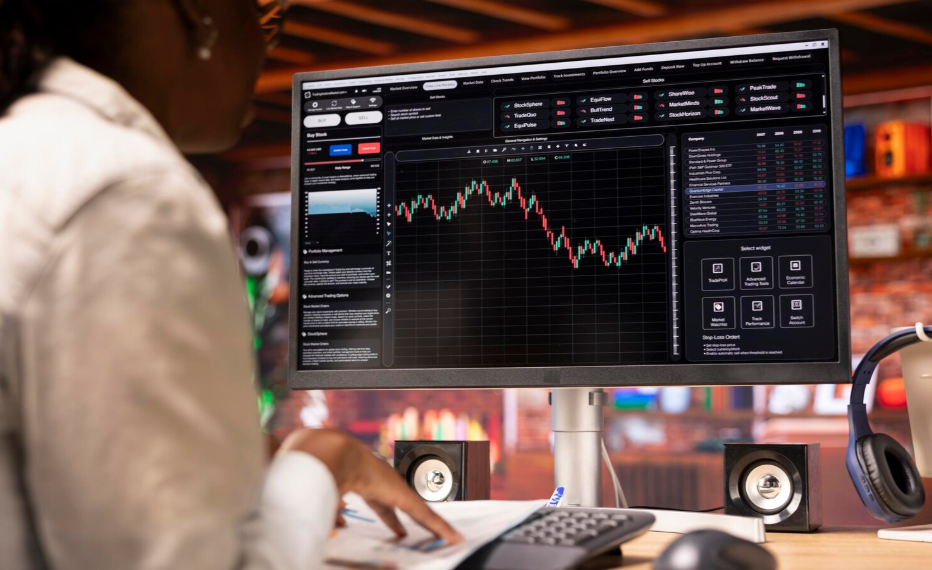
In the meantime, gold futures fell 1% while Bitcoin rose back toward $76,300. In a written commentary, Siebert Financial’s CIO, Mark Malek, put it bluntly: “The narrative itself has become the battlefield.” I’ve never forgotten that phrase. In the past, markets responded to events. They now respond to descriptions, clarifications, and sometimes retractions of events within the same hour.
It’s difficult to ignore the conflict between the S&P 500’s actual state, which is much more focused and sensitive to a small number of stories, and what it represents on paper, which is a broad American enterprise that is diversified across industries. spending on AI. prices of oil. signals related to interest rates. Just one post on Truth Social. The index continues to support trillions of derivative contracts at the CME and CBOE, direct pension managers and retirement accounts, and feed into the Conference Board Leading Economic Index.
That hasn’t changed at all. The thing’s daily twitchiness has changed. As we watch this develop, it seems like we’ve reached a stage where the index represents more of the viewers’ collective nervous system than the actual economy. It’s still unclear if that’s sustainable. However, the screens continue to blink for the time being.
Disclaimer
Nothing published on Creative Learning Guild — including news articles, legal news, lawsuit summaries, settlement guides, legal analysis, financial commentary, expert opinion, educational content, or any other material — constitutes legal advice, financial advice, investment advice, or professional counsel of any kind. All content on this website is provided strictly for informational, educational, and news reporting purposes only. Consult your legal or financial advisor before taking any step.
